

Key Takeaways
Why a Maintenance Log Is Worth Your Time
A car maintenance log is a running written record of every service, repair, and inspection your vehicle receives. Most drivers skip it entirely - and pay for that gap later. When it comes time to sell or trade in a vehicle, documented service history is one of the few tangible factors that can support a stronger asking price. Buyers and dealers alike are more confident in a car when the owner can hand over a clear, dated record of care.
Beyond resale value, a log helps you recognize patterns. If you're replacing the same component every 15,000 miles, or if coolant keeps running low between services, the record tells a story that random receipts cannot. It also gives mechanics faster, more accurate context when diagnosing a problem - saving both time and diagnostic fees.
Think of it like home upkeep: consistent, documented maintenance preserves long-term value in ways that sporadic care simply cannot. The same logic applies equally to your vehicle.
Don't Skip Warranty-Related Documentation
If your vehicle is still under a manufacturer or extended warranty, incomplete maintenance records can complicate claims. Keep receipts and log every service on schedule. Consult your warranty documentation or a qualified mechanic if you're uncertain what counts as a qualifying service interval.
What You'll Need Before You Start
Setting up a log requires very little investment. The essentials are a place to record entries, your owner's manual, and any existing service documentation you can locate.
What you will need
Dedicated notebook or binder
Serves as a permanent, portable paper record of all services and repairs.
Digital maintenance app or spreadsheet
Allows searchable, date-stamped entries with reminder features for upcoming service intervals.
File folder or envelope
Stores physical receipts alongside your notebook to corroborate logged entries.
Owner's manual
Provides the manufacturer's recommended service schedule as a reference baseline.
Cross-Reference Your Owner's Manual
Your vehicle's owner's manual lists manufacturer-recommended service intervals for every major system. Use it as your primary reference when setting up your log categories. If you've misplaced the manual, most automakers post them in PDF format on their official websites.
How to Build and Maintain Your Log
Follow these steps to set up a log from scratch, even if your vehicle already has years of service history behind it. The goal is a single, reliable reference that any mechanic - or future buyer - can follow at a glance.
Gather your existing service history
Before you log a single new entry, reconstruct what you already know. Collect oil change stickers, receipts from repair shops, inspection certificates, and any records from a previous owner. If you purchased the vehicle used, a vehicle history report may fill in significant gaps - see our guide on reading a vehicle history report for what to look for.
Note the approximate date and mileage of each past service, even if you're estimating. Partial records are better than none.
Choose your logging format
Decide whether you'll use a paper notebook, a dedicated vehicle maintenance app, or a simple spreadsheet. There's no universally superior format. Paper requires no battery or internet connection and travels easily in the glove box. Digital tools offer reminders and easy searching but depend on device and platform continuity.
If you choose paper, a small spiral notebook or a dedicated automotive log book with pre-printed columns both work well. If you go digital, create a consistent backup routine.
Set up your log structure
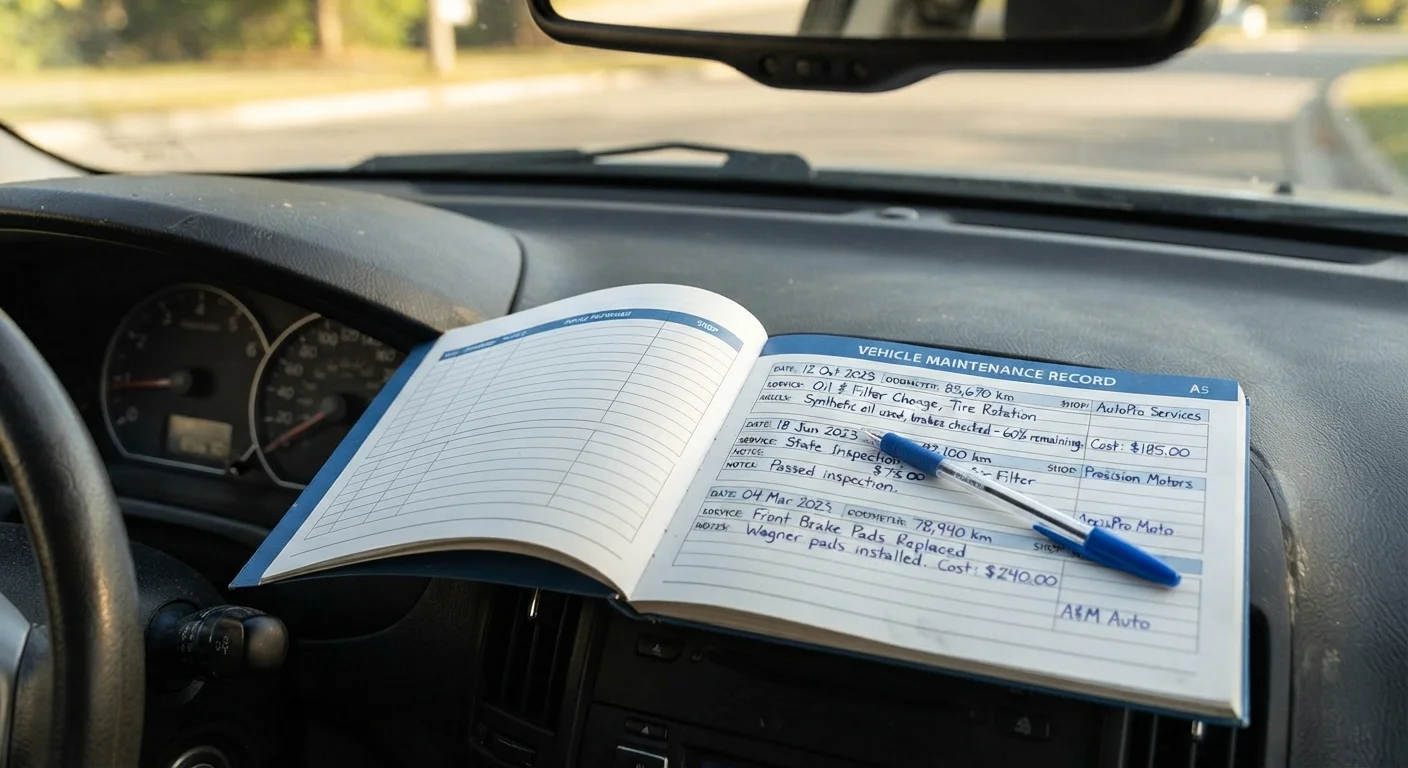
Each entry should capture five core data points:
- Date of the service
- Odometer reading at the time of service
- Service performed (e.g., oil and filter change, tire rotation, brake inspection)
- Parts or fluids used, if applicable (type of oil, filter part number)
- Who performed the work - shop name, or "self" for DIY tasks
Add a notes field for anything unusual observed, such as a noise the mechanic mentioned or a fluid that was low. Unfamiliar terms? Our car maintenance terms reference explains common jargon in plain language.
Enter your baseline records
Using the history you gathered in Step 1, work chronologically backward and create entries for past services. Estimate dates and mileage where necessary, and note any entry as "estimated" so future readers - including yourself - understand the confidence level.
Record your current odometer reading as today's baseline, even if no service was performed today. This anchors all future interval calculations.
Map out your upcoming service intervals
Open your owner's manual and note every recommended service interval: oil changes, transmission fluid, spark plugs, timing belt or chain, coolant flush, brake fluid, air filter, and cabin filter. Each entry should show the mileage or time threshold, whichever comes first.
Mark the next due date for each item based on your current mileage. For a broader picture of what regular maintenance involves, see everything involved in keeping a family car roadworthy.
Log every service as it happens
The log only works if you maintain the habit. After every service - whether a quick oil change or a major repair - make an entry within 24 hours while details are fresh. Attach or scan the receipt and file it with your records.
If you do any DIY maintenance, log it the same way. Note the product used (e.g., oil viscosity grade) so you can maintain consistency across changes or flag it for a mechanic if needed.
Digital Apps Can Lose Data
Cloud-based maintenance apps are convenient, but if you switch phones or an app shuts down, you may lose your records. Export or back up your data regularly, and consider keeping key entries in a physical notebook as a backup.
Making the Habit Stick
The most common reason maintenance logs fail is inconsistency. Life gets busy, and logging a routine oil change feels easy to defer. A few strategies help:
- Set a calendar reminder immediately after each service visit to make the log entry before you forget the details.
- Keep the log in the car - in the glove box if it's paper, or as a shortcut on your phone's home screen if it's digital.
- Review it once a year, ideally before a registration renewal or annual inspection, to confirm upcoming service items and catch any gaps.
A log that covers three years of careful ownership communicates something meaningful: this vehicle was taken seriously. That reputation, backed by paper, is worth real money at resale - and real peace of mind every mile in between.