

Key Takeaways
Our Verdict
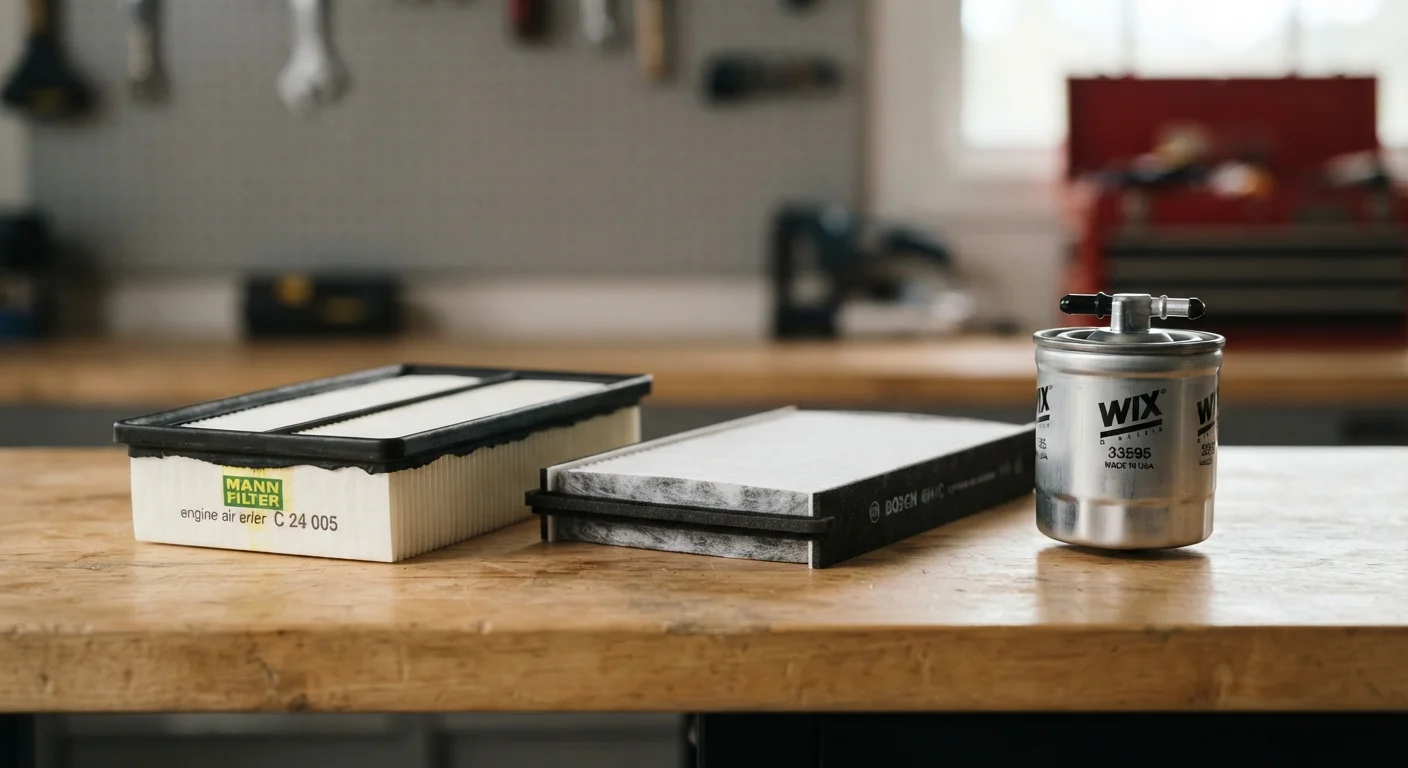
All three filters serve distinct, non-interchangeable roles. The engine air filter protects your engine's long-term health, the cabin filter protects the air your family breathes, and the fuel filter protects the fuel delivery system. Skipping any one of them creates real costs - either in component damage or in reduced performance and air quality.
| Best for | Recommended |
|---|---|
| Families focused on engine longevity and performance | Engine Air Filter - prioritize regular checks |
| Households with allergy or asthma concerns | Cabin Air Filter - replace on schedule or sooner |
| High-mileage vehicles or those showing fuel system symptoms | Fuel Filter - consult a qualified mechanic |
Why Your Car Needs Multiple Filters
Filters are among the most overlooked items in routine car maintenance - partly because they're out of sight and partly because their failure tends to be gradual rather than dramatic. Your vehicle relies on at least three separate filters, each guarding a different system against contaminants. Understanding what each one actually does gives you the knowledge to make informed decisions about when to replace them and whether to do it yourself or take it to a shop.
For a broader look at how filters fit into the full picture of vehicle care, see everything involved in keeping a family car roadworthy.
| Engine Air Filter | Cabin Air Filter | Fuel Filter | |
|---|---|---|---|
| What it protects | Engine internals and combustion | Passenger compartment air quality | Fuel injectors and fuel pump |
| What it filters | Dust, debris, pollen, insects | Pollen, dust, mold, exhaust particles | Rust, sediment, fuel contaminants |
| Typical replacement interval | 15,000-30,000 miles | 12,000-25,000 miles | Varies widely; check owner's manual |
| Symptom of failure | Reduced power, lower fuel economy | Weak airflow, musty odors, more dust | Hard starting, hesitation, stalling |
| DIY difficulty | Low - usually tool-free | Low to moderate | Moderate to high - professional recommended |
| Cost to neglect | Engine wear, fuel waste | HVAC motor strain, poor air quality | Injector and fuel pump damage |
Engine Air Filter: Your Engine's First Line of Defense
The engine air filter sits in the air intake system and screens out dust, pollen, insects, and debris before outside air enters the engine. Internal combustion engines need a precise mixture of air and fuel to run efficiently - contaminated air disrupts that balance and, over time, allows abrasive particles to wear down internal components.
A clogged engine air filter forces the engine to work harder to draw in air. Common signs of a dirty filter include reduced acceleration, slightly lower fuel economy, and in severe cases, a rough idle or check engine light. Most manufacturers recommend inspecting the engine air filter every 15,000 to 30,000 miles, though dusty or rural driving conditions can shorten that interval considerably. Checking your owner's manual is the most reliable guide.
Replacing an engine air filter is one of the more accessible DIY maintenance tasks - on most vehicles it involves unclipping a housing, swapping the filter, and re-securing the cover. No special tools are typically required. That said, if you're unsure about locating the housing or your vehicle has a more complex intake setup, a mechanic can do it quickly during a regular service visit.
Check Your Air Filter Visually First
Before scheduling a replacement, pull the engine air filter out and hold it up to the light. A new filter appears white or off-white; a filter that needs replacing looks gray or brown and may show visible debris. This quick check takes under two minutes on most vehicles and can confirm whether a replacement is actually due or can wait until the next service interval.
Cabin Air Filter: Protecting the Air Your Family Breathes
The cabin air filter is specifically designed to clean the air that flows through your vehicle's heating, ventilation, and air conditioning (HVAC) system - the air your passengers actually breathe. It captures pollen, dust, mold spores, exhaust particles, and other airborne contaminants before they circulate inside the car.
Unlike the engine air filter, a degraded cabin filter doesn't directly harm your vehicle's mechanical components - but it does affect your family's comfort and air quality. Signs of a clogged cabin filter include reduced airflow from vents, musty odors when the HVAC runs, and increased dust accumulation on interior surfaces. For family members with allergies or respiratory sensitivities, a worn cabin filter can meaningfully worsen their experience inside the car.
Typical replacement intervals range from 12,000 to 25,000 miles, or roughly once a year for average drivers - though high-pollen environments or urban driving with heavy traffic may warrant more frequent changes. The cabin filter is often located behind the glove compartment or under the dashboard, and many owners find it a manageable DIY job once they locate the access point in their vehicle's manual.
Fuel Filter: Keeping Your Fuel Delivery System Clean
The fuel filter removes contaminants - rust particles, sediment, and debris - from gasoline or diesel before it reaches the fuel injectors or carburetor. Clean fuel delivery is essential for consistent engine performance and for protecting injectors, which are precision components that can be expensive to repair or replace.
A failing fuel filter restricts fuel flow. Symptoms can include hard starting, engine hesitation or surging under acceleration, stalling at low speeds, and in advanced cases, a noticeable loss of power. However, these symptoms overlap with several other issues, so a fuel filter shouldn't be the automatic first assumption - diagnosis matters.
Replacement intervals vary significantly. Some older vehicles specify a fuel filter change every 20,000 to 30,000 miles; many modern vehicles have fuel filters integrated into the fuel pump assembly inside the tank, which may not require scheduled replacement under normal conditions but must be addressed if the pump is serviced. Because fuel system work involves flammable materials and pressurized lines, this is one filter where having a qualified mechanic perform or at least assess the work is often the prudent choice.
To understand how filter maintenance fits within broader service milestones, your family car's maintenance schedule, explained is a useful reference. And if you're preparing for a long drive, what mechanics check before a long trip covers fuel system checks among other pre-trip priorities.
What Happens When You Skip Filter Replacements
Deferred filter maintenance isn't just a performance issue - it's a cost issue. A clogged engine air filter can reduce fuel economy incrementally, meaning you pay more at the pump over months without connecting it to the filter. A neglected cabin filter strains the HVAC blower motor over time. A blocked fuel filter accelerates wear on the fuel pump, which is a far more expensive component to replace.
Filters are among the most cost-effective maintenance items on any vehicle precisely because they prevent damage to the systems they protect. Car maintenance myths that cost drivers unnecessary money explores how small, skipped service items often generate the largest downstream repair bills - a pattern that holds true for all three filters covered here.
This article is for general informational purposes only and is not a substitute for advice from a qualified mechanic familiar with your specific vehicle. Always consult your owner's manual and a licensed automotive professional before performing or delaying any maintenance task.