

Key Takeaways
Our Verdict
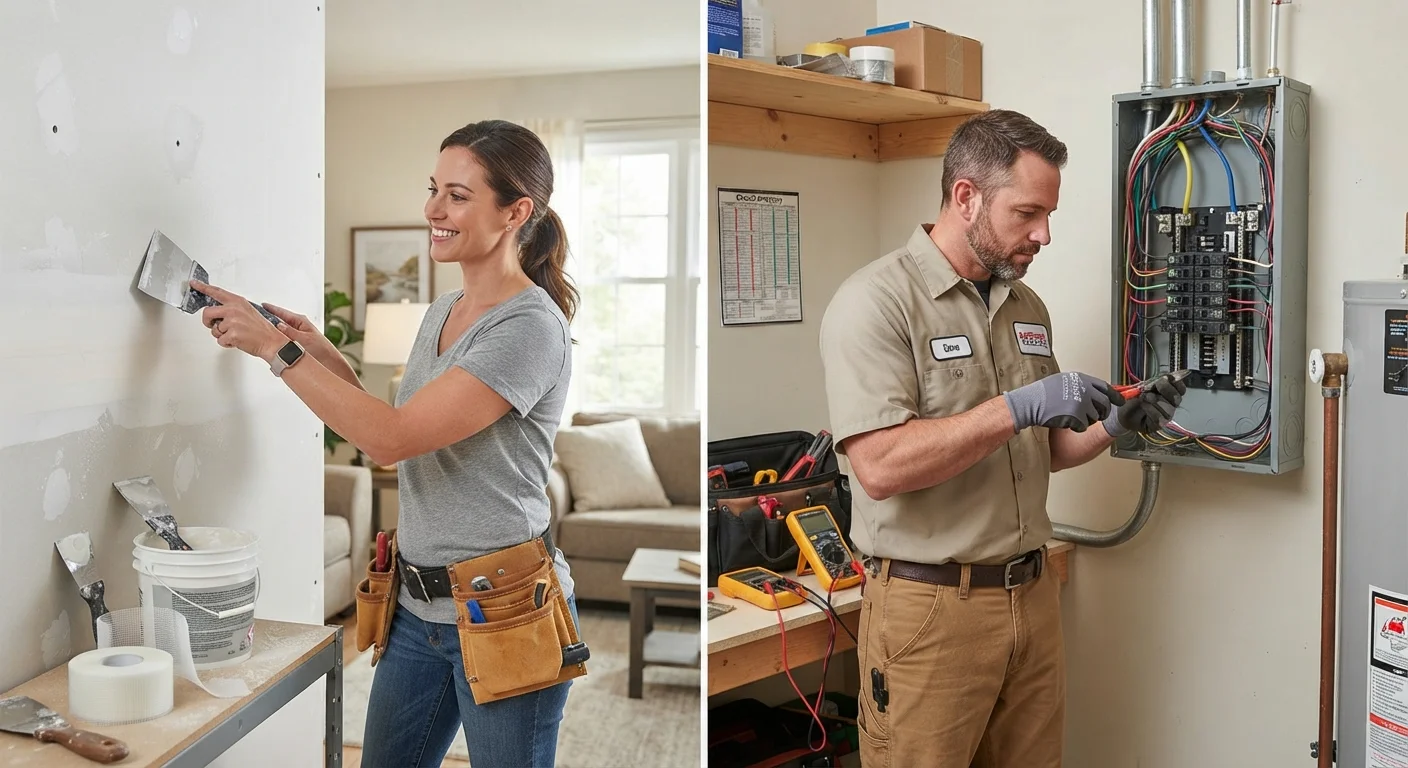
DIY repairs make strong financial sense for low-risk, cosmetic, or straightforward maintenance tasks where the skill gap is small and mistakes are cheap to fix. For work involving safety systems, permits, or specialized expertise, hiring a licensed professional is usually the smarter long-term investment - even on a tight budget.
| Best for | Recommended |
|---|---|
| Budget-conscious families with basic tool skills | DIY Repair |
| Work involving electrical, gas, or structural systems | Licensed Professional |
| Projects requiring permits or code compliance | Licensed Professional |
| Cosmetic fixes like patching drywall or caulking | DIY Repair |
The Real Question Isn't Pride - It's Risk
Most homeowners frame the DIY-vs.-professional debate around cost. But the smarter first question is: what happens if this goes wrong? A botched caulk job around a window costs you an afternoon and a tube of caulk to redo. A wiring error in a circuit can cause a fire, fail a home inspection, or void your homeowner's insurance. The potential downside is the real dividing line.
Think through four factors before picking up a tool or dialing a contractor:
- Safety risk - Could a mistake injure someone or damage the home significantly?
- Permit and code requirements - Does this work legally require a licensed trade and inspection? See what unpermitted work can cost you at resale or after a claim.
- Skill and tool gap - Be honest. Do you have the knowledge and equipment, or would you be learning on a live problem?
- Cost of a mistake - If the repair fails, is the fix a $20 tube of spackle or a $3,000 remediation bill?
Tasks That Generally Suit Confident DIYers
Certain repairs fall reliably in the DIY column for most homeowners with modest skills, basic tools, and a willingness to follow instructions carefully.
- Drywall patching - Small holes, nail pops, and hairline cracks are forgiving work. Our beginner's drywall repair guide walks through the process with realistic expectations.
- Caulking and weatherstripping - Low-cost materials, no permits, and a direct impact on energy efficiency.
- Painting interior walls and trim - Time-intensive but low-risk. Preparation is 80% of the result.
- Unclogging drains - A drain snake or basic plunger handles most clogs without touching supply lines.
- Replacing hardware - Cabinet handles, door knobs, light switch plates, and outlet covers are straightforward swaps.
- Gutter cleaning - Routine maintenance with basic ladder safety in mind.
Start Small to Build Real Confidence
If you're new to home repairs, begin with genuinely low-stakes tasks - replacing a faucet aerator, patching a nail hole, or swapping a light switch plate. Completing these successfully builds a realistic sense of your skill level. Tackling an unfamiliar complex repair to save money often costs more in the end when a professional has to undo and redo the work.
When you're unsure whether a task is truly within your skill range, consider the DIY vs. hiring-out framework to pressure-test your decision before you start.
When to Call a Licensed Professional - No Exceptions
Some repairs carry risks that genuinely outweigh any potential savings. These are not areas where a confident attitude compensates for missing credentials or tools.
Don't Let Permits Be an Afterthought
Skipping a required permit isn't just a technicality - it can result in fines, forced demolition of completed work, and complications when selling your home or filing an insurance claim. Before any project that changes electrical, plumbing, or structural elements, contact your local building department to confirm what's required in your jurisdiction. Requirements vary significantly by city and county.
- Electrical panel work - Adding circuits, replacing breakers, or touching service entrance wiring. This is regulated work in every U.S. jurisdiction and requires a licensed electrician and permit.
- Gas line repairs or extensions - A leak is immediately life-threatening. Licensed plumbers or gas fitters are legally required for this work in most states.
- Structural modifications - Removing walls (especially load-bearing ones), adding openings, or altering foundations requires engineering input and permits.
- Roof replacement - Not just the safety hazard of height; improper flashing and fastening leads to water intrusion that causes thousands in interior damage.
- HVAC refrigerant handling - Federal law restricts refrigerant handling to certified technicians.
If you're planning a project that sits near any of these categories, use the contractor pre-project checklist to arrive prepared, and review what to verify when hiring a contractor - licensing, insurance, and written contracts are non-negotiable protections.
Comparing DIY and Professional Approaches Side by Side
The table below summarizes how the two approaches stack up across the factors that matter most to budget-conscious families. Use it as a quick reference, not a rigid rule - every project has its own context.
| DIY Repair | Licensed Professional | |
|---|---|---|
| Upfront cost | Lower - materials only | Higher - labor plus materials |
| Cost of a serious mistake | Can be very high (redo + damage) | Covered by contractor liability/insurance |
| Permit and code compliance | Homeowner's responsibility to verify | Professional handles in most cases |
| Time required | Longer - learning curve included | Faster with specialized tools and experience |
| Best task types | Cosmetic, low-risk maintenance | Electrical, gas, structural, roofing |
| Skill requirement | Basic to moderate (task-dependent) | Trade certification typically required |
| Warranty on work | None - self-performed | Often included in contractor quote |
For larger projects, the home improvement budget planning guide covers sequencing repairs in the right order and building contingency funds so one surprise doesn't derail your finances. Decisions about financing major repairs also touch on broader savings and debt strategies worth reviewing before you commit to a large project scope.