

Key Takeaways
Monthly Cash Flow Mapping
Monthly cash flow mapping is the process of documenting every dollar coming in and every dollar going out of your household in a given month. Unlike building a budget - which projects what you plan to spend - cash flow mapping reveals what you actually spend. It captures fixed costs, variable costs, and the irregular expenses that rarely appear in standard budget templates.
Cash flow mapping is distinct from net worth analysis; it focuses on the timing and volume of money movement within a single period, not overall asset-to-liability ratios.
Why Your Mental Budget and Your Real Spending Don't Match
Ask most adults what they spend on groceries each month and they'll give you a number. Ask their bank statement and you'll often get a very different answer. This gap - between what we think we spend and what we actually spend - is the primary reason so many family budgets fail before February.
The problem isn't a lack of willpower. It's a lack of data. Most households build budgets from memory and good intentions rather than from real transaction records. The result is a plan built on faulty assumptions.
Cash flow mapping fixes this by forcing you to confront actual numbers. It's the foundation that every other budgeting step - tracking, adjusting, saving - depends on. If you're part of a broader effort to understand your household finances, this process connects directly to the principles covered in the complete family budgeting guide.
3+
Categories families typically underestimate
Consumer spending research consistently shows households misreport food, entertainment, and irregular expenses as the most common blind spots.
$150-$200
Avg. monthly subscription spending per household
Surveys of American households suggest subscription costs are routinely underestimated by 40-50% when self-reported without reviewing statements.
3 months
Statements needed for an accurate spending baseline
Financial planners generally recommend reviewing at least three months of transaction history to account for irregular and seasonal expenses.
How to Map Your Real Monthly Spending
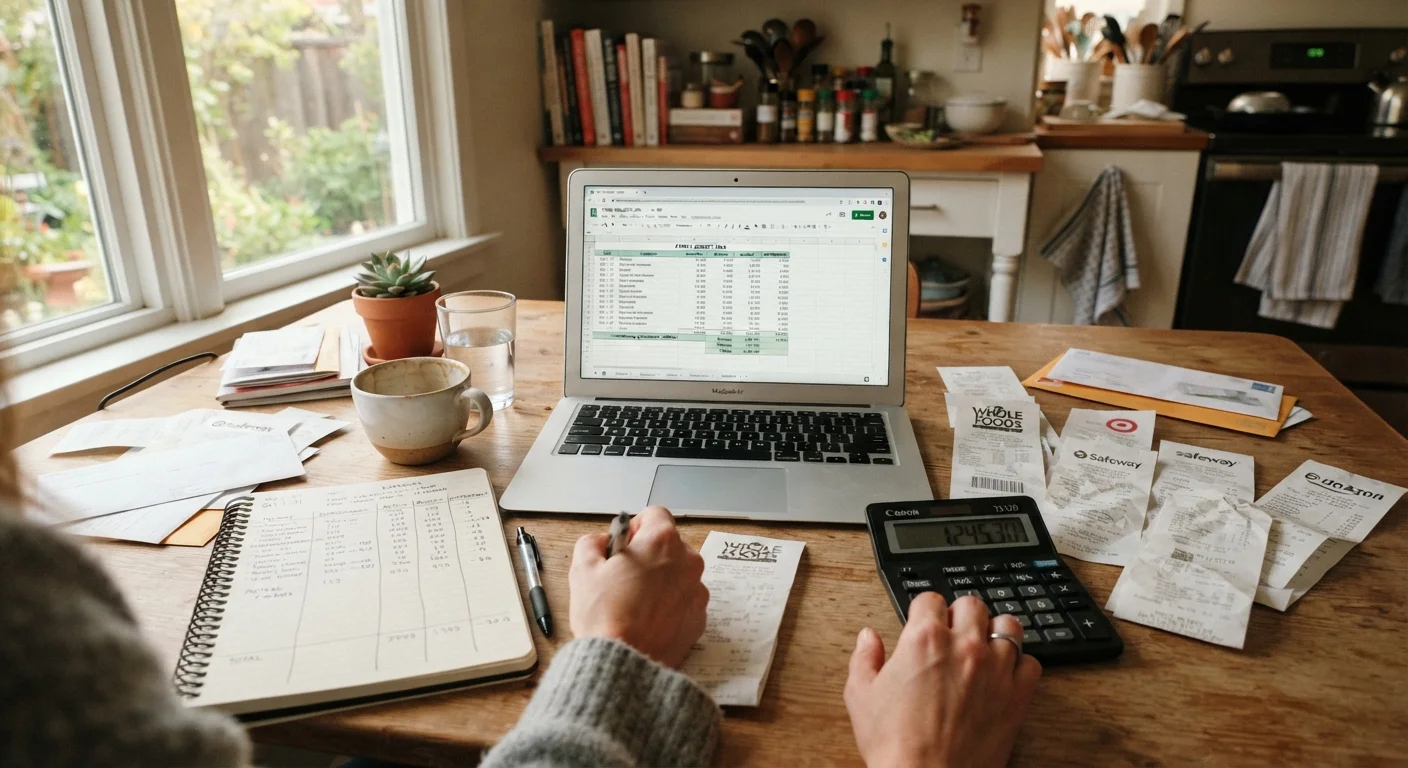
Start with your bank statements and credit card statements - not your memory. Pull the last three months. You want enough data to see patterns, not just a single unusual month.
Group every transaction into categories. A working set of categories for most families includes: housing (mortgage or rent, insurance, property tax), utilities, groceries, dining out, transportation (fuel, insurance, payments, parking), healthcare, childcare or education, subscriptions and memberships, clothing, personal care, and miscellaneous cash spending.
Add up each category for each month, then average across your three-month window. That average is your baseline - the closest approximation of what your household actually spends.
Use Statements, Not Memory
Download or print three months of bank and credit card statements before building any spending categories. Memory systematically underestimates frequent small purchases - coffee, convenience stops, app charges - that add up fast. Real transaction data removes the guesswork and produces a map you can actually trust.
One category that consistently surprises families: irregular expenses. Car registration, annual insurance premiums, school fees, holiday gifts - these don't show up every month, so they get left out of the mental budget. But they hit the bank account reliably. The forgotten budget categories article walks through a full list worth reviewing before you finalize your map.
The Categories Where Most Families Find Surprises
Food spending: Groceries and dining out are nearly always underestimated - often significantly. Many families mentally account for the weekly grocery run but forget the mid-week convenience stops, school lunches, and frequent takeout orders that accumulate.
Subscriptions: Streaming services, app subscriptions, gym memberships, and software renewals often add up to more than $150-$200 per month for a typical household, yet families routinely guess half that. A three-month statement review will surface charges you may have forgotten you authorized.
Transportation beyond the car payment: Fuel, oil changes, parking, tolls, and the occasional repair easily rival or exceed a monthly car payment for many families - but only the payment tends to make it into the budget.
For a deeper look at the recurring costs that erode savings without much notice, see unexpected costs that quietly drain family savings. Families with children will also find relevant context in the analysis of what child-rearing actually costs.
Turning Your Map Into a Usable Budget
Once you have real averages for each spending category, compare them to your take-home income. The gap between total income and total spending is your actual margin - or deficit. Most families find this number either smaller or more negative than expected.
From here, you can make deliberate choices: which categories to reduce, where you have genuine flexibility, and what's truly fixed. This is structurally different from guessing at budget amounts and then wondering why you overspend.
Your spending map should be revisited regularly. A monthly review keeps your categories accurate as life changes - a new insurance premium, a child aging into different expenses, or a subscription you cancelled. The monthly budget reset checklist is a practical tool for building that habit.
This article provides general financial education and is not personalized financial advice. Consult a qualified financial professional for guidance specific to your household situation.