

Key Takeaways
Sinking Fund
A sinking fund is a dedicated savings pool you build up gradually to cover a specific, planned expense. Instead of scrambling when a large bill arrives, you set aside a fixed amount each month until you have what you need. Common examples include car registration, holiday gifts, back-to-school shopping, and home repairs. Unlike an emergency fund, a sinking fund is for costs you know are coming.
In corporate finance, a sinking fund refers to a reserve a company builds to retire debt. The household version borrows the same core idea - systematic accumulation - but applies it to everyday predictable expenses.
Why Your Budget Keeps Getting Ambushed
You build a careful monthly budget. Then the car registration comes due, the kids need new school supplies, and the holidays arrive - and suddenly you're dipping into credit cards or wiping out savings you'd planned for something else. These aren't emergencies. You knew they were coming. The problem is that most budgets only plan for monthly expenses, not the irregular ones that hit a few times a year.
That's exactly the gap a sinking fund fills. It's one of the most practical - and underused - savings tools available to families on a budget. If you've never heard of one, you're not alone. But once you understand how they work, you'll wonder how you managed without them.
For a deeper look at the costs that quietly eat into savings year after year, see unexpected costs that quietly drain family savings.
How a Sinking Fund Actually Works
The math is straightforward. Identify an upcoming expense, estimate the total cost, then divide by the number of months until you need the money. Set aside that amount each month in a dedicated account. When the bill arrives, the money is already there.
For example: if your family spends $600 on holiday gifts each year, saving $50 a month starting in January means you reach December fully funded - no credit card debt, no budget stress. The same logic applies to car maintenance, vacation costs, back-to-school clothing, annual insurance premiums, or home repairs.
40%
Americans who can't cover a $400 emergency
According to Federal Reserve survey data, a significant share of U.S. households have limited financial buffer for even modest unexpected costs.
$1,400+
Average annual vehicle maintenance cost per car
Industry estimates suggest households with a car should anticipate over $1,000 annually in routine upkeep - a predictable expense well-suited to a sinking fund.
$998
Average American holiday spending per person
The National Retail Federation has reported average holiday spending near or above $1,000 per consumer in recent years - a cost families can plan for well in advance.
The key distinction is that sinking funds are for planned expenses. They're not a substitute for your emergency fund, which should stay untouched for genuine surprises. These two tools work side by side - see how emergency funds actually work for guidance on building that separate cushion.
Setting Up Your First Sinking Fund
Start with one expense that's been a consistent budget-buster. List the total amount you need and your target date. Divide, and you have your monthly contribution.
Open a separate savings account - or a labeled sub-account if your bank supports it - specifically for that fund. Keeping it physically separate from your everyday accounts removes the temptation to raid it. Automating the monthly transfer is the most reliable way to stay consistent. Our article on automating your savings covers both the benefits and the pitfalls worth knowing first.
Name Your Funds to Stay Motivated
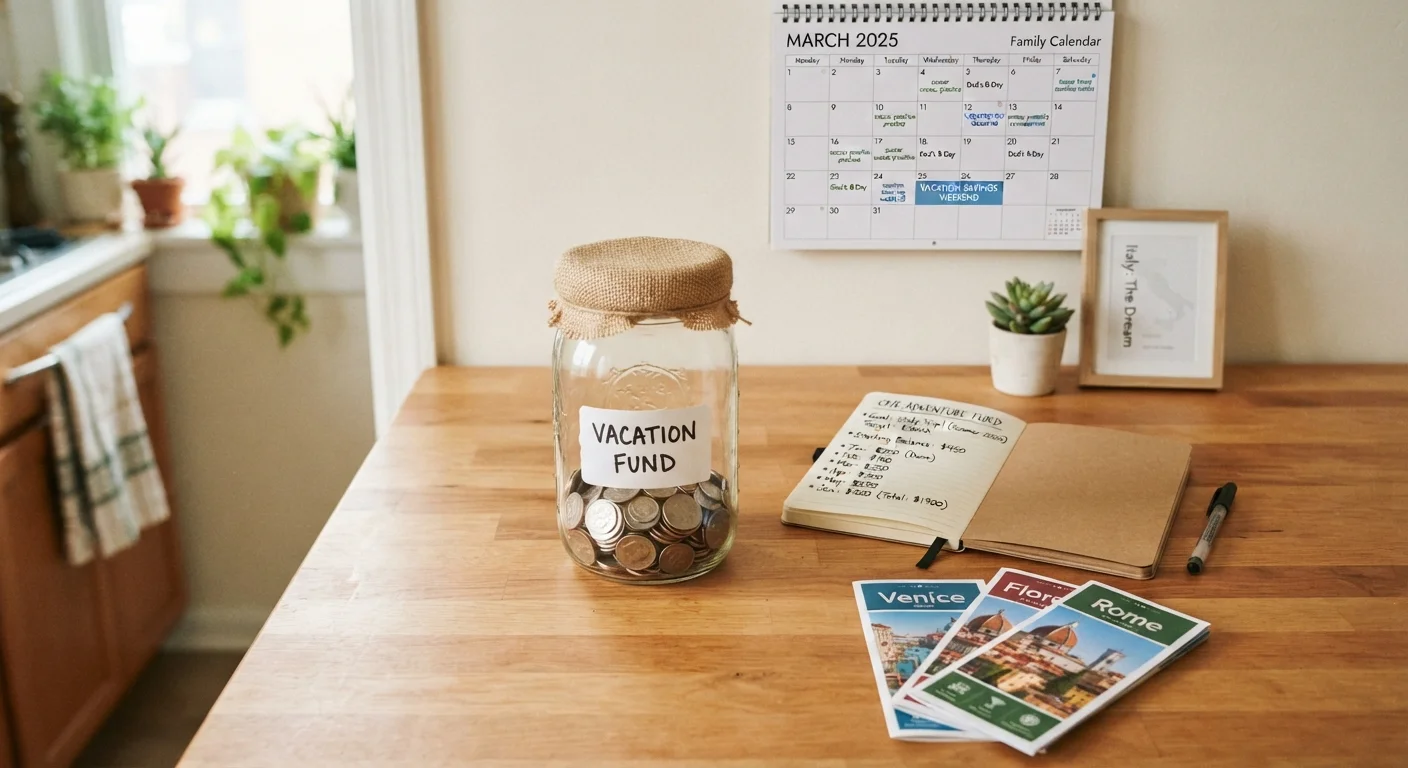
Label each sub-account with its specific purpose - 'Holiday 2025,' 'Car Maintenance,' 'Summer Trip.' Named accounts make it easier to track progress and psychologically harder to raid the money for something unrelated. Many online banks and credit unions allow free sub-accounts with custom labels.
Once your first fund is running smoothly, you can layer in others. Common household sinking funds include: car maintenance, home repairs, medical co-pays, pet care, travel, and annual subscriptions. For a framework on managing several goals simultaneously, see balancing multiple savings goals at once.
The Real Benefit: Predictability Over Panic
The biggest advantage of sinking funds isn't the money itself - it's the mental shift. When you know a $900 car service is coming and you've been saving $75 a month for a year, it stops being a crisis and becomes a scheduled transaction. That predictability reduces financial stress and protects the rest of your budget from being derailed.
Families who use sinking funds also tend to carry less revolving credit card debt, because they're not financing predictable expenses with high-interest borrowing. Over time, that adds up to real savings. For foundational budgeting strategies that pair well with sinking funds, the Budget Basics hub is a useful starting point.
This article is for general informational and educational purposes only and does not constitute personalized financial advice. Consult a qualified financial professional for guidance specific to your situation.