

Key Takeaways
Why Your Energy Bill May Be Higher Than It Should Be
A high utility bill isn't always the result of leaving lights on or cranking the thermostat. For many American families, energy costs creep up gradually due to problems hidden inside walls, attics, ductwork, and even outlet covers. These issues rarely announce themselves - they just quietly drive up your monthly expenses.
Understanding where energy loss actually occurs is the first step toward doing something about it. Most of the culprits on this list are things you can inspect yourself with basic tools and address with modest materials. For guidance on how these hidden inefficiencies connect to broader household budget leaks, see our article on unexpected costs that quietly drain family savings.
Air Leaks Around Windows and Doors
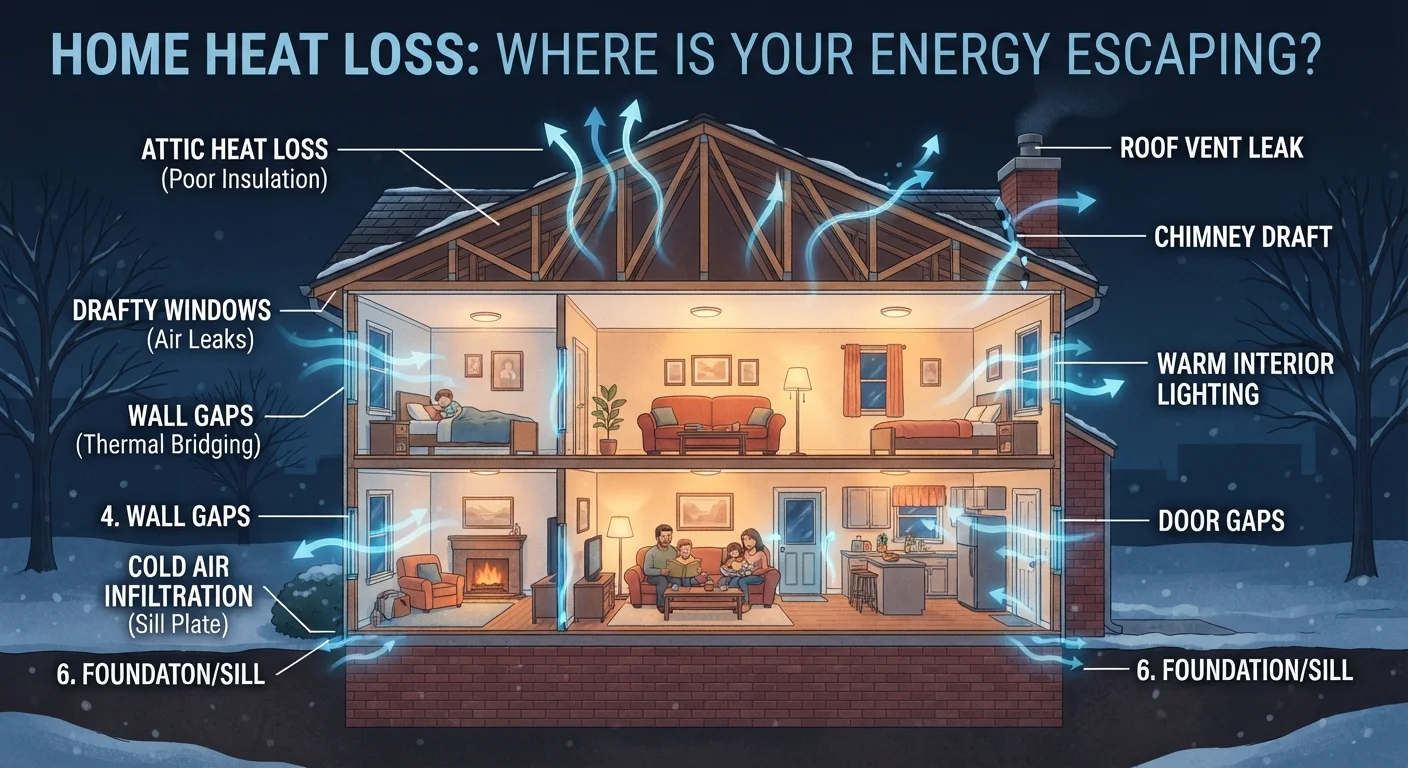
Gaps around window frames and door sweeps allow conditioned air to escape and outdoor air to seep in. On a cold day, hold your hand near the edges of windows and exterior doors - a noticeable draft is a reliable sign of leakage. You can also hold a lit incense stick near suspected gaps; shifting smoke confirms air movement.
Weatherstripping and caulk are inexpensive and widely available at hardware stores. Replacing worn door sweeps typically costs just a few dollars per door. These small interventions can make a noticeable difference in rooms that always feel too cold or too warm regardless of thermostat settings.
A simple incense stick can reveal air leaks that silently inflate your heating and cooling bills.
Poorly Insulated or Uninsulated Attic Space
Heat rises, and in a poorly insulated attic, it escapes directly through the roof. The U.S. Department of Energy recommends specific insulation levels (measured in R-value) based on climate zone. Many older homes fall well short of those thresholds, particularly in the attic, where adding insulation is often a manageable DIY project.
Before adding insulation, check for attic air bypasses - gaps around recessed lights, plumbing stacks, and attic hatches. These should be sealed first, since insulation alone won't stop air movement. An uninsulated or poorly sealed attic hatch is a surprisingly common energy drain.
Sealing attic bypasses before adding insulation dramatically improves how well new insulation performs.
Leaky HVAC Ductwork
Studies have suggested that duct leakage in a typical home can account for a substantial portion of heating and cooling energy loss. Ducts that run through unconditioned spaces - like crawlspaces, garages, or attics - are especially vulnerable to leaks at joints and connections.
Inspect accessible ductwork for disconnected sections, holes, or areas where foil tape has peeled away. Mastic sealant or purpose-made duct tape (not standard household tape) can seal minor gaps. For extensive duct systems, a professional energy audit can identify problem areas using pressure testing equipment.
Leaky ducts in unconditioned spaces can waste a significant share of your HVAC system's total output.
An Overworked or Neglected HVAC System
A clogged air filter forces your furnace or air conditioner to work harder to move air through your home. Most filters should be replaced every one to three months depending on usage and home conditions (pets and dusty environments require more frequent changes). A dirty filter is one of the simplest and cheapest problems to fix - filters typically cost just a few dollars.
Beyond filters, HVAC systems that haven't been professionally serviced in several years may run inefficiently due to dirty coils, low refrigerant, or degraded components. Annual or biannual maintenance checks can catch these issues early.
Replacing a clogged HVAC filter is one of the cheapest, highest-impact maintenance tasks a homeowner can do.
Phantom Loads from Plugged-In Electronics
Many devices draw power continuously even when turned off - televisions, gaming consoles, chargers, and desktop computers are common examples. This is called a phantom load or standby power. While each device draws a relatively small amount individually, the cumulative effect across a household can add meaningfully to monthly bills.
Using power strips with on/off switches makes it easy to cut power to clusters of devices at once. Unplugging seldom-used chargers and small appliances when not in use is another straightforward habit that costs nothing to adopt.
Plugged-in devices in standby mode collectively consume more energy than most homeowners realize.
An Aging or Inefficient Water Heater
Water heating typically represents a significant share of a home's total energy use. Older tank-style water heaters - particularly those more than 10-15 years old - often operate less efficiently as sediment builds up in the tank and components degrade. Flushing the tank annually to remove sediment can improve performance and extend the unit's life.
Setting the water heater temperature to around 120°F (rather than the factory default of 140°F) reduces energy consumption while still providing adequate hot water for most household needs. Insulating the tank and the first few feet of hot water pipes can also reduce standby heat loss.
Lowering your water heater temperature to 120°F is a safe, free adjustment that can reduce water heating costs.
Taking Action Without Breaking the Budget
You don't need to overhaul your entire home to see meaningful improvements. Working through this list methodically - starting with the easiest, lowest-cost fixes - is an approach that pays off over multiple billing cycles. Air sealing and insulation improvements in particular tend to offer lasting results without requiring ongoing spending.
Start With a Home Energy Audit
Many utility companies offer free or low-cost home energy audits that pinpoint where your home is losing the most energy. Before spending money on upgrades, an audit gives you a prioritized list of improvements with the highest potential impact. Check your utility provider's website or call their customer service line to ask about available programs in your area.
For a structured plan that keeps your home running efficiently throughout the year, our seasonal home maintenance guide is a practical companion resource. And if you've been following advice that hasn't delivered results, check out our look at home maintenance myths that cost homeowners real money - some common assumptions can actually make energy efficiency worse.
This article is for general informational purposes only. Costs and conditions vary by home, region, and season. For work involving electrical systems, gas lines, or structural components, always consult a licensed professional and verify local permit requirements before proceeding.