

Key Takeaways
Why These Conversations Feel So Hard
Many parents hesitate to contact a teacher because they worry about seeming difficult, don't want to embarrass their child, or fear the teacher will treat their child differently afterward. These concerns are understandable - but waiting too long usually allows small problems to become bigger ones. Research on family-school partnerships consistently finds that regular, respectful communication between parents and teachers is associated with better academic and behavioral outcomes for students.
The discomfort cuts both ways: teachers are also navigating 20 to 30 relationships simultaneously and may not realize something is wrong unless you tell them. Most teachers genuinely want this feedback. Understanding that both parties feel some vulnerability can make it easier to start.
This Is a Partnership, Not a Confrontation
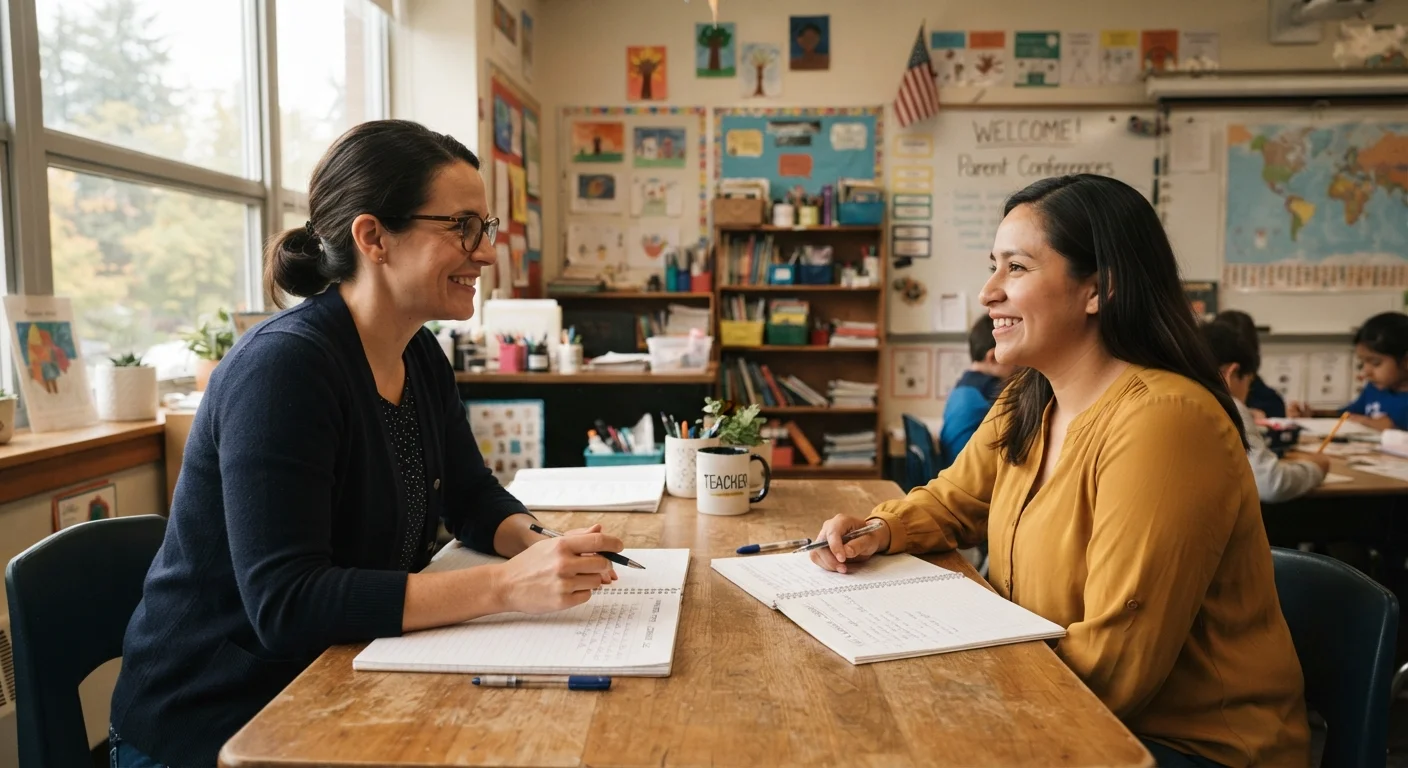
Teachers and parents share the same core goal: your child's success. Approaching a concern with a problem-solving mindset - rather than blame - dramatically increases the chance of a productive outcome. If you enter the conversation already convinced the teacher is at fault, the meeting will likely stall before solutions are found.
If your child has been showing signs of stress that go beyond a single classroom issue - withdrawal, anxiety, or changes in sleep - it may also be worth reviewing our guidance on talking to kids about mental health as a parallel step.
Before You Reach Out: Preparation Matters
A productive parent-teacher conversation almost always starts with homework done on the parent's end - not just the child's.
What you will need
If your concern involves a possible learning difference such as dyslexia or ADHD, gather any documentation you already have and review our in-depth resource on supporting a child with learning differences before the meeting. Knowing the right questions to ask can make a significant difference in what gets addressed.
How to Have the Conversation: Step by Step
Follow the steps below to move from first contact through a productive meeting and a solid follow-up plan.
Identify the specific concern before you reach out
Vague worry - "my child seems unhappy at school" - is hard for a teacher to address. Before contacting anyone, write down what you've actually noticed: Is homework taking much longer than it should? Has your child mentioned a specific classmate conflict? Are grades dropping in one subject? The more specific your observations, the more useful the conversation will be.
If you're unsure whether what you're seeing is a school problem or something else, our article on early signs of academic struggle can help you sort through the signals.
Request a meeting through the teacher's preferred channel
Most teachers prefer an initial email or a note through the school's communication platform rather than a phone call or an unscheduled drop-in. Keep your outreach brief: state that you have a concern you'd like to discuss, suggest a few available times, and let the teacher propose a format that works for them. Avoid detailing the entire issue in a message - a real conversation is far more productive.
Prepare your talking points - and your listening posture
Walk into the meeting with your written observations and a short list of questions. Frame your opening around curiosity rather than accusation: "I've noticed X at home and wanted to understand what you're seeing in class" is a far better opener than "My child says you never help her." Teachers spend six or more hours a day with your child; their perspective contains information you don't have.
[tool_cards]
Share what you've observed without editorializing
Stick to factual descriptions: "She cries most evenings during math homework and says she doesn't understand the problems" is concrete and useful. "She thinks math is stupid because the teacher goes too fast" introduces blame and puts the teacher on the defensive. Present your observations and then pause - give the teacher space to respond before you offer your interpretation.
Ask explicitly what you can do at home
Teachers almost always have concrete suggestions for home support - specific practice strategies, reading routines, or ways to discuss school positively. Asking this question signals that you're a partner in the solution, not just presenting a problem for the teacher to fix alone. Leave the meeting with at least one agreed-upon action from each side.
Follow up and monitor progress
Send a brief summary email within 24 hours recapping what was discussed and agreed upon. Set a realistic check-in point - two to four weeks is usually enough time to observe whether the plan is working. If concerns persist after good-faith efforts, it's appropriate to involve a school counselor or, if an IEP is involved, request a formal team meeting.
[tip_callout]
Avoid Going Over the Teacher's Head First
Unless there is a serious safety concern or a documented pattern of unresolved issues, contacting the principal before speaking directly with the teacher can damage the parent-teacher relationship and make future cooperation harder. Start with the teacher and escalate only if direct communication fails after good-faith attempts.
When the First Conversation Doesn't Resolve the Issue
Sometimes one meeting isn't enough. If your child's situation hasn't improved after the agreed-upon timeframe, it's appropriate - and responsible - to escalate. Request a meeting that includes the school counselor or an instructional specialist. If an IEP or 504 plan is in place, you have a legal right to request a team meeting to review it.
Keep your tone collaborative at every level. Document each communication: dates, who was present, and what was decided. This record protects your child and demonstrates good faith on your part. If the concern involves discrimination, bullying, or a potential violation of your child's educational rights, contact your school district's parent advocate or ombudsperson for guidance on formal processes.
Building a strong home-school partnership is one of the most effective - and lowest-cost - investments you can make in your child's education. The skills you build advocating for your child at school also reinforce the broader habits of engaged family involvement, including the financial conversations that shape how children understand responsibility and planning at home.