

Key Takeaways
Resource Guarding
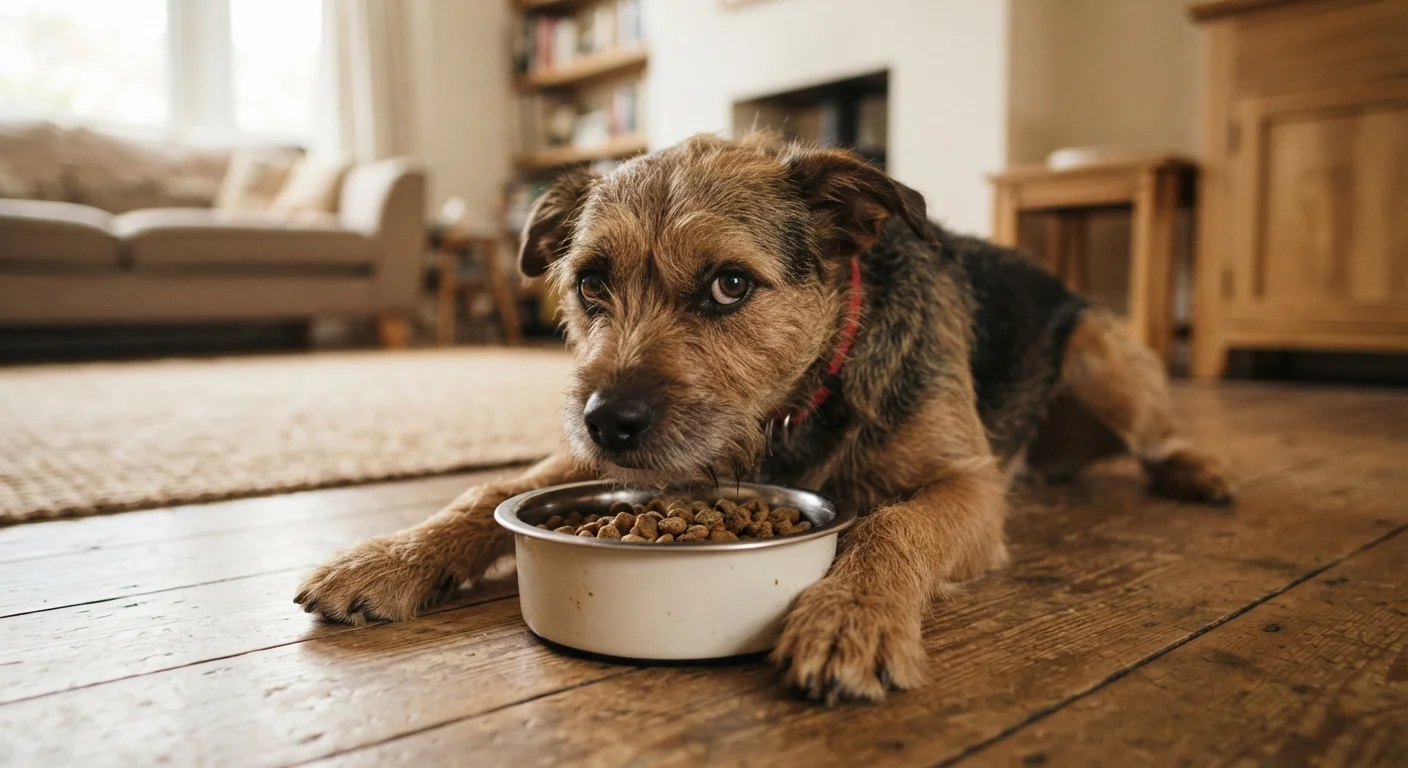
Resource guarding is when a dog uses threatening behavior - such as stiffening, growling, snapping, or biting - to keep people or other animals away from something it values. That 'something' can be food, toys, a resting spot, or even a person. It is a normal canine instinct rooted in survival, not a sign that your dog is mean or broken.
Behaviorally, resource guarding is classified as agonistic behavior - a category of competitive or conflict-driven responses - and is distinct from aggression driven by fear or pain, though the two can overlap.
Why Dogs Guard in the First Place
Before dogs had reliable daily meals, resources were scarce and competition was real. A dog that held onto food, a safe resting spot, or a prized object had a survival advantage. That evolutionary wiring hasn't disappeared just because your dog eats from a ceramic bowl at 7 a.m. every morning.
Resource guarding exists on a spectrum. At the mild end, a dog may simply freeze, eat faster, or move away with an object. Further along the spectrum, you'll see stiffening, a hard stare, a low growl, or a raised lip. At the severe end, the dog snaps or bites. Most pet dogs land somewhere in the mild-to-moderate range, but any point on that spectrum deserves attention - especially in homes with children or other pets.
It's also worth understanding what dogs guard. Food and high-value chews are the most common triggers, but dogs also guard toys, sleeping spots, water bowls, and sometimes people they are strongly bonded to. Recognizing what your dog values most helps you anticipate and manage situations before they escalate.
Children Need Extra Protection
Young children are at higher risk during guarding incidents because they often don't recognize warning signs and may unintentionally approach a dog's resource in a way that triggers a snap. Until guarding behavior is well under control, children should never be left unsupervised around a dog known to guard - and feeding or treat time should happen in a space the child cannot access.
Reading the Warning Signs Early
One of the most common mistakes families make is missing - or misreading - a dog's early guarding signals. By the time a dog growls, it has likely already communicated discomfort through subtler body language: eating faster when you approach, turning its body to block an item, or giving a hard, unblinking stare.
Learning to read these signals is genuinely useful. Our article on reading canine body language walks through what posture, tail position, and facial expressions actually mean - knowledge that pays dividends well beyond managing guarding.
Critically, a growl is communication, not defiance. Many well-meaning owners try to suppress growling through punishment or confrontation. This usually backfires: the dog learns that growling brings punishment, so it skips the warning and goes straight to snapping. The growl is your dog's way of saying 'I'm uncomfortable - please back off.' Respecting that signal, while working to change the underlying anxiety, is far safer than silencing it.
Never Punish the Growl
If your dog growls while guarding, resist the urge to scold or intimidate. Growling is an early warning signal that gives you time to de-escalate safely. Punishing it doesn't reduce the guarding - it just removes your advance notice, making future incidents harder to predict and more dangerous.
The Role of Anxiety and Past Experience
Resource guarding rarely exists in isolation. Dogs that have experienced food insecurity, competed heavily with littermates, lived in chaotic environments, or had items repeatedly taken from them without positive outcomes are often more prone to guarding. In these cases, the behavior is rooted in a genuine expectation that resources will be taken.
This connects closely to broader anxiety patterns in dogs. If your dog shows other stress-related behaviors alongside guarding - destructive chewing, excessive barking, or clinginess - it may be helpful to read more about anxiety in dogs and cats to get a fuller picture of what your pet may be experiencing.
Understanding history doesn't mean excusing the behavior - it means addressing the right problem. A dog that guards because it genuinely believes it will lose its food needs a different emotional experience, not a correction.
~20%
Dogs showing food-related guarding behavior
Research published in Applied Animal Behaviour Science has found that food guarding is among the most frequently reported forms of aggression by dog owners, with estimates varying by study methodology and population.
77%
Dog bites involving a familiar dog
According to the American Veterinary Medical Association, the majority of dog bites occur with dogs known to the victim, underlining why managing guarding in family pets is a household safety priority.
Top 3
Reason owners surrender dogs to shelters
Aggression - including resource guarding - is consistently cited among the top reasons dogs are relinquished to shelters, according to shelter intake surveys, making early intervention especially important.
Practical Management and Training Approaches
For most households, management and training work together. Management means arranging the environment so guarding incidents are less likely to happen - feeding dogs separately, giving high-value chews in a crate or gated room, and teaching children never to approach a dog while it's eating. These are not permanent solutions, but they prevent rehearsal of the behavior while training takes place.
The core training approach recommended by veterinary behaviorists is desensitization and counter-conditioning. In simple terms, this means gradually teaching the dog that a person approaching its valued resource predicts something even better - not a loss. A common starting exercise: approach your dog while it eats, drop a high-value treat near the bowl without reaching in, then walk away. Over time, the dog begins to associate your approach with good things rather than threat.
This is distinct from 'dominance'-based advice that involves taking food away to 'show the dog who's boss.' That approach is not supported by current behavioral science and can accelerate guarding rather than reduce it. For more on why some common training beliefs are counterproductive, see our piece on dog training myths families still believe.
Progress takes consistency and patience. Small, frequent practice sessions - a minute or two several times a day - tend to outperform long, infrequent ones. Celebrate incremental wins rather than expecting overnight change.
This article is for general educational purposes only and is not a substitute for professional veterinary or behavioral guidance. If your dog has bitten someone or if guarding is escalating, consult a certified professional dog trainer or veterinary behaviorist before attempting behavior modification at home.