

Travel & Trips

Before You Back Out of the Driveway: A Family Road Trip Readiness Checklist

Share
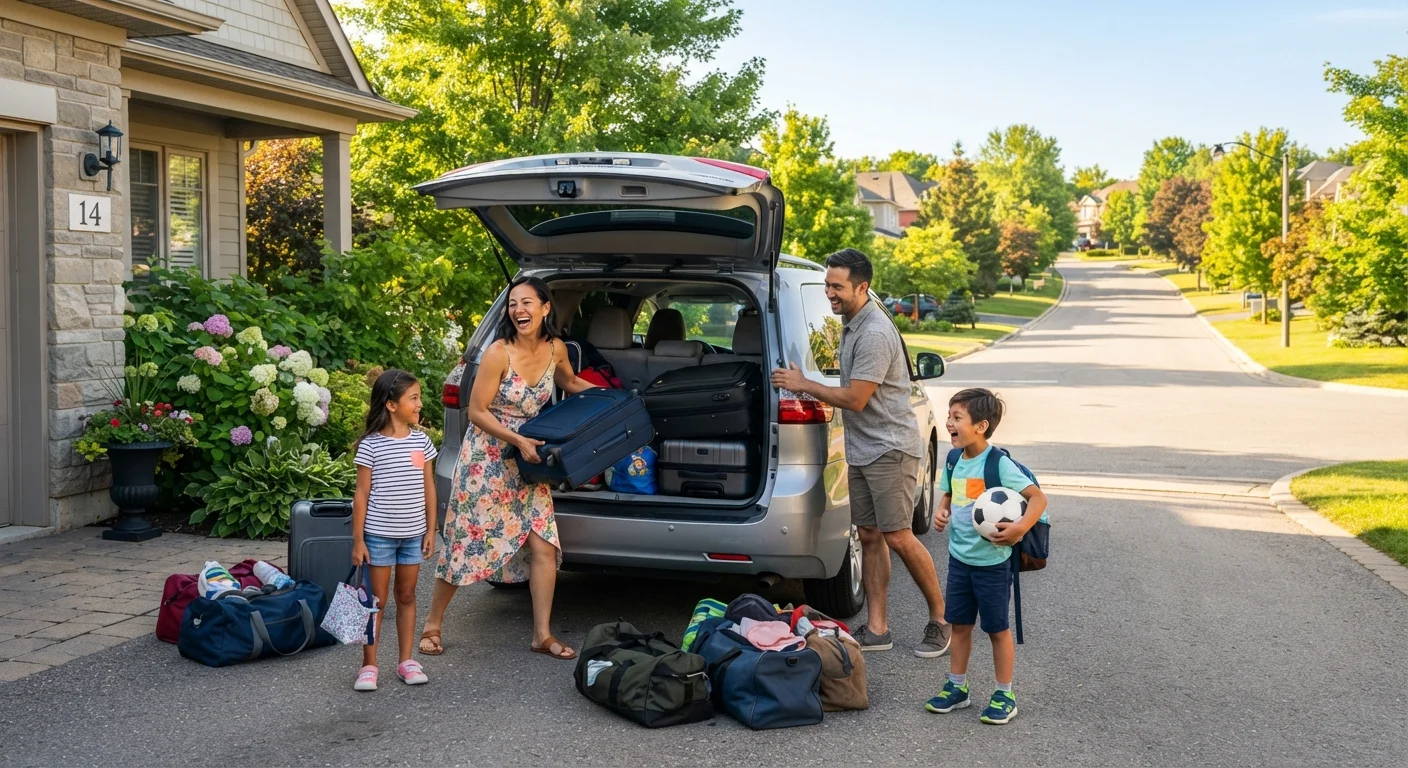
A family loading bags into a minivan in a driveway, preparing for a road trip on a sunny morning

Key Takeaways

A pre-departure vehicle check can help prevent breakdowns and costly roadside delays.
Organizing documents, medications, and emergency contacts before leaving saves stress mid-trip.
Smart snack and comfort prep reduces stops and keeps kids calmer on long drives.
A quick home-security walkthrough protects your house while you're away.
Sharing your route and schedule with a trusted contact adds an important safety layer.
45–90 min

Summary

28 items · 45–90 minutes

Why This Checklist Matters Before Mile One

The excitement of a family road trip can make it tempting to throw bags in the trunk and hit the gas. But the hour or two you invest in a proper pre-departure check can be the difference between a smooth adventure and an avoidable breakdown on a remote highway. Think of this checklist as your family's launchpad — a systematic sweep of vehicle, safety, logistics, and comfort so every seat is occupied by a smiling face, not a stressed one.

For broader trip planning — routes, budgets, rest-stop strategy — see our complete family road trip planning guide. This checklist picks up where the planning ends: the morning you leave.

Vehicle Checks

Check tire pressure on all four tires — and the spare — using a gauge, and inflate to the level specified in your owner's manual. Must
Inspect tires visually for uneven wear, cracks, or embedded objects that could cause a blowout. Must
Verify engine oil level and top off if needed; check the oil's condition on the dipstick. Must
Check coolant, brake fluid, power steering fluid, and windshield washer fluid levels. Must
Test all exterior lights — headlights, brake lights, turn signals, and hazard flashers. Must
Confirm windshield wipers clear effectively and replace them if streaking is visible. Should
Inspect brakes for any squealing, grinding, or sponginess; if in doubt, have a qualified mechanic assess them before you leave. Must
Verify the spare tire is properly inflated and that your jack and lug wrench are accessible in the vehicle. Must

Safety & Emergency Gear

Pack a roadside emergency kit including jumper cables, reflective triangles or flares, a flashlight, and basic tools. Must
Ensure your first-aid kit is fully stocked with bandages, antiseptic wipes, pain relievers, and any family-specific supplies. Must
Confirm your roadside assistance membership or coverage is active and save the contact number in your phone. Should
Share your complete route, planned stops, and estimated arrival times with a trusted contact who is staying home. Must
Download offline maps for your route in case cell service becomes unreliable in remote areas. Should

Documents & Financial Prep

Locate and pack your vehicle registration, proof of insurance, and every driver's valid license. Must
Carry a written list of emergency contacts — including your insurance provider and a local contact at your destination. Must
Notify your bank or credit card provider of your travel dates and destinations to prevent holds on your cards. Should
Set a daily spending budget and have a mix of payment options available in case one is unavailable at certain stops. Should

Health, Medications & Comfort

Pack all prescription medications in their original labeled containers with enough supply for the full trip plus a buffer. Must
Bring motion sickness remedies if any family members are prone — consult your healthcare provider about options before the trip. Should
Prepare a snack bag with healthy, non-messy options to reduce pit-stop frequency and impulse purchases. Should
Pack reusable water bottles for every traveler and fill them before departure. Must
Organize entertainment and comfort items for children — books, headphones, travel games — in a dedicated easy-access bag. Nice to have

Home Security Before You Leave

Lock all doors and windows, and confirm the garage door is fully closed before pulling out. Must
Put interior lights on timers or smart schedules to give the appearance of occupancy. Should
Pause mail and package deliveries, or arrange for a neighbor to collect them. Should
Unplug non-essential appliances and set your thermostat to an energy-saving travel setting. Nice to have
Confirm that a trusted neighbor or contact has a key and your emergency contact number in case of a home issue. Should

Tools You'll Want On Hand

You don't need a mechanic's garage to run through these checks — just a few basic supplies and about an hour of focused attention. Gather the items below before you start working through the checklist.

Required

Tire pressure gauge

Measure and verify tire inflation to the level recommended in your owner's manual.

Required

Vehicle owner's manual

Look up correct fluid levels, tire pressure specs, and fuse locations specific to your vehicle.

Required

Flashlight or work light

Inspect under the hood, check lights, and look under the vehicle safely.

Required

First-aid kit

Handle minor injuries during the drive without needing to find a pharmacy mid-trip.

Required

Portable phone charger or car charger

Keep phones charged for navigation, emergencies, and communication throughout the trip.

Optional

Paper map or printed directions

Serve as a backup navigation method if cell signal is lost in remote areas.

On the Road: What to Keep Within Reach

Even with flawless preparation, long drives produce surprises. Knowing where your essentials are — rather than digging through a packed trunk at mile 200 — keeps everyone calmer and safer. Designate one easy-access bag for items needed en route: snacks, a first-aid kit, entertainment, and any medications.

Don't Rely Solely on Digital Navigation

Cell service can disappear quickly in rural and mountainous areas. Download offline maps to your device before leaving home, and consider keeping a printed or paper map for your primary route. Running out of navigation in an unfamiliar area with a car full of kids is a stressful and avoidable situation.

If you have a teen who may share driving duties on a long trip, make sure ground rules and expectations are already established. Our article on teen drivers and family road safety is worth a read before departure. And for a deeper dive into vehicle safety checks specifically, this safety check guide covers several items most families overlook.

When in Doubt, See a Mechanic First

If any vehicle check reveals something you're uncertain about — an unusual noise, fluid that looks discolored, brakes that feel different than usual — have a qualified mechanic inspect the vehicle before your trip, not after. Driving hundreds of miles on a potential mechanical issue can turn a manageable problem into a dangerous and expensive one. General information about routine car maintenance can help you recognize warning signs, but a professional diagnosis is always the safer path.

Travel & Trips Editorial Team is the collective byline for our editorial team and contributor network. Articles published under this byline or an editorial pen name are researched, written, and reviewed according to our editorial standards for clarity, consistency, and independence before publication.

View all articles by Travel & Trips Editorial Team →
Disclaimer: The content provided on our blog site traverses numerous categories, offering readers valuable and practical information. Readers can use the editorial team’s research and data to gain more insights into their topics of interest. However, they are requested not to treat the articles as conclusive. The website team cannot be held responsible for differences in data or inaccuracies found across other platforms. Please also note that the site might also miss out on various schemes and offers available that the readers may find more beneficial than the ones we cover.