

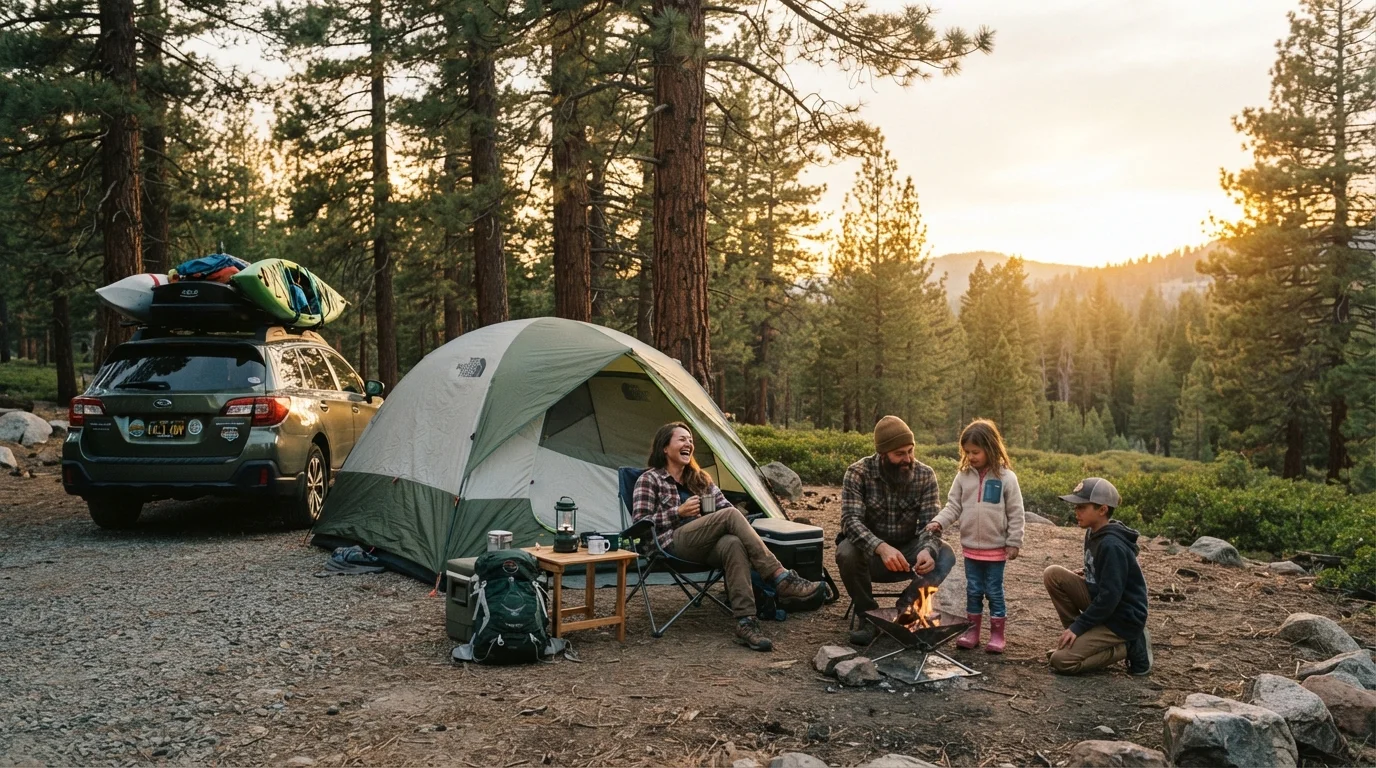
Key Takeaways
Option A
Camping
The immersive, budget-stretching outdoor option.
Best for: Families who enjoy outdoor activities, travel frequently, and want to reduce nightly lodging costs significantly.
Option B
Motels
The convenient, predictable road trip staple.
Best for: Families prioritizing comfort, reliability, and minimal setup - especially with young children or tight schedules.
If you're road tripping on the tightest possible budget
Camping
Campsite fees at public lands can be a fraction of motel rates, and cooking your own meals adds further savings. Over a multi-week trip, the difference can be substantial.
If you're travelling with infants or toddlers
Motels
Climate control, private bathrooms for nighttime needs, and a predictable sleep environment make motels far less stressful when managing very young children on the road.
If your kids are school-age and outdoors-curious
Camping
School-age children adapt well to camping routines and often find it the most memorable part of a trip. National and state park campgrounds pair well with daytime adventure activities.
If your route passes through cities or areas with limited campgrounds
Motels
Urban and suburban stretches of a road trip rarely have convenient camping options. Motels keep you moving without significant detours.
If you want the best of both worlds on a long trip
Camping
Use camping for scenic, nature-heavy legs of the journey and motels for city stops or nights when weather turns. A hybrid plan maximises savings and comfort where each matters most.
The Real Cost Difference
Cost is usually the first question families ask - and camping does win on nightly rate. A site at a state or national park campground typically runs between $15 and $35 per night in the U.S., while the average motel rate has hovered well above $100 per night in many regions. Over a 10-night road trip, that gap alone could represent several hundred dollars in savings.
But the honest picture is more nuanced. If your family doesn't already own camping gear, the startup costs - tent, sleeping bags rated for the season, a camp stove, and basic cookware - can run $300 to $600 or more. That investment pays off over multiple trips, but it erodes first-trip savings considerably. Motels, by contrast, require no equipment and include utilities, bedding, and often breakfast.
Meal costs are another lever. Camping naturally encourages cooking your own food, which is consistently cheaper than dining out. Motels don't prevent you from packing a cooler, but without a full kitchen, you may eat out more often. For a deeper look at lodging cost comparisons, see how vacation rentals stack up against hotels for another angle on the numbers.
| Criterion | Camping | Motels |
|---|---|---|
| Average nightly cost | $15-$35 per site | $100-$160+ per room |
| Upfront investment | $300-$600+ in gear | None required |
| Bathroom access | Shared or pit toilets | Private in-room bathroom |
| Climate control | None (weather-dependent) | Air conditioning and heat |
| Meal preparation | Camp stove or fire cooking | Limited; often relies on dining out |
| Booking flexibility | Reserve weeks-months ahead | Often bookable same-day |
| Setup/breakdown effort | 30-60 minutes each day | Minimal; check in and go |
| Experience quality | Immersive, memorable outdoors | Comfortable, predictable rest |
Comfort, Convenience, and Logistics
Motels are reliably comfortable in ways camping simply isn't. Air conditioning matters when you're crossing the Southwest in July. Private bathrooms matter at 2 a.m. with a five-year-old. A firm bed and a hot shower can genuinely affect how everyone feels the next driving day. Motels also fit neatly into flexible itineraries - you can often book same-day and pull off the highway without significant advance planning.
Camping demands more from everyone. Setting up and breaking down a campsite takes time and energy after long driving days. Weather is a real variable - a rainy night in a tent is uncomfortable, and a thunderstorm with young children can be genuinely stressful. Campground reservations at popular parks now often require booking weeks or months in advance, especially during summer.
That said, camping offers something motels can't: immersion in the landscape. Waking up in a forest, cooking breakfast over a fire, and stargazing at night are experiences families consistently describe as trip highlights. For a balanced assessment of what camping actually involves, read our honest look at family camping pros and cons before committing to a fully tented itinerary.
Campground Reservations Are More Competitive Than Ever
Popular national and state park campgrounds - especially in areas like Yellowstone, the Smokies, and Rocky Mountain National Park - can fill months in advance during peak summer season. If camping is central to your plan, check reservation windows on Recreation.gov and your state's park system early. Walk-up sites exist but are not reliable for families with firm schedules.
Which Option Fits Your Family?
The right answer depends on the ages of your kids, your route, the season, and - honestly - your own tolerance for discomfort. Families with children under three generally find motels worth every dollar. Families with kids aged seven and up who have camped before often report that the camping nights are the ones children remember longest.
A hybrid strategy works well for many families: camp on nights in scenic, rural areas where campgrounds are plentiful and the experience adds real value, and book motels for city stopovers or weather-uncertain nights. This approach keeps costs manageable without sacrificing comfort when it matters most.
Whatever you decide, planning ahead is what makes either option succeed. Our guide to family travel on a tight budget covers broader strategies for keeping an entire road trip affordable - lodging is just one piece of the puzzle. And if you're still weighing whether a road trip is the right move at all, comparing road trips to flying with kids lays out the full cost picture.
$15-$35
Typical campsite fee per night
U.S. national and state park campground fees vary by facility type; electric hookup sites cost more, while primitive sites often fall at the lower end.
57 million
American households that camp annually
According to the Outdoor Foundation's Outdoor Participation Trends report, camping is one of the most widely practiced outdoor recreation activities in the U.S.
3-5 trips
Gear payback period for most families
Financial planning estimates suggest that basic camping gear purchased for around $400-$600 typically pays for itself compared to motel stays within three to five camping trips.