

Key Takeaways
Why Road Trip Eating Deserves a Real Strategy
Food is one of the sneakiest budget drains on a family road trip. Pull into a highway rest stop for four people three times a day, and you can easily spend $150 or more on meals before you've even reached your destination. The good news? With a little preparation, you can eat well, keep everyone satisfied, and hold on to a surprising amount of money.
This isn't about deprivation - it's about replacing impulse spending with a plan. As part of a broader road trip budget strategy, food is one of the most controllable line items you have. These seven approaches will show you exactly how to pull it off.
Pack a Cooler Like You Mean It
A well-stocked cooler is your most powerful tool against highway food spending. Before departure, fill it with pre-made sandwiches, hard-boiled eggs, cut vegetables, string cheese, yogurt cups, and fruit. Block ice or reusable ice packs keep things cold longer than cubed ice and make less of a watery mess.
Organize the cooler with frequently grabbed items on top - kids' snacks, drinks, easy fruit - so you're not digging through it at every stop. This single habit can eliminate two out of three daily fast food visits without anyone feeling like they're roughing it.
A well-organized cooler can eliminate two out of three daily fast food stops entirely.
Prep Meals at Home Before You Leave
The day before departure is the highest-leverage cooking time of your entire trip. Make a batch of pasta salad, roll up wraps, portion trail mix into bags, and bake a loaf of banana bread. These require zero reheating, hold up well in a cooler or dry bag, and cost a fraction of drive-through equivalents.
Think in terms of modules: proteins (rotisserie chicken, canned tuna, nut butter), carbs (crackers, bread, cooked grains), and produce (baby carrots, grapes, cherry tomatoes). Mix and match across stops without needing a stove or microwave.
The day before you leave is the highest-leverage cooking time of your entire trip.
Shop at Grocery Stores Along the Route
Grocery stores in small towns along your route are almost always cheaper than highway convenience stores, and far cheaper than sit-down restaurants. A brief stop at a regional supermarket lets you restock produce, grab deli items, and pick up regional foods you can't find at home - a genuine road trip experience in itself.
Plan one grocery stop every day or two using your maps app to identify stores near your intended lunch break. This keeps the cooler refreshed without requiring a major detour. For a deeper look at route-smart spending habits, see road trip planning that keeps fuel and food costs in check.
Regional grocery stores offer real food at real prices - and often a taste of local flavor.
Stop at Roadside Farmers Markets
Farmers markets along rural and small-town routes are food gold. Fresh peaches in Georgia, tamales in New Mexico, kettle corn in the Midwest - these stops cost little, feed a family well, and turn into genuine memories. Most markets run on weekends, so it's worth checking schedules when you map your road trip route.
Beyond produce, you'll often find local honey, preserves, baked goods, and hot food vendors. Budget $15-$25 for a family market stop and you'll likely cover lunch and snacks for the day at a fraction of what a fast food run would cost.
A $20 farmers market stop can cover lunch and snacks while delivering a genuine local experience.
Make Snacking a System, Not an Impulse
Unplanned hunger is what drives families into convenience stores for $4 bags of chips and $3 sodas. Counter this by setting up a dedicated snack bin in the back seat - accessible without stopping - stocked with non-perishables like nuts, granola bars, dried fruit, popcorn, and crackers.
Assign a family snack budget for the trip and let kids help choose what goes in the bin before you leave. They're far less likely to demand gas station candy when they had a hand in picking the snacks. Keeping kids comfortable on long drives covers how snack timing connects to managing energy and mood across big driving days.
A stocked snack bin in the back seat is the most reliable defense against impulse convenience store spending.
Limit Restaurant Meals to Once a Day
Eating out isn't the enemy - eating out three times a day is. Set a family norm of one sit-down or counter-service meal per day, ideally lunch or dinner at a locally owned spot in a town you're passing through. This keeps the experience special, supports small businesses, and controls costs without eliminating the pleasure of eating out.
Breakfast and the other meal can come from the cooler or a grocery run. Over a five-day trip, switching from three restaurant meals to one can save a family of four several hundred dollars - money that can go toward a state park entry fee or an experience you'd otherwise skip.
One restaurant meal per day keeps dining special while potentially saving hundreds across a multi-day trip.
Use Picnic Areas and Rest Stops as Dining Rooms
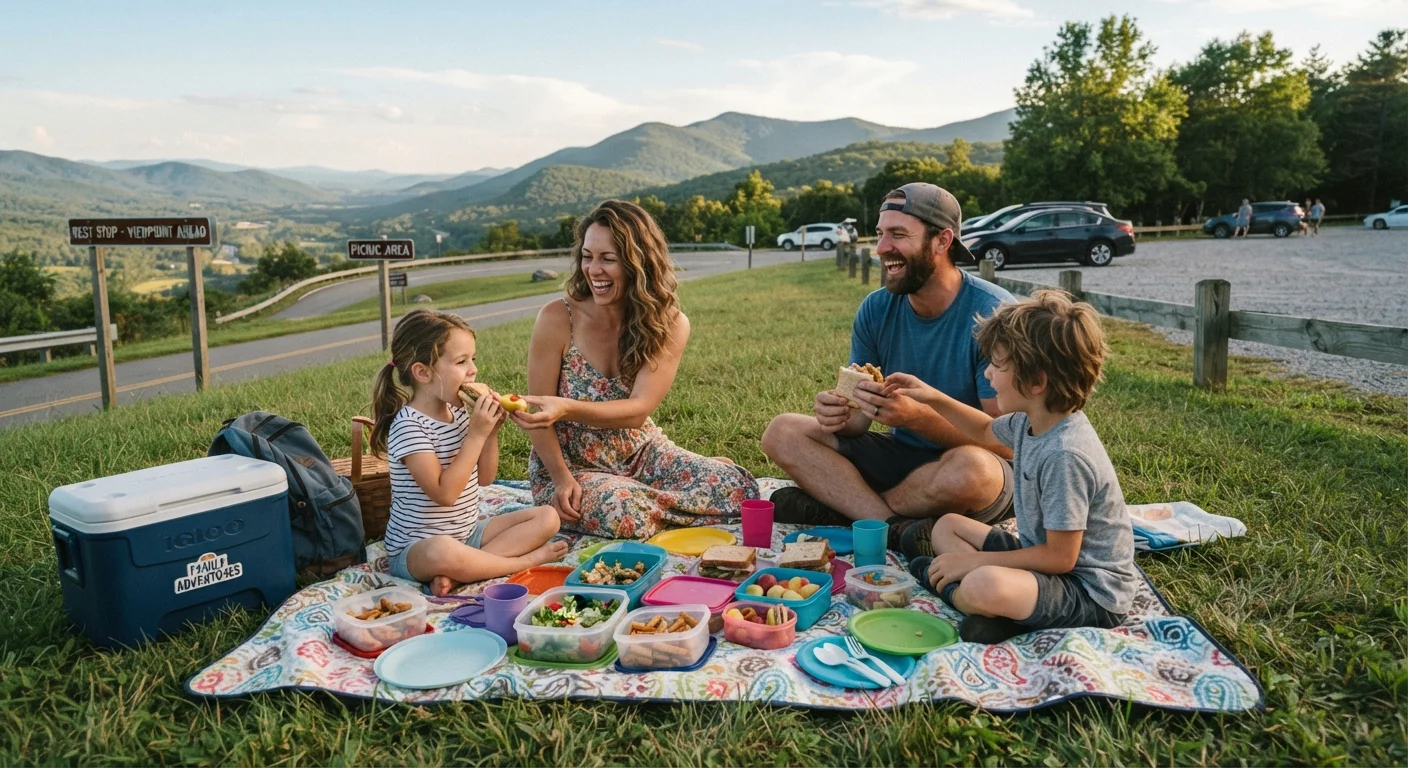
America's highway system is lined with free picnic areas, state welcome centers, and rest stops with tables, shade, and occasionally grills. These are genuinely underused by families who default to drive-throughs out of habit rather than necessity. A 20-minute picnic break is often faster than waiting in a fast food line, and it gives everyone a chance to stretch.
Pack a small blanket, a few reusable plates, and basic cutlery at the top of your luggage. The infrastructure is already there - you just have to use it. For broader strategies on making every travel dollar count, the Budget Family Trips hub is a great next stop.
Free picnic areas along America's highways are faster, cheaper, and more refreshing than any drive-through.
Making It Work for Your Family
Combining even three or four of these strategies can shift your family's road trip food spend from a stressor to a solved problem. The families who eat best on the road aren't the ones with the biggest budgets - they're the ones who thought ahead. For more ways to manage meal costs beyond the car, see our guide to keeping food costs reasonable on a family vacation.
Start With a Written Meal Plan
Before packing a single item, sketch out what your family will eat for each meal and snack across the trip. Even a rough plan - 'Day 2 lunch: wraps from the cooler, Day 3 dinner: local diner' - prevents the decision fatigue that leads to expensive impulse stops. A meal plan also tells you exactly what to buy and pack, cutting waste and overspending at the grocery store before you leave.
And if you want the full picture - from route planning to rest stop timing - the complete family road trip planning guide covers everything in one place.
This article is for general informational purposes only. Prices, availability, and conditions at specific stops or markets may vary. Always verify local options before relying on them during travel.