

Key Takeaways
Why Airport Packing Mistakes Hit Family Budgets Hardest
For families traveling with multiple kids, the cost of a single packing mistake multiplies fast. An overweight suitcase here, an oversized carry-on there - and suddenly you're shelling out hundreds of dollars in fees before you've even reached your gate. These aren't freak occurrences; they're predictable, avoidable errors that catch families off guard every day.
The good news: every mistake on this list can be prevented with a little preparation at home. If you've ever wondered where vacation budgets quietly disappear, airport fees are a major culprit - right alongside the spending traps covered in this look at where families commonly overspend on vacation.
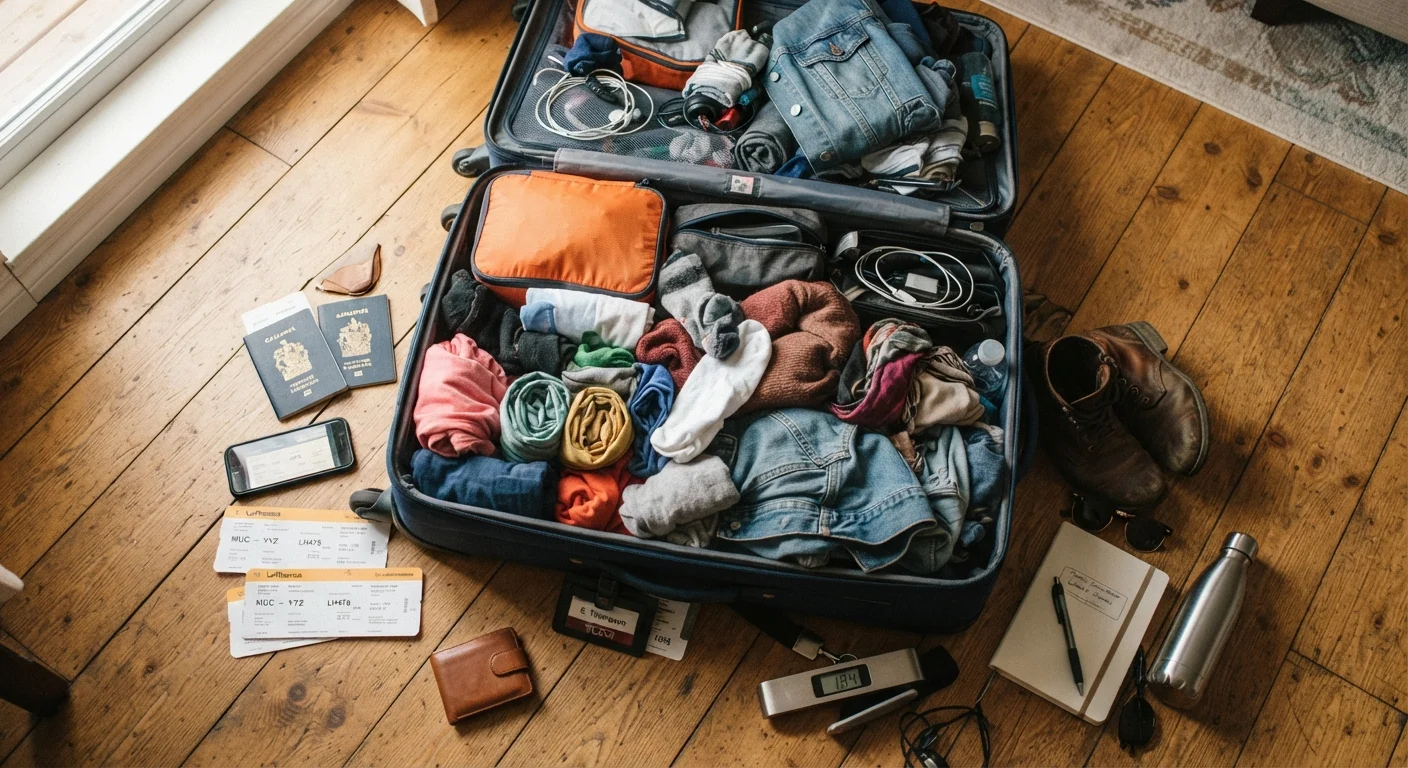
Overpacking and exceeding the airline's checked bag weight limit.
Why it happens: Families pack 'just in case' items and don't weigh bags until they're at the airport check-in counter.
Bringing a carry-on that exceeds the airline's size restrictions.
Why it happens: Many travelers assume all carry-on bags are universally accepted, not realizing size limits vary meaningfully between carriers, especially budget airlines.
Packing liquids over 3.4 oz (100ml) in a carry-on bag.
Why it happens: Families routinely forget that full-size sunscreen, shampoo, and children's medicine must follow TSA's 3-1-1 liquids rule for carry-ons.
Forgetting or misplacing essential travel documents for children.
Why it happens: Parents focus on packing clothing and gear and leave document preparation to the last minute - passports expire unnoticed, or consent letters for unaccompanied minors are skipped.
Packing prohibited or restricted items that get flagged at security.
Why it happens: TSA's prohibited items list is longer than most people expect, and families don't always think to check it for everyday items like certain sporting goods, tools, or food items.
Assuming a 'free personal item' is the same across all airlines.
Why it happens: Travelers conflate airline policies, especially after booking through third-party platforms that don't always highlight carrier-specific baggage rules clearly.
Build a Pre-Travel Checklist That Protects Your Budget
The families who consistently avoid airport fees aren't lucky - they're prepared. A simple pre-travel checklist, reviewed 48 hours before departure, catches the vast majority of costly oversights before they become problems at the ticket counter.
$7.8B
Annual U.S. airline baggage fee revenue
U.S. airlines collected approximately $7.8 billion in baggage fees in a recent pre-pandemic year, according to U.S. Bureau of Transportation Statistics data, underscoring how common these charges are.
1 in 3
Travelers hit by unexpected airport fees
Consumer travel surveys have consistently found that a significant share of travelers encounter unanticipated fees at the airport, most commonly related to baggage and carry-on sizing.
Start by pulling up your airline's current baggage policy directly on their website - policies change, and what applied on your last trip may not apply today. Weigh every bag at home using an inexpensive luggage scale. Compare each child's backpack or personal item against the airline's published dimensions; a bag that's one inch too wide can be flagged at the gate.
Don't forget to budget for baggage fees as part of your overall trip cost from day one. Irregular travel expenses like these are exactly the kind of line item that most family budgets forget to include until the bill arrives. See our broader guide to budget family trip planning for more ways to keep the full cost of travel in view.
This article is for general informational purposes only. Airline policies, fees, and regulations vary by carrier and change frequently - always verify current rules directly with your airline and relevant government authorities before traveling.