

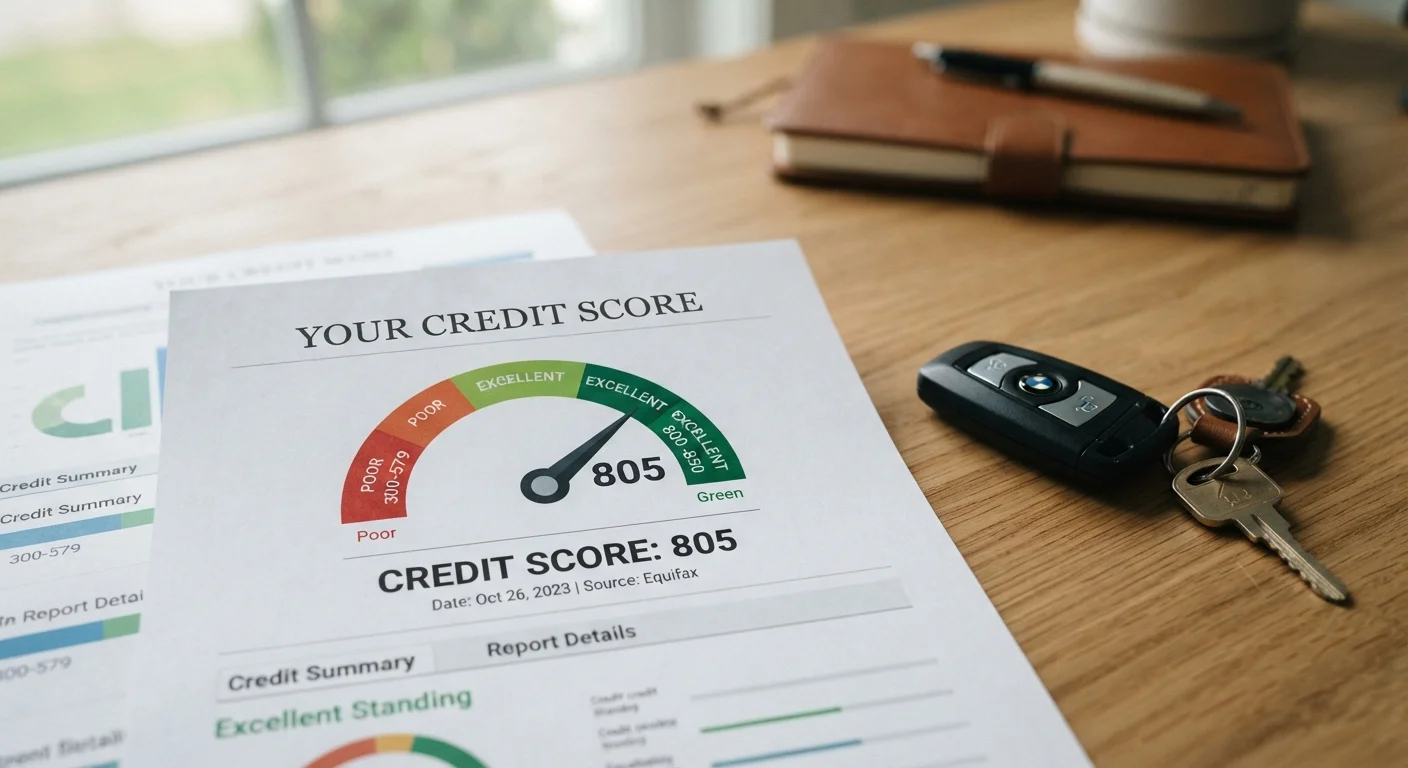
How Lenders Use Credit Score Tiers
When you apply for an auto loan, lenders don't just look at whether you qualify - they use your credit score to determine what rate you qualify for. Most lenders group applicants into tiers, sometimes called risk bands, and assign interest rate ranges to each tier. The lower your score, the higher the rate lenders typically charge to offset their perceived risk.
Credit scores used in auto lending are generally based on the FICO scoring model, which ranges from 300 to 850. Different lenders may use slightly different versions or cutoffs, but the general pattern holds across the industry. Understanding which tier you're likely to fall into before you shop gives you a realistic picture of your borrowing costs - and time to improve your position if needed.
For a deeper look at how loan terms interact with your rate, see our guide to auto loan APR and terms.
Credit Score Ranges and What They Generally Mean
The table below reflects broadly representative tier labels used across the auto lending industry. Actual rate ranges vary by lender, loan type, vehicle age, down payment, and market conditions. Use this as a general reference, not a guarantee of what any specific lender will offer.
| Score Range | Common Tier Label | General Rate Outlook |
|---|---|---|
| 720 and above | Super Prime / Excellent | Typically the most competitive rates available |
| 660-719 | Prime | Generally favorable rates; close to top-tier offers |
| 600-659 | Near Prime | Moderate rates; noticeably higher than prime |
| 540-599 | Subprime | Higher rates; total loan cost increases significantly |
| Below 540 | Deep Subprime | Highest rates; some lenders may decline or require large down payments |
Credit Tier
A risk category assigned by lenders based on a borrower's credit score. Each tier corresponds to a range of interest rates the lender is willing to offer.
APR
Annual Percentage Rate - the yearly cost of borrowing expressed as a percentage, including interest and certain fees. This is the most useful number to compare across loan offers.
Subprime Loan
A loan extended to a borrower with a lower credit score, typically carrying a higher interest rate to compensate for the lender's increased risk.
Hard Inquiry
A credit check initiated by a lender when you apply for credit. Hard inquiries appear on your credit report and can temporarily lower your score by a few points.
Credit Utilization
The percentage of your available revolving credit (such as credit cards) that you're currently using. Lower utilization is generally associated with higher credit scores.
Debt-to-Income Ratio
A measure of how much of your gross monthly income goes toward debt payments. Lenders use it alongside your credit score to assess your ability to repay a new loan.
Even a modest score improvement - moving from near prime to prime, for example - can meaningfully reduce the total interest paid over a 48- or 60-month loan.
Other Factors That Affect Your Rate
Your credit score is the biggest single factor, but lenders also weigh several others:
- Loan term: Longer terms often carry slightly higher rates, and you'll pay more interest overall even if your monthly payment is lower.
- Vehicle age: Used car loans typically carry higher rates than new car loans because older vehicles are considered riskier collateral.
- Down payment: A larger down payment lowers the lender's exposure and may help you secure a better rate.
- Debt-to-income ratio: Lenders look at how much of your monthly income is already committed to existing debt obligations.
- Where you borrow: Banks, credit unions, and dealership financing arms each operate with different rate structures. Comparing loan sources before you commit can be just as important as comparing rates.
If you're weighing a new versus used vehicle purchase, your loan rate should factor into the total cost comparison - our article on new car vs. used car tradeoffs walks through the full math.
Steps to Strengthen Your Position Before You Apply
If your score isn't where you'd like it to be, there are practical steps that can help over time - though improvements don't happen overnight and results will vary by individual situation.
- Check your credit reports for errors. You're entitled to free reports from the three major bureaus through AnnualCreditReport.com. Dispute inaccuracies, since errors can drag your score down unfairly.
- Pay down revolving balances. Credit utilization - how much of your available credit limit you're using - is one of the most influential score factors. Lowering it can produce relatively quick improvements.
- Avoid opening multiple new accounts before applying. Each hard inquiry can temporarily lower your score, and new accounts shorten your average credit age.
- Get preapproved before visiting a dealer. Preapproval from a bank or credit union lets you know your likely rate in advance and gives you negotiating clarity at the dealership.
This article is for general informational purposes only and does not constitute financial or lending advice. Credit score ranges and rate tiers vary by lender. Consult a qualified financial professional for guidance specific to your situation.