

Key Takeaways
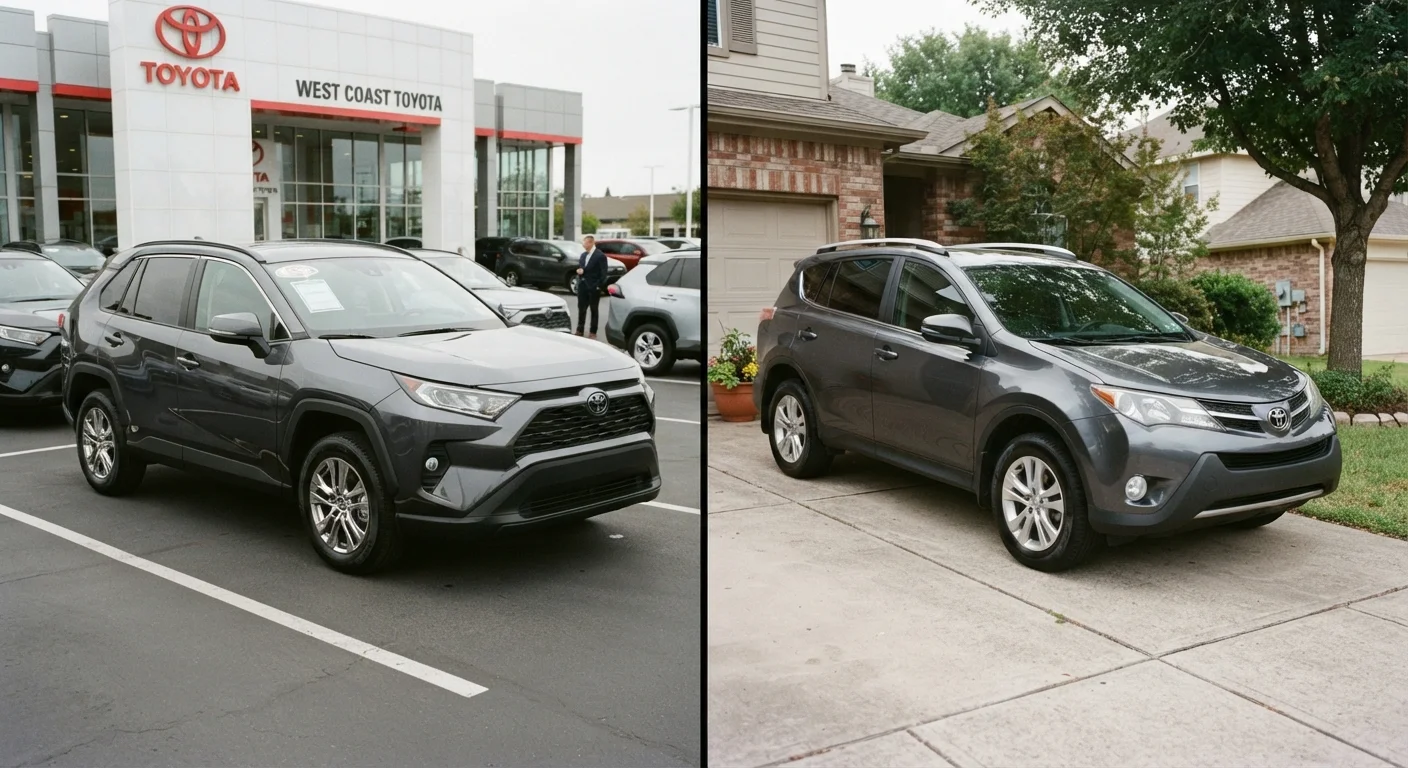
Option A
New Car
The full-warranty, latest-features, higher-cost option.
Best for: Families who want predictable ownership costs, manufacturer warranty coverage, and access to the latest safety technology.
Option B
Used Car
The depreciation-adjusted, lower-entry-cost alternative.
Best for: Budget-conscious buyers who want to minimize monthly payments and let someone else absorb the steepest depreciation.
If your priority is minimizing monthly payments and upfront cost
Used Car
A used vehicle typically has a lower purchase price and has already shed its sharpest depreciation, reducing how much you need to finance.
If you want comprehensive warranty protection and the latest safety features
New Car
New cars come with full manufacturer warranties and modern driver-assistance technology that older used models may lack entirely.
If you plan to keep the vehicle for seven or more years
New Car
Over a long ownership horizon, the warranty coverage and lower early maintenance costs can help close the price gap with a used vehicle.
If you need reliable transportation on a tight budget and can research vehicle history
Used Car
A well-chosen used vehicle with a clean history report can deliver solid value - especially if it falls within a certified pre-owned program.
If your credit score is below the prime tier and financing costs concern you
Used Car
Even at a somewhat higher interest rate, the lower loan principal on a used car often means less total interest paid over the loan term.
Depreciation: The Number Most Buyers Ignore
Depreciation is the largest single cost of owning most vehicles - yet it rarely appears in the monthly-payment conversation at a dealership. A new car typically loses around 15-20% of its value in its first year of ownership, and roughly 50% within the first five years. When you drive a new car off the lot, that value drop begins immediately.
A used car, by contrast, has already absorbed much of that initial loss. The buyer who purchased it new paid the steepest depreciation tax; you benefit from a lower entry price without necessarily taking on proportionally more risk - provided the vehicle has been maintained properly.
That said, depreciation eventually flattens. Older vehicles lose value more slowly, which means a two- to four-year-old used car can represent a particularly efficient point on the depreciation curve: significant value has already been shed, but the vehicle likely has meaningful useful life remaining.
To understand the full scope of what you'll spend beyond the purchase price, see our guide to total car ownership costs, which covers insurance, fuel, maintenance, and registration alongside depreciation.
Financing Rates and What They Do to the Real Price
Automakers frequently offer promotional interest rates on new vehicles - sometimes as low as 0% for qualified buyers - through their captive financing arms. These deals can meaningfully reduce the total cost of a new car over the loan term. Used cars generally carry higher loan rates because lenders treat them as higher-risk collateral.
| Criterion | New Car | Used Car |
|---|---|---|
| Typical purchase price | Higher sticker price | Lower entry price |
| Depreciation exposure | Immediate, steepest in year one | Much of it already absorbed |
| Financing rate (general) | Lower; promotional rates possible | Typically higher |
| Warranty coverage | Full manufacturer warranty | Limited or none (CPO varies) |
| Insurance cost | Generally higher premiums | Generally lower premiums |
| Reliability risk | Lower - no prior use history | Depends on maintenance history |
| Safety technology | Latest standard features | Varies by model year |
The rate difference matters more than many buyers realize. On a $25,000 loan over 60 months, a 3-percentage-point difference in APR adds roughly $2,000 in total interest. That gap can erode some - or all - of the savings from choosing a used vehicle, depending on the specific numbers involved.
Your credit profile is a critical variable here. How your credit score affects your auto loan rate explains how lenders tier rates based on credit bands, which affects whether a new car's promotional financing is even available to you. It's also worth comparing lender types before signing anything - see dealer financing vs. bank or credit union loans for a direct comparison of borrowing sources.
Warranties, Reliability, and the Risk of the Unknown
New cars come with a manufacturer's bumper-to-bumper warranty - typically 3 years or 36,000 miles - plus a longer powertrain warranty, often 5 years or 60,000 miles. These cover repair costs during the ownership period when mechanical problems are statistically least likely anyway, but they provide genuine peace of mind and protection against manufacturing defects.
Used cars present more uncertainty. Without knowing the full service history, you're accepting some risk that deferred maintenance or undisclosed damage could produce repair bills. Two tools help manage this risk: vehicle history reports and certified pre-owned (CPO) programs.
Reading a vehicle history report carefully can surface accident records, odometer discrepancies, and ownership patterns that affect reliability estimates. CPO programs go further by pairing an inspection with an extended warranty - though the coverage terms vary significantly by manufacturer. Understanding what CPO certification actually covers is essential before treating it as equivalent to a new-car warranty.
CPO Is Not the Same as New
Certified pre-owned vehicles carry inspections and extended warranties, but the depth of coverage varies significantly across manufacturers. Some CPO programs cover only the powertrain; others are closer to a comprehensive warranty. Always read the actual warranty document - not just the marketing summary - before factoring CPO status into your cost calculations.
Running the Numbers for Your Specific Situation
There is no universally correct answer to new vs. used. The better question is: which option fits your budget over the full ownership period, given your financing terms, driving habits, and risk tolerance?
A practical starting framework: calculate the total loan cost (principal plus interest) for each option, add estimated insurance premiums (new cars often cost more to insure), factor in likely maintenance costs based on mileage and age, and subtract any warranty value you'd be giving up. That total - not the sticker or monthly payment - is the number that matters.
Families carrying existing debt should also consider how a car payment interacts with their broader financial picture. The Saving & Debt hub and Budget Basics hub offer frameworks for evaluating large purchases within a household budget.
Before you visit a lot, it also pays to understand the terminology you'll encounter. A plain-language guide to car-buying terms can help you parse the paperwork and negotiate from a more informed position.
This article provides general financial and automotive information for educational purposes only. It is not personalized financial or purchasing advice. Consult a qualified financial professional regarding decisions specific to your circumstances.