

Key Takeaways
Pre-Road-Trip Vehicle Inspection
A pre-road-trip vehicle inspection is a systematic review of your car's key systems - tires, brakes, fluids, lights, and more - performed before an extended drive. Its goal is to identify wear, leaks, or potential failures that normal short-distance driving might mask. Think of it as a health check for your car before you put serious miles on it.
Mechanics typically follow a multi-point inspection format, evaluating components against manufacturer specifications rather than general thresholds, since acceptable wear varies significantly by vehicle make, model, and age.
Why Long Trips Stress Your Car Differently
A two-hour highway cruise puts your vehicle under sustained stress that a typical weekly commute never does. Engines run hotter for longer. Tires accumulate heat from continuous high-speed contact with pavement. Brakes that feel fine around town may reveal their true wear only on a mountain descent. Understanding this distinction is what makes a pre-trip inspection genuinely valuable - not just a box to check.
Most mechanical failures on road trips aren't random bad luck. They're problems that already existed but hadn't yet caused noticeable symptoms. An inspection gives a trained set of eyes the chance to find those issues before your family is stranded 300 miles from home.
For more on what to look at beyond the mechanical, see our family road trip readiness checklist that covers everything from tire pressure to snack bags.
What Mechanics Actually Examine - and Why Each Item Matters
A thorough pre-trip inspection typically covers these core systems:
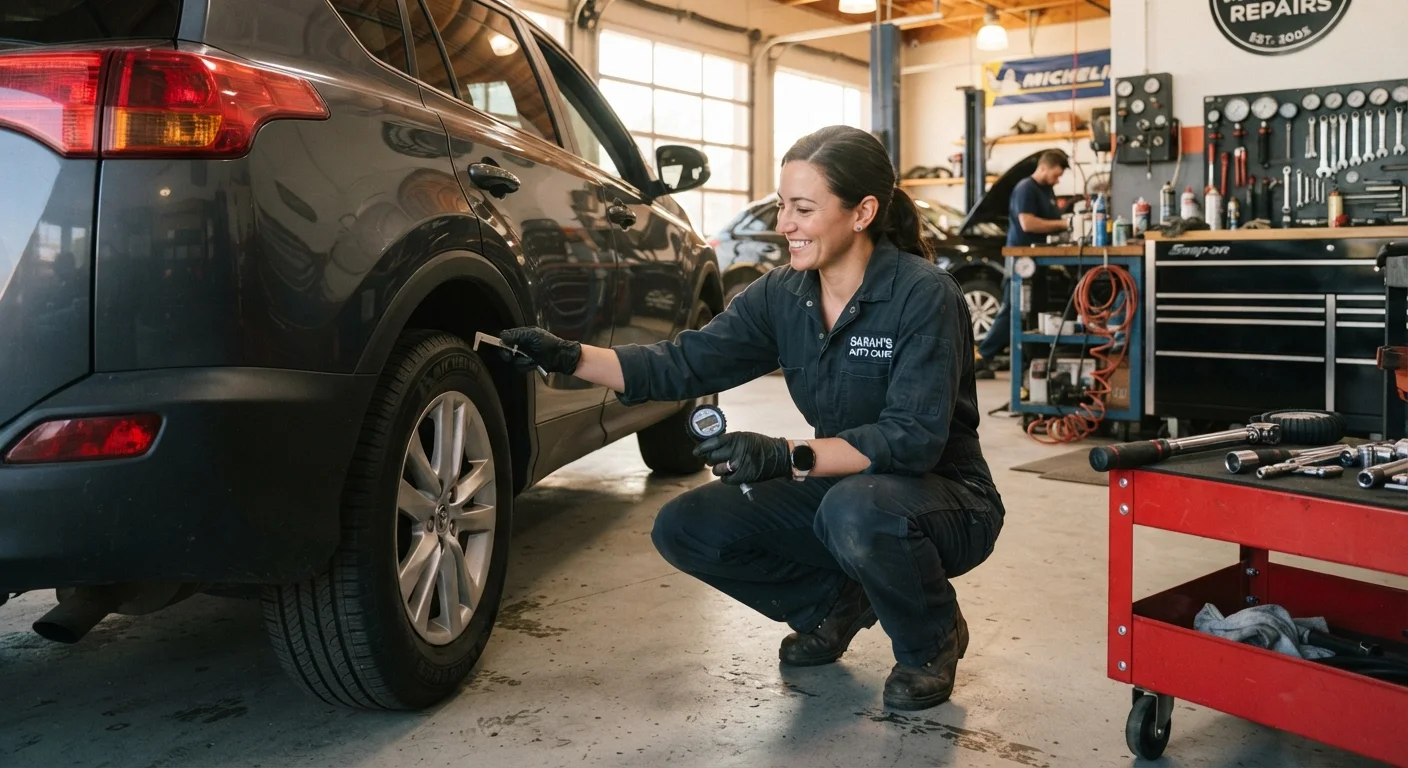
- Tires: Tread depth, inflation pressure, and sidewall condition. Underinflated tires generate excess heat; worn tread loses grip in rain. Mechanics also check for uneven wear, which can signal alignment or suspension problems.
- Brakes: Pad thickness, rotor condition, and brake fluid level. Brake fade - reduced stopping power from heat buildup - is a real risk on long downhill stretches with marginal pads.
- Fluids: Engine oil, coolant, transmission fluid, power steering fluid, and brake fluid. Low coolant is a leading cause of highway overheating. Each fluid serves a specific protective role that becomes more critical under sustained load.
- Belts and hoses: The serpentine belt powers multiple systems; a snap leaves you immediately disabled. Hoses carry coolant and can develop cracks or softness that aren't visible without squeezing them.
- Battery and charging system: A battery nearing the end of its life may start fine in your driveway but fail in extreme heat or after sitting in a parking lot for hours.
- Lights: Headlights, brake lights, turn signals, and hazard lights. A burned-out brake light is both a safety hazard and a traffic stop waiting to happen.
- Air and cabin filters: A clogged engine air filter affects fuel efficiency; a dirty cabin filter degrades air quality for passengers. Our guide on what each filter actually does explains how often they typically need attention.
~1 in 5
Road trips impacted by a vehicle-related issue
AAA has estimated that tens of millions of drivers experience a breakdown or road emergency annually, with tires, batteries, and engines among the leading causes.
35%
Vehicles with at least one underinflated tire
The National Highway Traffic Safety Administration has found that a significant share of passenger vehicles on U.S. roads are operated with at least one tire outside the recommended pressure range.
$500+
Average roadside towing and emergency repair cost
Emergency out-of-network repairs and towing on highways commonly run several hundred dollars or more, according to general industry cost data - far exceeding most pre-trip inspection fees.
What You Can Check at Home vs. What Needs a Professional
Not every inspection item requires a shop visit. Here's a practical breakdown:
DIY-friendly checks: Tire pressure (use a quality gauge), windshield washer fluid, engine oil level via the dipstick, wiper blade condition, and all exterior lights. These take about 15 minutes and cost nothing.
Leave it to a professional: Brake pad thickness (requires wheel removal), belt condition assessment, coolant concentration testing, battery load testing, and suspension inspection. These tasks require either specialized tools or the ability to safely lift the vehicle.
Schedule Your Inspection Early
Book your pre-trip inspection at least one to two weeks before departure. This window gives the shop time to order any needed parts and allows you to get a second opinion on major recommended repairs without feeling rushed.
If your check engine light is on before departure, don't ignore it. It could be minor or it could flag something that worsens under highway load. Our explainer on why your check engine light isn't always an emergency helps you understand what you're dealing with before you panic - or dismiss it.
Tracking your vehicle's service history also helps mechanics work more efficiently. A maintenance log makes it easier to know when items were last serviced, so you're not guessing about oil change intervals or tire rotations.
Getting the Most from Your Mechanic Visit
Knowing what to ask makes a real difference. When you drop your car off, tell the mechanic you're planning an extended highway trip and ask them to pay particular attention to heat-sensitive systems: cooling, tires, and brakes. This context helps prioritize the inspection.
Request a written estimate before any work begins, and ask the mechanic to explain any recommended repairs in plain terms. Understanding why something needs attention - not just that it does - helps you make informed decisions. Our guide on mechanic visit best practices walks through how to navigate this conversation confidently.
For broader vehicle safety knowledge, the safe driving hub and car maintenance hub are solid starting points for families who want to stay ahead of problems - not just react to them.
This article provides general educational information about vehicle maintenance and is not a substitute for advice from a qualified mechanic familiar with your specific vehicle. Always consult a licensed professional for repairs involving safety-critical systems. Verify any safety- or travel-related conditions with official sources before departure.