

Key Takeaways
Why Child Passenger Safety Matters
Motor vehicle crashes are a leading cause of injury-related death among children in the United States, according to the Centers for Disease Control and Prevention (CDC). The encouraging reality is that properly used car seats, booster seats, and seat belts dramatically reduce that risk - child safety seats reduce the risk of death for infants by about 71% and for toddlers by about 54%, based on CDC data.
Yet research consistently shows that a large share of car seats are used incorrectly. Understanding the basics - seat type, installation, and transition timing - gives families a genuine safety advantage that costs nothing extra beyond the seat itself.
If you're also thinking about broader family protection, see our guide on estate planning basics for families with young children for complementary steps parents can take.
71%
Reduction in infant crash fatality risk
According to CDC data, properly used infant car seats reduce the risk of death by approximately 71% compared to seat belt use alone.
54%
Reduction in toddler crash fatality risk
CDC research indicates properly used child safety seats reduce toddler crash death risk by about 54%.
~46%
Car seats used incorrectly
NHTSA inspection data has consistently found that close to half of observed car seats have at least one critical misuse error.
The Four Stages of Child Passenger Protection
Child passenger safety is organized around four sequential stages. Movement between stages should be driven by the child's physical measurements and the seat's specifications - not by age alone.
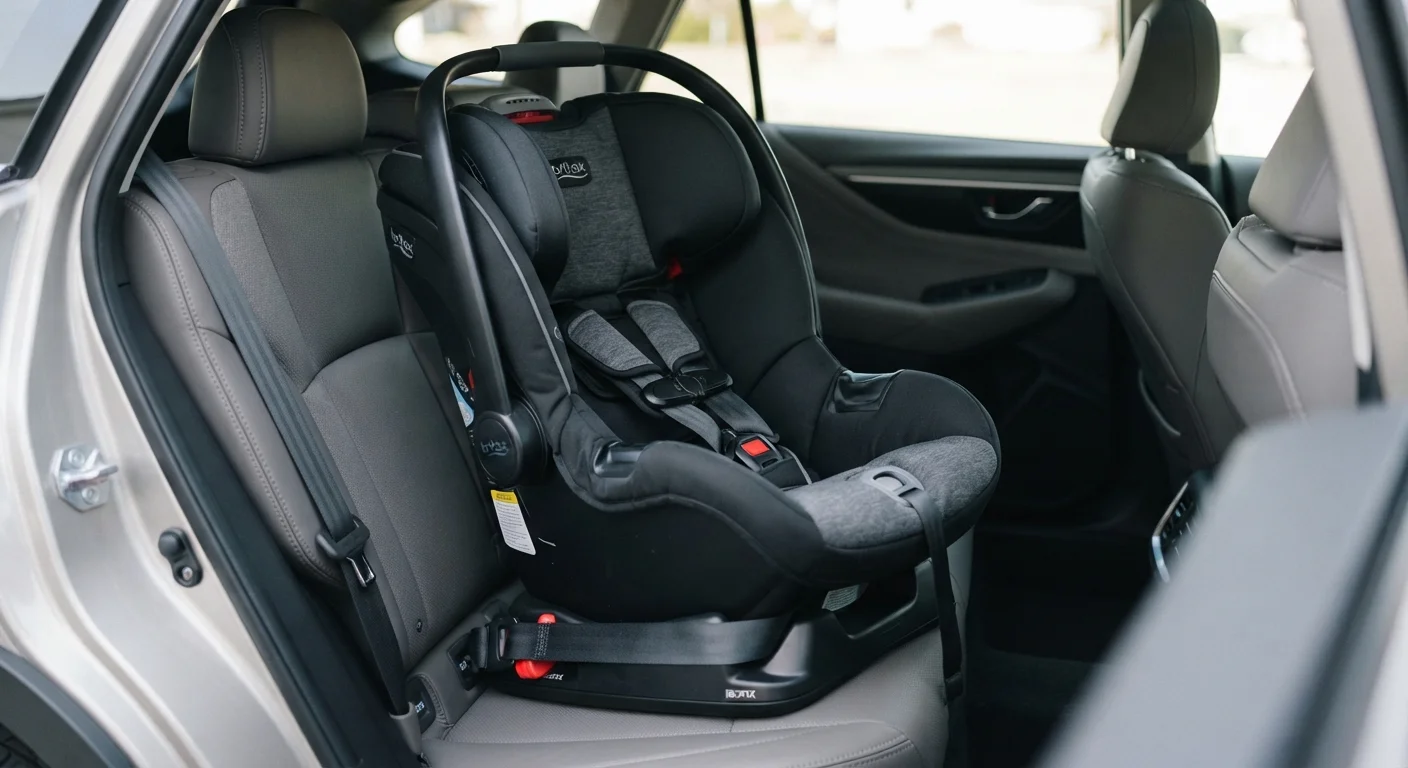
Stage 1: Rear-Facing Car Seat
Infants and young toddlers should ride in a rear-facing seat positioned in the back seat. This orientation distributes crash forces across the entire back, head, and neck - the most effective protection for young children whose spinal structures are still developing. Keep children rear-facing until they reach the maximum height or weight allowed by their specific seat's manufacturer.
Stage 2: Forward-Facing Car Seat with Harness
Once a child has outgrown rear-facing limits, a forward-facing seat with a five-point harness is the next step. The harness should be used up to the seat's full weight and height limits - typically 40 to 65 pounds depending on the model.
Stage 3: Belt-Positioning Booster Seat
Booster seats raise the child so the vehicle's lap-and-shoulder belt fits correctly across the chest and hips, not the neck or abdomen. Children generally need a booster until they are about 4 feet 9 inches tall, which often falls between ages 8 and 12.
Stage 4: Seat Belt Alone
A child is ready for a seat belt without a booster when the lap belt lies flat across the upper thighs (not the stomach) and the shoulder belt crosses the center of the chest and shoulder - not the neck. All children under 13 should ride in the back seat whenever possible.
Read both your vehicle owner's manual and the car seat manual before installation - they must work together, and vehicle-specific anchors or belt lock mechanisms vary widely.
A seat installed perfectly by generic instructions can still be incorrect if it conflicts with a specific vehicle's latch weight limits or belt routing.
At every stage, keep the child in the current seat until they physically outgrow its limits - resist the urge to move up early just because a sibling or peer has.
Each transition moves a child to a slightly less protective restraint system; staying in the current stage longer preserves more crash protection.
Installing a Car Seat Correctly
The National Highway Traffic Safety Administration (NHTSA) estimates that a significant proportion of car seats are not installed or used correctly. Two installation methods are available in most modern vehicles:
- LATCH system (Lower Anchors and Tethers for Children): Metal anchors built into the vehicle seat bight connect directly to the car seat without using the seat belt. Check both the vehicle owner's manual and the car seat manual for weight limits on LATCH use - once a child plus seat exceeds the system's weight limit, switch to the seat belt installation method.
- Seat belt installation: Thread the vehicle seat belt through the designated path on the car seat and lock it according to the manufacturer's instructions. This method can be used regardless of the child's weight.
After installation, the seat should not move more than one inch side-to-side or front-to-back when gripped at the belt path. For forward-facing seats, always attach the top tether to the designated anchor in your vehicle.
Free inspection events are held regularly at fire stations, hospitals, and community organizations staffed by NHTSA-certified Child Passenger Safety Technicians (CPSTs). Finding one is as straightforward as using NHTSA's inspection station locator at nhtsa.gov.
Common Mistakes That Reduce Protection
Even parents who purchased the right seat sometimes unknowingly reduce its effectiveness. Watch for these frequent errors:
- Harness too loose: You should not be able to pinch any slack in the harness webbing at the child's collarbone. A loose harness allows the child to move forward too far in a crash.
- Chest clip positioned too low: The chest clip should sit at armpit level - not at the stomach, where it could cause abdominal injury.
- Retaining bulky clothing: Heavy coats and thick snowsuits compress in a crash, creating slack in the harness. Dress children in thin layers and place blankets over the secured harness instead.
- Transitioning too soon: Moving a child to the next stage before they've outgrown the current seat's limits removes a layer of protection. Let the seat's specs - not a birthday - drive the decision.
- Using an expired or second-hand seat without documentation: Car seats have expiration dates (usually 6-10 years from manufacture) printed on the seat. Plastic degrades over time, and an unknown history seat may have hidden damage.
For a broader look at how safety technology can be misunderstood, our article on common beliefs about car safety features that aren't quite true addresses misconceptions that affect families.
Car Seats After a Crash
NHTSA guidance recommends replacing a car seat after any moderate-to-severe crash. A moderate crash is generally defined as one where the vehicle could not be driven away, an airbag deployed, someone was injured, or the door nearest the seat was damaged.
Minor crashes - low-speed impacts with no injuries, no airbag deployment, no visible damage to the vehicle door, and the seat showing no visible damage - may not require immediate replacement, but always consult the seat manufacturer's guidance directly, as policies vary.
Replace Your Seat After a Moderate Crash
Internal structural damage to a car seat is often invisible to the naked eye. A seat that has been through a moderate-to-severe crash may not perform as designed in a subsequent collision, even if it looks intact. Do not continue using a seat with an unknown crash history, and always consult both NHTSA guidance and the seat manufacturer's specific policy when in doubt.
Contact your auto insurer after a crash: many policies cover car seat replacement as part of a claim, even when the seat appears undamaged.
Keeping the Whole Vehicle Safe for Kids
A properly installed car seat works best inside a vehicle that is itself well-maintained and suited for family travel. Tires, brakes, and visibility all play a role in whether a family reaches their destination safely.
Our guide to tire pressure, tread, and rotation explains the checks every driver should make regularly. For broader vehicle upkeep, the Car Maintenance hub is a practical starting point.
Driver behavior matters just as much as equipment. Children in the backseat are a known distraction - our article on driving with young children in the car offers strategies for staying focused. And when it's time to think about your next vehicle, buying a family car responsibly walks through the factors that matter most for families.
Child passenger safety is one of the most impactful habits a family can build. The right seat, correctly installed and consistently used, is one of the few protections that works every single trip - not just in emergencies.