

Key Takeaways
Start here
Why Tires Matter More Than Most Drivers Realize
Learn the basics
Tire Pressure: Reading It, Setting It, and Checking It Regularly
Build on it
Tread Depth: How to Check It and When to Replace
Go further
Tire Rotation: Why It's Worth Doing on Schedule
Put it into practice
Putting It All Together: A Simple Tire Care Routine
Why Tires Matter More Than Most Drivers Realize
Every safety system on your car - brakes, stability control, all-wheel drive - ultimately depends on four palm-sized patches of rubber gripping the road. Tires in poor condition can undermine even the most advanced vehicle technology, increasing stopping distances and reducing control in wet or slippery conditions. For families hauling kids to school or navigating highway traffic, that's a risk worth taking seriously.
The good news: basic tire care requires no special tools beyond a $5 pressure gauge and five minutes a month. Understanding how pressure, tread depth, and rotation work together lets you catch problems early - and avoid the kind of sudden tire failure that turns a routine drive into an emergency. This guide is part of our broader look at keeping a family car roadworthy.
PSI
Pounds per square inch - the unit used to measure the air pressure inside a tire. Your vehicle's recommended PSI is found on the driver's door jamb sticker.
Tread depth
The measurement of how much rubber remains in the grooved channels of a tire. Deeper tread channels water more effectively, improving grip on wet roads.
Tread wear indicator
Small rubber bars built into tire grooves at the factory. When these bars become flush with the surrounding tread surface, the tire has reached its minimum legal depth.
Tire rotation
Moving each tire to a different position on the vehicle (e.g., front-left to rear-left) so all four tires wear down at a similar rate over time.
TPMS
Tire Pressure Monitoring System - a sensor built into most vehicles sold after 2008 that triggers a dashboard warning light when one or more tires drops significantly below the recommended pressure.
Cold inflation pressure
Tire pressure measured after the car has been parked for at least three hours. Driving heats air and raises pressure artificially, so cold readings give the most accurate result.
Tire Pressure: Reading It, Setting It, and Checking It Regularly
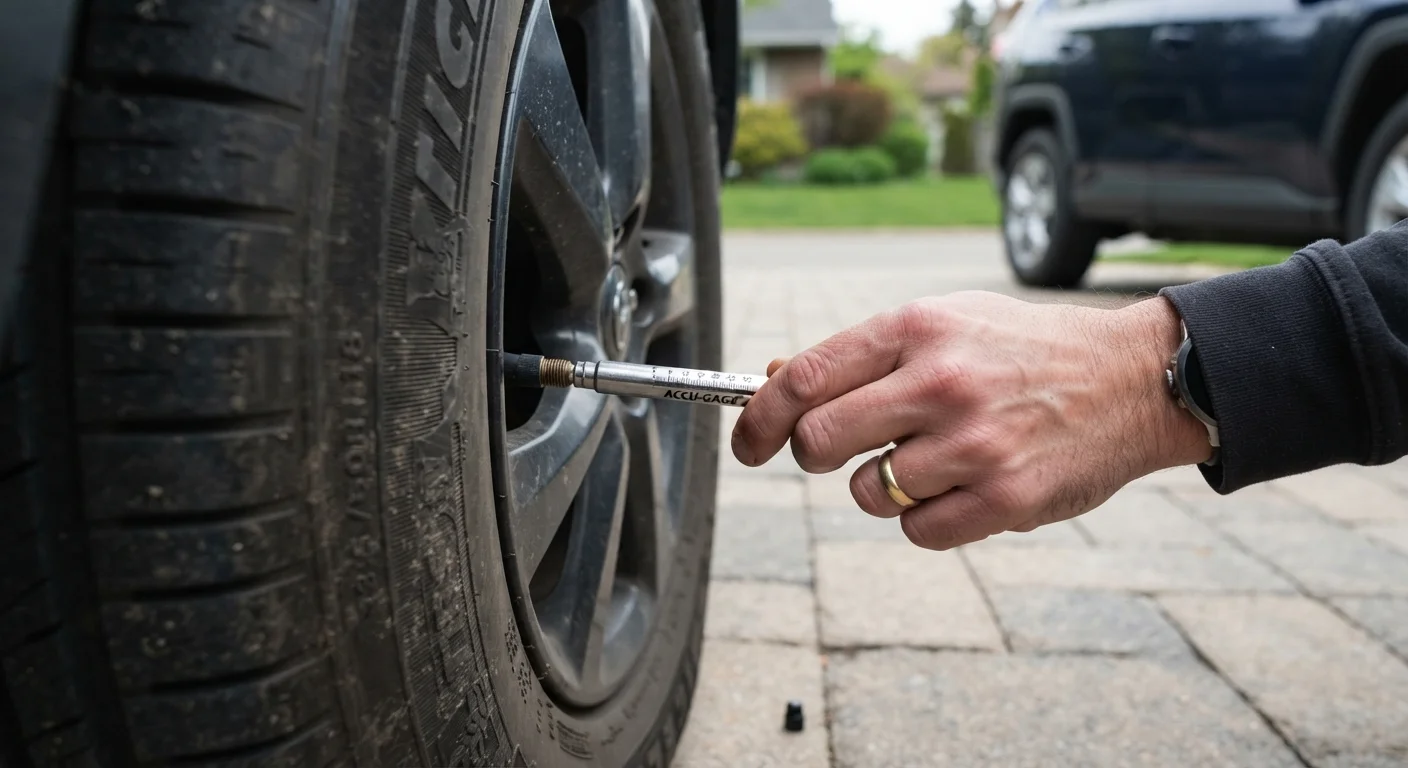
Tire pressure is measured in PSI. The correct PSI for your vehicle is printed on a sticker inside the driver's door jamb - not on the tire sidewall. The sidewall number is the tire's maximum capacity, which is almost always higher than what your car actually needs.
Check pressure when tires are cold - meaning the car has been parked for at least three hours or driven fewer than a mile. Heat from driving causes air to expand and gives a falsely high reading. A basic dial or digital gauge works fine; many gas stations also have air pumps with built-in gauges.
- Underinflation causes tires to flex excessively, building heat, accelerating tread wear on the outer edges, and increasing blowout risk. It also reduces fuel economy.
- Overinflation makes the center of the tread wear faster, reduces the tire's ability to absorb road impacts, and can make the vehicle feel skittish on uneven surfaces.
Temperature matters: tire pressure drops roughly 1 PSI for every 10°F decrease in outside temperature. If you set pressure in summer and ignore it through fall, your tires may be noticeably underinflated by the time winter arrives - exactly when grip matters most. See our article on driving safely in rain, fog, and snow for how tire condition ties into wet-weather handling.
Check Pressure Before a Road Trip
Before any long drive, check all four tires - and the spare - when they're cold. Highway driving at sustained speeds generates significant heat, and starting with the correct pressure gives the tires the best foundation. Five minutes in the driveway can prevent a roadside delay hours later.
Tread Depth: How to Check It and When to Replace
Tire tread channels water away from the contact patch so the rubber can grip the road. As tread wears down, that ability diminishes - most noticeably in rain and snow. U.S. law requires tires to be replaced at 2/32 inch of remaining tread depth, though many safety experts recommend considering replacement at 4/32 inch for families who regularly drive in wet weather.
The Coin Tests
- Penny test (2/32 inch): Insert a penny headfirst into the tread groove. If Lincoln's entire head is visible, the tread is legally worn out - replace the tire.
- Quarter test (4/32 inch): Use a quarter instead. If Washington's head is fully visible, you're approaching the point where wet-weather performance drops significantly.
Check multiple grooves across each tire, including the center and outer edges. Uneven wear patterns - such as wear only on the edges or only in the center - often signal a pressure or alignment issue worth addressing. Most new tires also include built-in tread wear indicators: small rubber bars molded into the grooves that become flush with the tread surface at 2/32 inch.
Proper tread goes hand-in-hand with other safety systems. Our guide to brake wear warning signs explains how worn tires and worn brakes compound each other's risks.
Tire Rotation: Why It's Worth Doing on Schedule
Tires wear at different rates depending on their position. Front tires on a front-wheel-drive vehicle, for example, handle both steering and power delivery, so they typically wear faster than the rears. Regular rotation - moving each tire to a different position on the vehicle - distributes that wear more evenly, helping all four tires last longer and perform consistently.
Most manufacturers recommend rotating tires every 5,000-7,500 miles. This interval conveniently lines up with many oil change schedules, making it easy to combine both services in one trip. Check your owner's manual for the pattern recommended for your drivetrain; front-wheel-drive, rear-wheel-drive, and all-wheel-drive vehicles each have preferred rotation patterns.
Skipping rotation doesn't cause immediate harm, but over time it can mean replacing two tires long before the other two are worn - an unnecessary cost that routine rotation avoids. Consistent rotation also gives a shop the opportunity to inspect brakes and suspension components at the same time, catching developing problems before they become expensive repairs.
For a full picture of how tire care fits into the bigger maintenance calendar, see our family car maintenance schedule guide.
Never Ignore the TPMS Warning Light
The Tire Pressure Monitoring System light means at least one tire is 25% or more below its recommended pressure - a level that meaningfully increases blowout risk. Don't assume the light is a sensor glitch. Check pressures manually as soon as it's safe to do so and inflate any underinflated tire before continuing to drive at highway speeds.
Putting It All Together: A Simple Tire Care Routine
Tire maintenance doesn't need to be complicated. A consistent, low-effort habit covers most of what families need:
- Monthly: Check all four tire pressures (plus the spare if your vehicle has one) with a gauge when tires are cold. Adjust to the PSI on the door jamb sticker.
- Every oil change: Ask the shop to rotate tires and do a visual inspection of tread depth and sidewall condition.
- Seasonally: Re-check pressure when outside temperatures shift significantly - particularly at the start of winter. Inspect tread with the quarter test before road trips.
- Anytime: If the car pulls to one side, vibrates at highway speeds, or the TPMS warning light appears, don't wait for the next scheduled service - have the tires checked promptly.
These steps require no mechanical expertise and very little money. They're also among the highest-return safety habits any driver can build. For families working to keep car costs under control, understanding common car maintenance terms helps you have informed conversations with mechanics - and avoid being upsold on services you don't need.