

Key Takeaways
Why Variety Matters - and Why It's Hard
Research consistently links dietary variety in childhood to better long-term nutrition outcomes, including adequate intake of micronutrients that support growth and cognitive function. Yet most families settle into a narrow lunch rotation within weeks - not from lack of caring, but because the mental load of packing five different meals each week is genuinely taxing.
The fix isn't willpower. It's a system. By thinking in food-group slots rather than complete meals, you can mix and match components to produce lunches that feel different every day while using much of the same weekly grocery haul. This approach aligns with the USDA's MyPlate framework, which encourages filling roughly half the plate with fruits and vegetables, a quarter with protein, and a quarter with grains - adapted here to the realities of a lunchbox.
If grocery habits are quietly shrinking your family's nutritional range, see our guide to common grocery patterns that erode nutrition for practical perspective.
What you will need
The Four-Slot Framework
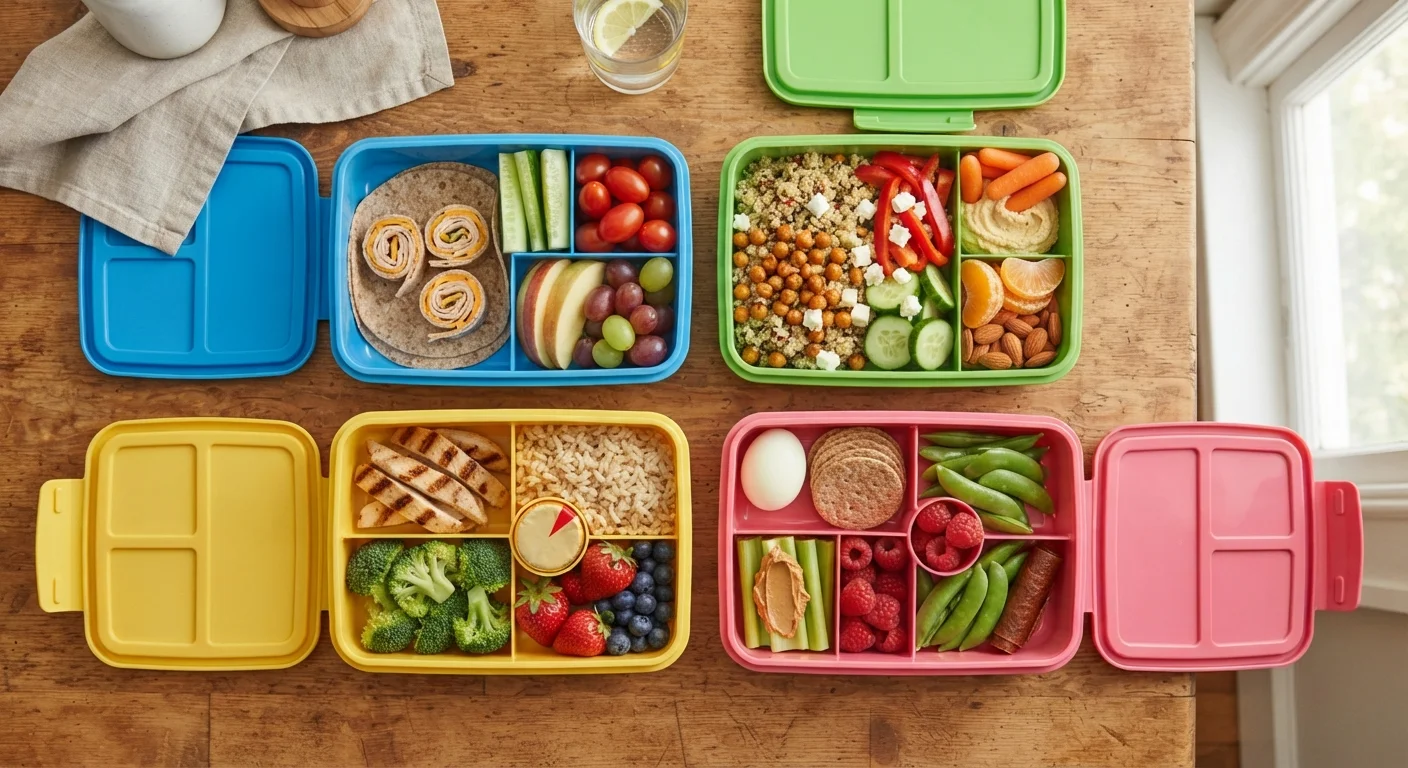
Before building the week, establish four non-negotiable slots for each lunch:
- Protein: Keeps children satiated through the afternoon. Options include hard-boiled eggs, hummus, cheese cubes, turkey slices, canned tuna, or cooked beans.
- Whole grain: Provides sustained energy. Think whole-wheat bread, brown rice crackers, oat-based granola bars with minimal added sugar, or corn tortillas.
- Vegetable: Aim for at least one serving. Raw carrot sticks, cucumber rounds, snap peas, cherry tomatoes, or roasted bell pepper strips all travel well.
- Fruit: Offers natural sweetness and fiber. Rotate between fresh options (apple slices, grapes, berries) and occasional no-added-sugar dried fruit or unsweetened applesauce pouches.
A small dairy element - yogurt, a cheese stick, or milk at school - rounds out the meal, but treat it as a bonus rather than a required fifth slot.
Divided reusable lunch containers
Keep food-group components separated and visually distinct, which supports both presentation and portion awareness.
Small leak-proof dip containers
Carry hummus, yogurt dip, or dressings without contaminating other components.
Insulated lunch bag with ice pack
Maintains safe food temperatures for perishable proteins and dairy through a school day.
Weekly meal planning grid (paper or digital)
Visualizes the five-day rotation to catch ingredient repetition before it reaches the lunchbox.
Step-by-Step: Planning and Prepping the Week
Follow these steps each weekend to set up five varied, balanced lunches with minimal daily effort.
List your child's accepted foods by slot
Before you can rotate, you need a working inventory. Sit down with your child - even briefly - and identify three to five accepted options in each of the four slots. Write these on a sticky note or a phone note you can reference at the grocery store. Including children in this step, even with a limited shortlist to choose from, is associated with higher acceptance of packed lunches.
Map out a five-day slot grid
On paper or a simple spreadsheet, create a grid with Monday through Friday across the top and your four slots down the side. Fill in one option per cell, making sure no single ingredient appears in the same slot more than twice across the week. This visual check catches repetition before it hits the lunchbox.
Example protein rotation: Monday - hard-boiled egg; Tuesday - hummus with pita; Wednesday - turkey roll-ups; Thursday - cheddar cubes; Friday - black bean and corn mix.
Build your grocery list from the grid
Transfer each item in your grid to a grocery list organized by store section (produce, dairy, deli, dry goods). Calculate quantities based on portion sizes and number of children. Buying only what the grid requires reduces food waste - a common hidden cost in family grocery budgets. For a broader look at budget alignment, see our family budgeting framework.
Batch prep on Sunday
Dedicate 30-40 minutes to prepping components that require work: hard-boil a batch of eggs, wash and cut vegetables, portion out crackers or grain servings into small containers, and cook any grains or legumes. Store prepped items in airtight containers in the refrigerator. This step converts weekday packing from a 15-minute scramble into a 5-minute assembly task.
Pack the night before and store correctly
Assemble each lunchbox the evening before school. Keep perishable items - proteins, dairy, cut fruit - in the refrigerator overnight. In the morning, add an ice pack to the bag. The USDA recommends keeping perishable lunch foods below 40°F until eaten; an insulated bag with a frozen gel pack achieves this for most school-day durations.
Keeping Costs Realistic
A well-planned lunchbox doesn't require premium products. Eggs, dried or canned beans, seasonal produce, and store-brand whole-grain bread are among the most cost-effective nutrient-dense foods available. Our registered-dietitian-backed pantry staples guide identifies ingredients that stretch across multiple meals without sacrificing nutrition.
For families managing a tight weekly food budget, the slot-and-rotate method pairs naturally with batch cooking. Cooking a pot of brown rice or a dozen eggs on Sunday costs little in time and money but provides protein and grain components across several lunches. If you're building a broader household food budget, our article on feeding a family of four on a realistic weekly budget offers a complementary roadmap.
Involve Kids Without Losing Control
Offering children a choice between two pre-approved options per slot - rather than an open question - keeps variety alive while ensuring every lunch still meets nutritional goals. Research in pediatric eating behavior suggests that autonomy-supportive feeding practices are associated with children developing broader food acceptance over time. Start small: let them pick which fruit goes in on Tuesday and which vegetable on Thursday.
This article is for general informational and educational purposes only and does not constitute medical or dietary advice. Consult a qualified healthcare professional or registered dietitian for guidance tailored to your child's individual health needs.