

| Protein per cup, cooked lentils | ~18 grams (USDA FoodData Central) |
| Protein per large egg | ~6 grams (USDA FoodData Central) |
| Protein per cup, Greek yogurt (plain) | 15-20 grams (USDA FoodData Central) |
| Protein per half-cup, tempeh | ~15 grams (USDA FoodData Central) |
| Typical cost, 1 lb dried lentils | Under $2 (yields ~6 cups cooked) (Average U.S. grocery pricing, general estimate) |
| Sodium reduction by rinsing canned beans | ~40% (Reported in American Dietetic Association research) |
Why Non-Meat Proteins Make Sense for Family Budgets
Meat is often the most expensive line item on a family grocery receipt. Shifting even a few weekly meals toward plant-based or minimally processed animal proteins - eggs, legumes, dairy - can meaningfully reduce food costs while maintaining the protein intake families need. The USDA's Dietary Guidelines recognize a wide range of protein foods as nutritionally equivalent sources of essential amino acids, making substitution both practical and evidence-supported.
This isn't about eliminating meat entirely. It's about knowing which alternatives deliver the most protein per dollar, how to prepare them so families will actually eat them, and how to combine foods to ensure nutritional completeness. See our realistic family nutrition roadmap for a broader look at hitting nutritional targets on a weekly budget.
| Protein per cup, cooked lentils | ~18 grams (USDA FoodData Central) |
| Protein per large egg | ~6 grams (USDA FoodData Central) |
| Protein per cup, Greek yogurt (plain) | 15-20 grams (USDA FoodData Central) |
| Protein per half-cup, tempeh | ~15 grams (USDA FoodData Central) |
| Typical cost, 1 lb dried lentils | Under $2 (yields ~6 cups cooked) (Average U.S. grocery pricing, general estimate) |
| Sodium reduction by rinsing canned beans | ~40% (Reported in American Dietetic Association research) |
The Best Budget Protein Sources at a Glance
The foods below are ranked by a combination of protein content, cost-effectiveness, and family-meal versatility. Prices vary by region and store, but these staples are consistently among the most affordable options available in U.S. grocery stores.
Complete protein
A protein source that contains all nine essential amino acids in sufficient amounts. Animal proteins are typically complete; most plant proteins are not, though soy (tofu, tempeh, edamame) is a notable exception.
Legume
A category of plant foods that includes beans, lentils, peas, and chickpeas. Legumes are high in protein, fiber, and several key micronutrients, and are generally among the least expensive protein foods available.
Complementary proteins
Two or more incomplete plant proteins eaten together - or across the day - that collectively supply all essential amino acids. Classic examples include rice and beans, or lentils and whole grain bread.
Tempeh
A fermented soybean product with a firm, dense texture. It is higher in protein than tofu and contains probiotics from the fermentation process. Tempeh has a slightly nutty flavor and holds up well in high-heat cooking.
Dietary fiber
A type of carbohydrate found in plant foods that the body cannot digest. Fiber supports digestive health, helps maintain steady blood sugar, and contributes to feelings of fullness - all relevant when eating legume-heavy meals.
Legumes: Beans and Lentils
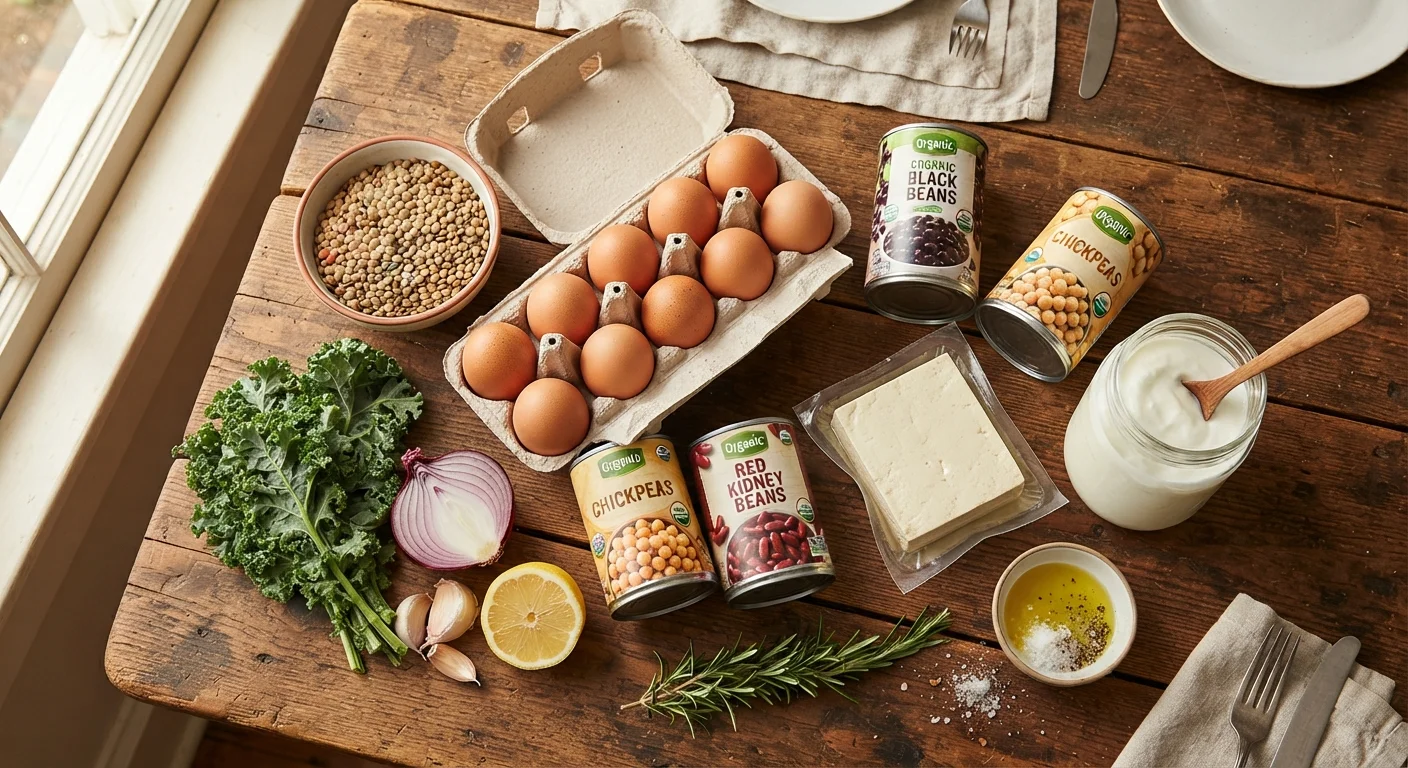
Dried lentils and beans are among the most cost-efficient protein sources available. A one-pound bag of dried lentils typically yields six or more cups cooked and provides roughly 18 grams of protein per cooked cup. Canned versions trade some savings for convenience and are still highly economical. Both are excellent sources of dietary fiber, iron, and folate - nutrients many families fall short on.
Lentils require no soaking and cook in about 20 minutes, making them a weeknight-friendly option. Black beans, kidney beans, and chickpeas absorb seasonings well and work across cuisines - from tacos and soups to grain bowls and curries.
Eggs
A dozen eggs typically provides 12 servings of roughly 6 grams of protein each, along with choline, vitamin D, and B12. Eggs are among the most complete single-ingredient proteins available at low cost. Scrambled, hard-boiled, baked into frittatas, or added to fried rice - eggs integrate into nearly any meal format.
Tofu and Tempeh
Firm tofu offers approximately 10 grams of protein per half-cup serving. Tempeh - a fermented soy product - provides even more, around 15 grams per half-cup, along with beneficial probiotics. Both take on bold flavors when marinated and are pantry-stable when purchased shelf-stable or frozen. Tempeh has a firmer texture that works well for stir-fries and sandwiches, making it easier to introduce to kids used to meat-based proteins.
Greek Yogurt and Cottage Cheese
Plain Greek yogurt delivers 15-20 grams of protein per cup and doubles as a sour cream substitute in cooked dishes. Cottage cheese provides a similar protein profile and is often less expensive per ounce. Both are practical add-ons for breakfasts, snack plates, or as a base for dips and dressings.
For a complete list of pantry staples that support balanced family meals, see what dietitians recommend stocking.
A Note on Protein Needs for Children
Daily protein requirements vary by age, body weight, and activity level, and children's needs differ from adults. The USDA Dietary Guidelines provide general reference ranges by age group, but families with questions about a child's specific nutritional needs - particularly those with growth concerns, food allergies, or chronic conditions - should consult a registered pediatric dietitian or their child's pediatrician.
Putting It Together: Practical Meal Strategies
Combining plant proteins across a day - or within a meal - helps ensure families get all essential amino acids. Pairing legumes with grains (beans and rice, lentil soup with bread, hummus on whole wheat) is a well-established approach that nutritionists and dietitians commonly recommend for completeness.
- Batch cook dried beans or lentils once a week and refrigerate for use in multiple meals.
- Use eggs as a fast-protein fallback on nights when planned meals run long - a vegetable scramble takes under 10 minutes.
- Blend silken tofu into smoothies for kids who resist textured proteins; it is nearly tasteless when combined with fruit.
- Add cottage cheese or Greek yogurt to pancake batter, mashed potatoes, or pasta sauces to boost protein invisibly.
- Stock canned beans as a backup - rinsing canned beans reduces sodium content by roughly 40%, according to research from the American Dietetic Association.
Keeping grocery costs manageable across all household expenses is a broader goal. Tools and strategies at the Budget Basics hub can help families build the financial structure that makes intentional grocery spending easier to sustain.
This article is for general informational and educational purposes only and does not constitute medical or nutritional advice. Families managing specific dietary needs, food allergies, or health conditions should consult a registered dietitian or qualified healthcare provider.