

Key Takeaways
Eating the Rainbow
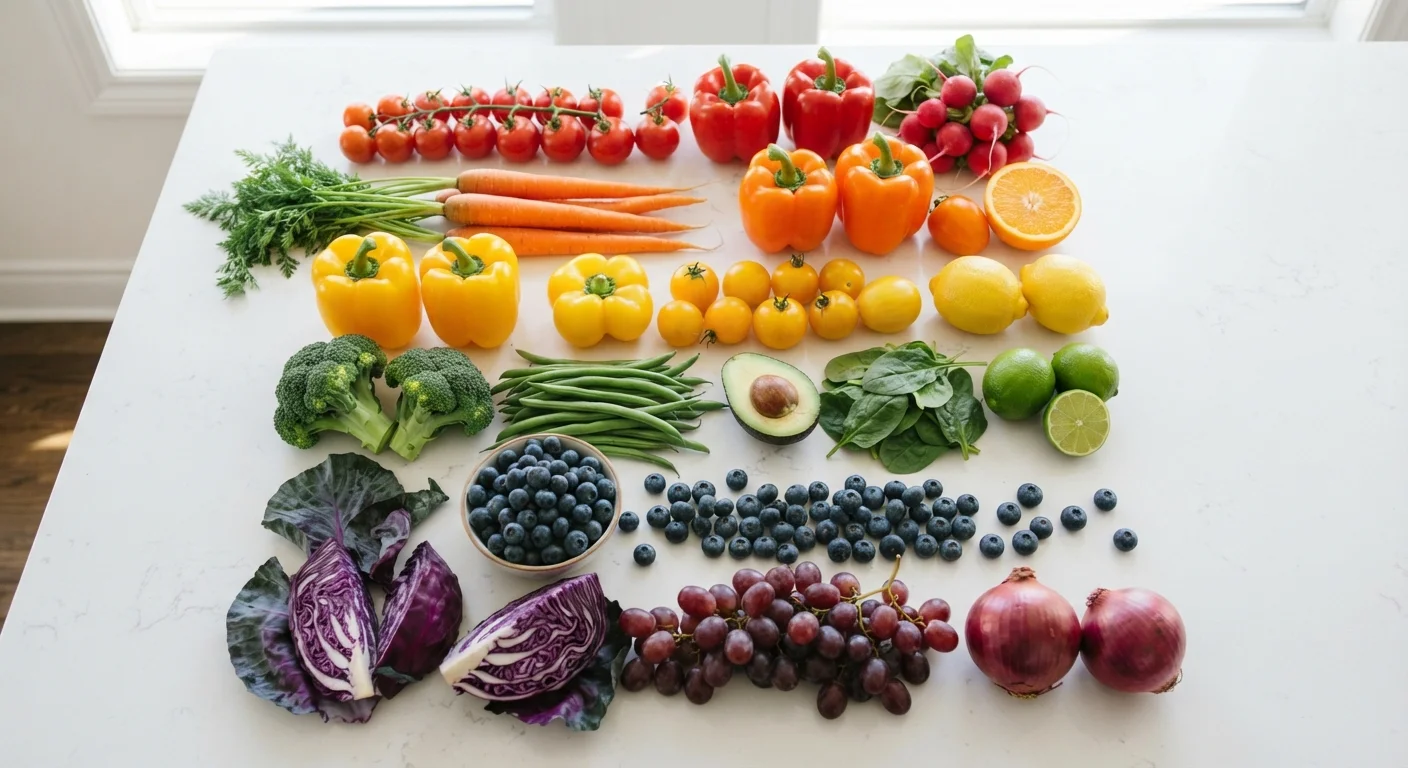
"Eating the rainbow" is a nutrition principle that encourages choosing fruits and vegetables across the full spectrum of natural colors - reds, oranges, yellows, greens, blues, and purples. Each color group reflects distinct plant pigments that carry different health-supporting compounds. Consuming a wide variety helps ensure your body receives a broader range of vitamins, minerals, and phytonutrients than any single-color diet could provide.
The pigments responsible for plant colors - such as carotenoids, anthocyanins, chlorophyll, and flavonoids - often function as antioxidants and anti-inflammatory agents within human physiology, though their exact bioavailability and mechanisms continue to be studied.
Why Color Is a Useful Nutritional Signal
Plants produce pigments primarily to attract pollinators, deter pests, and manage sun exposure - but those same compounds interact meaningfully with human biology. Because different pigment families tend to cluster in different color groups, a plate's visual variety serves as a surprisingly reliable stand-in for chemical diversity.
This matters because no single plant food contains every beneficial compound. Lycopene, which gives tomatoes and watermelon their red hue, behaves differently in the body than lutein from dark leafy greens or the anthocyanins in blueberries. Each plays a distinct role, which is why variety - not just quantity - is what researchers consistently highlight in dietary guidance. The USDA's Dietary Guidelines for Americans recommends consuming vegetables from all subgroups across the week, a recommendation that aligns neatly with the rainbow principle.
9 in 10
Americans not meeting vegetable intake recommendations
CDC dietary data consistently shows that the vast majority of U.S. adults and children fall short of recommended vegetable consumption across all subgroups.
800+
Known dietary carotenoids in plant foods
Researchers have identified more than 800 carotenoid compounds in nature, though only a subset are commonly consumed through a typical diet.
28%
Lower cardiovascular risk with high fruit and vegetable intake
A meta-analysis published in the International Journal of Epidemiology found approximately 28% lower risk of cardiovascular disease in those eating 800g of fruits and vegetables daily versus low consumers.
What Each Color Group Contributes
Red - Tomatoes, red bell peppers, strawberries, and watermelon get their color largely from lycopene and anthocyanins. Lycopene is a carotenoid associated in observational studies with cardiovascular and cellular health. Anthocyanins, present in many red-purple foods, are being researched for their antioxidant properties.
Orange and Yellow - Carrots, sweet potatoes, mangoes, and yellow squash are rich in beta-carotene, which the body converts to vitamin A - essential for immune function and vision. This group also tends to supply vitamin C and other carotenoids such as alpha-carotene and beta-cryptoxanthin.
Green - Dark leafy greens like spinach, kale, and broccoli contain chlorophyll, lutein, zeaxanthin, folate, and vitamin K. Lutein and zeaxanthin are concentrated in the retina and studied extensively in relation to eye health. Folate is especially important during pregnancy - if you are pregnant or planning to be, consult your healthcare provider about your specific needs.
Blue and Purple - Blueberries, eggplant, purple cabbage, and blackberries derive their color from anthocyanins. This pigment family has been studied in relation to cognitive function and inflammation, though research in humans remains ongoing.
White and Tan - Often left out of the conversation, foods like garlic, onions, leeks, and cauliflower contain allicin and quercetin. These compounds have been examined for immune-modulating properties, and excluding this group from the framework would be an oversimplification.
Making It Work on a Family Budget
The most common barrier families face isn't understanding - it's cost and convenience. A few practical strategies can make color variety achievable without straining a grocery budget.
- Prioritize frozen produce. Frozen vegetables and fruits are typically harvested and frozen at peak ripeness, preserving their nutrient content well. A bag of frozen spinach, mixed berries, or edamame is often significantly less expensive than its fresh equivalent and lasts much longer.
- Use canned options strategically. Canned tomatoes, beans, and corn are shelf-stable, affordable, and retain meaningful nutrition. Opt for low-sodium or no-salt-added versions when available, and check labels for added sugars in canned fruit. Our guide on reading a Nutrition Facts label can help you navigate those choices.
- Build around in-season produce. Seasonal fruits and vegetables are typically more affordable and more flavorful, making them easier to serve to children who may be skeptical of new foods.
- Add color incrementally. Swapping white rice for a grain-and-vegetable mix, or adding shredded purple cabbage to tacos, adds a new color without redesigning the entire meal.
If your household includes younger eaters who resist new colors or textures, that's a common experience - not a failure. Pediatric dietitian guidance consistently shows that repeated, low-pressure exposure works better than forcing new foods, and that variety in the household overall shapes children's preferences over time.
Start With One New Color Per Week
Rather than overhauling your grocery list all at once, try introducing one color group you don't regularly buy each week. A bag of frozen purple cabbage, a bunch of beets, or a box of clementines can anchor a new color without significantly changing your spending or cooking routine. Small, consistent additions tend to stick better than dramatic dietary overhauls.
This article is for general informational and educational purposes only and does not constitute medical or dietary advice. For guidance specific to your family's health needs, please consult a qualified healthcare or nutrition professional.