Key Takeaways
Our Verdict
Neither DIY nor hiring out is universally the right answer - the decision depends on the specific task, your honest skill assessment, local code requirements, and what errors could cost you. For cosmetic upgrades and routine maintenance, DIY can deliver real savings. For anything involving electrical panels, gas lines, structural elements, or roofing, the risk of an uncorrected mistake far outweighs the labor savings.
| Best for | Recommended |
|---|---|
| Homeowners with basic skills and limited budgets | DIY for low-risk cosmetic and maintenance tasks |
| Projects involving electrical, gas, or structural systems | Licensed professional |
| Families uncertain about scope, permits, or local code | Licensed professional with written contract |
| Mid-complexity projects like tiling or minor plumbing fixture swaps | DIY with thorough research and proper tools |
The Four Questions That Drive the Decision
Every DIY-or-hire decision comes down to four honest questions. Work through them before picking up a tool or calling a contractor.
- What's the skill ceiling? Can the task be learned reliably from reputable guides, and completed safely by someone without trade training?
- What's the worst realistic outcome if something goes wrong? A crooked tile can be re-laid. A miswired circuit can start a fire.
- Does it require a permit or licensed trade? Many jurisdictions require licensed electricians, plumbers, or HVAC technicians for specific work - and permits exist to protect you, not burden you.
- What is the real total cost of DIY? Factor in tool purchases or rentals, materials, disposal, and an honest estimate of your time at its actual value to your household.
For a deeper look at permit questions and scope clarity, see our homeowner's pre-project checklist before making any final call.
Tasks That Suit Confident DIYers
A broad category of home projects carry low risk, require no permits in most jurisdictions, and respond well to careful preparation. These are generally reasonable candidates for DIY:
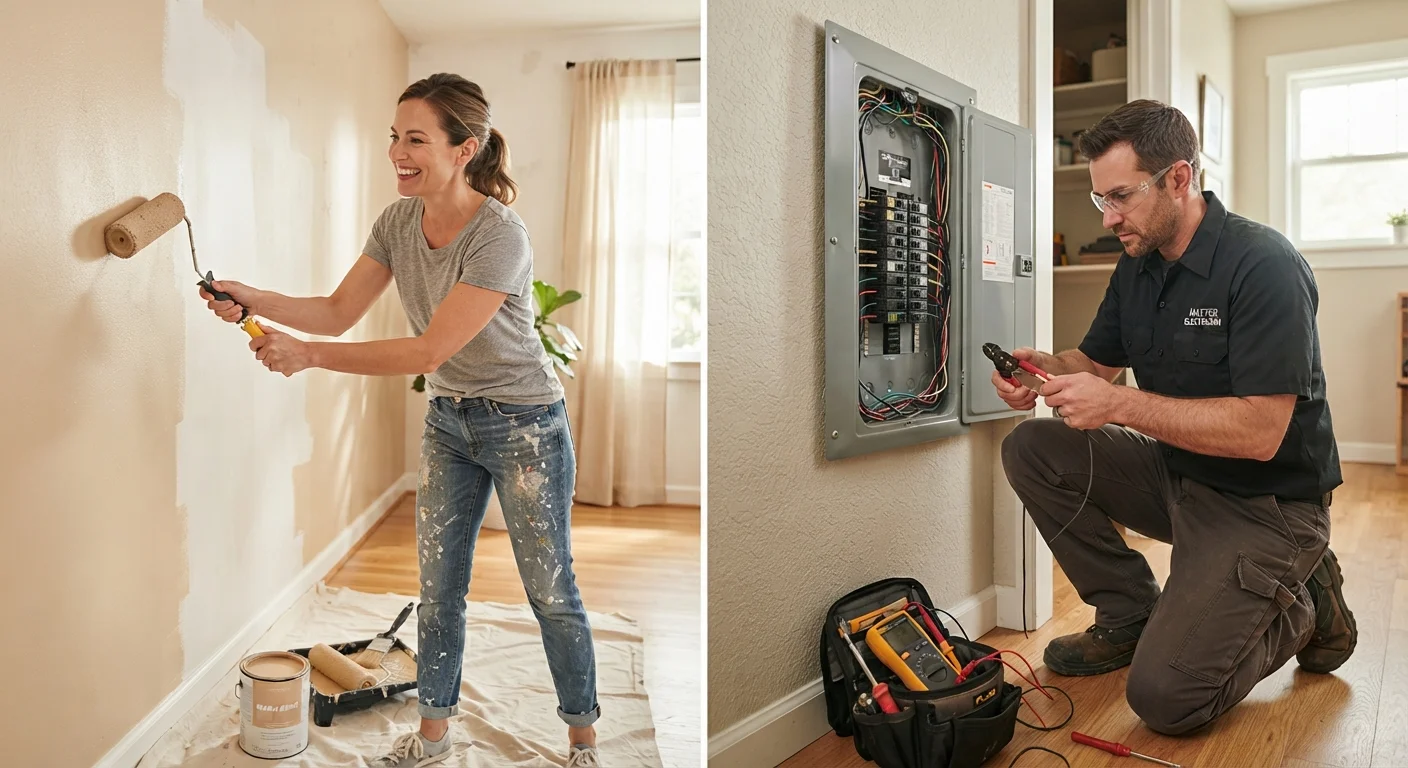
- Interior painting - Prep work (cleaning, patching, taping) determines quality more than technique. Mistakes are correctable.
- Basic landscaping and garden beds - Planting, mulching, edging, and simple hardscaping like gravel pathways are accessible to most homeowners.
- Installing flooring over an existing subfloor - Floating laminate or vinyl plank installation is a well-documented process with forgiving tolerances.
- Replacing fixtures and hardware - Swapping faucets, cabinet pulls, light fixtures (at existing junction boxes, with power off), and door hardware is manageable with basic tools.
- Caulking and weatherstripping - Sealing gaps around windows, doors, and tubs is inexpensive and impactful.
- Minor drywall patching - Small holes and screw pops are straightforward repairs that don't require trade skills.
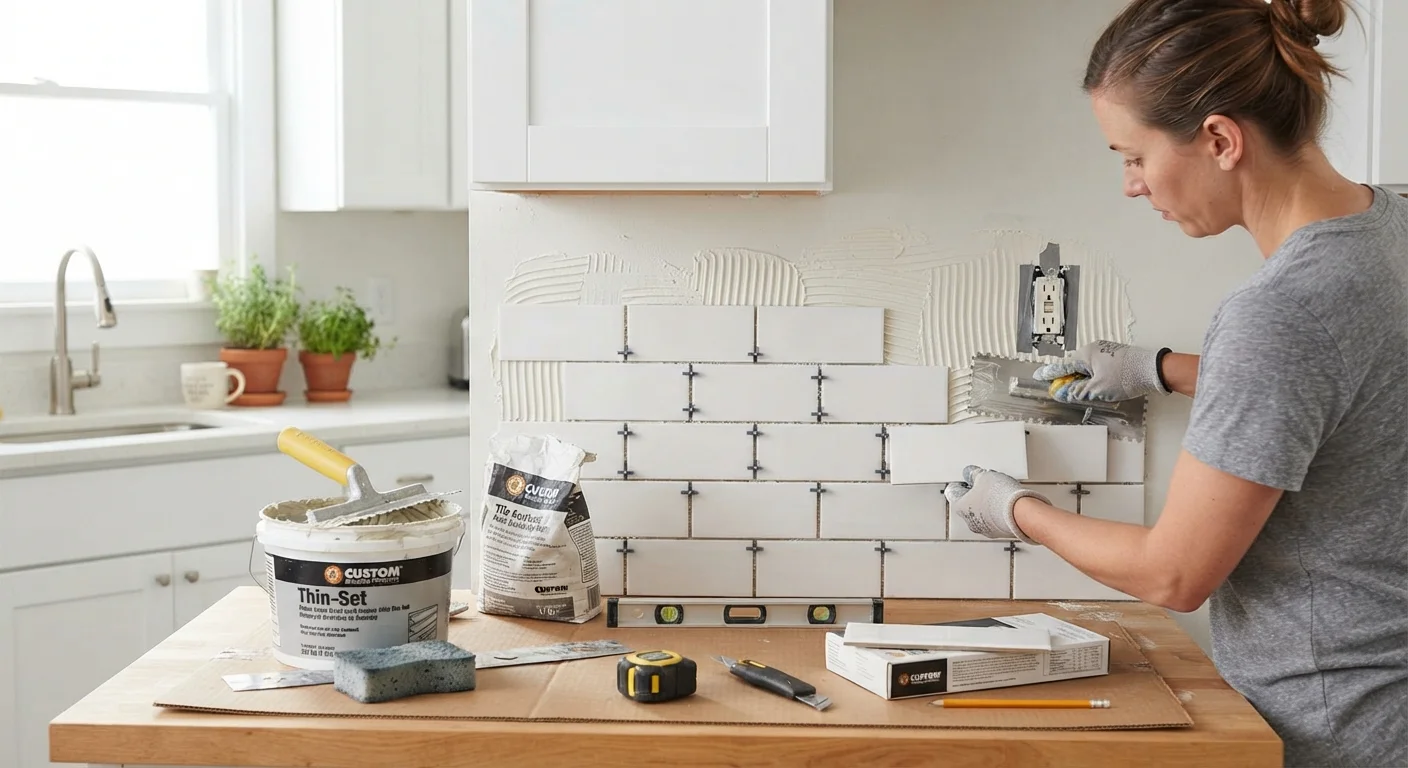
Even on these tasks, honest self-assessment matters. If you've never tiled before, starting with a main bathroom floor is a higher-stakes learning curve than a small mudroom. Our home improvement on a budget guide covers how to sequence projects so early wins build the skills you need for bigger ones.
Start Small to Build Real Confidence
If you're new to DIY, choose a forgiving first project - painting a single room or replacing cabinet hardware - before tackling anything with permit implications. Each completed project builds your tool kit, your pattern recognition for what can go wrong, and your ability to accurately estimate time and cost on future jobs.
Tasks That Belong With Licensed Professionals
Some work carries consequences for mistakes that no amount of tutorial-watching can reliably prevent. These categories should generally involve a licensed, insured professional:
- Electrical panel work, new circuits, and subpanel additions - Incorrect wiring is a leading cause of residential fires. Most jurisdictions require a licensed electrician and permit for this work.
- Gas line modifications - Leaks are odorless without odorant, and small errors have catastrophic potential. Always use a licensed plumber or gas fitter.
- Structural modifications - Removing or altering load-bearing walls, adding beams, or changing roof lines without engineering input can compromise your home's integrity.
- Roofing replacement - Beyond the fall hazard, improper installation voids manufacturer warranties and may not meet local code, creating insurance complications.
- Main plumbing line work - Tying into municipal water or sewer lines typically requires permits and licensed work in most US municipalities.
Never Skip Permits to Save Money
Unpermitted work on regulated systems can void your homeowner's insurance coverage, trigger mandatory teardown orders, and create disclosure obligations when you sell. The short-term savings are rarely worth the long-term liability. Always check with your local building department before starting any project that touches electrical, plumbing, gas, or structural systems.
When hiring, verify licensing and insurance credentials directly - not just from the contractor's own materials. Our guide to hiring a contractor safely explains exactly what to check and why it matters.
Comparing the Two Approaches Side by Side
The table below maps common project characteristics against DIY and professional approaches to help clarify where each option tends to make sense.
| Factor | DIY | Licensed Professional | |
|---|---|---|---|
| Upfront labor cost | None (your time) | Quoted labor rate applies | |
| Skill requirement | Low to moderate for suitable tasks | Trained and certified | |
| Permit handling | Homeowner's responsibility to research | Often managed by contractor | |
| Error consequences | Variable - low on cosmetic tasks | Covered by license and insurance | |
| Code compliance | Homeowner must verify | Professional's legal obligation | |
| Warranty on work | None - you absorb rework cost | Typically guaranteed in writing | |
| Best project type | Cosmetic, low-risk, no-permit | Electrical, gas, structural, roofing |
For routine upkeep decisions that don't involve major renovations, the home maintenance hub offers practical guidance organized by system and season.
The Hidden Costs DIYers Often Miss
DIY decisions made purely on labor savings often ignore several real costs that close - or reverse - the gap with professional quotes:
- Tool acquisition
- A tile saw, oscillating multi-tool, or wet/dry vacuum may be necessary for a single project. Rental is often available but must be factored in.
- Rework and material waste
- Learning curves produce mistakes. First-time tile setters commonly waste 15-20% more material than experienced installers.
- Permit and inspection fees
- Even DIY work on permitted projects requires inspections. Skipping permits can create problems when you sell or make an insurance claim.
- Time cost
- A weekend project that stretches into three weekends has a real household cost, particularly for families with tight schedules.
Thinking through savings and budget trade-offs before committing to a large DIY project can help you decide whether the savings justify the commitment.