

| Typical electrical panel capacity | 100-200 amps (most modern homes) |
| Recommended water heater temperature | 120°F (U.S. Department of Energy) |
| Air filter replacement interval | Every 1-3 months (standard 1-inch filter) |
| Average tank water heater lifespan | 8-12 years |
| Water heater tank sizes (residential) | 40-80 gallons (tank-style) |
| GFCI outlet locations required by code | Kitchens, bathrooms, garages, outdoors (National Electrical Code (NEC)) |
Why Every Homeowner Needs a Systems Baseline
A house is essentially a collection of interconnected systems, and when any one of them fails, daily life can grind to a halt. Knowing what each system does - even at a basic level - helps you spot early warning signs, communicate clearly with contractors, and make informed decisions about repairs and upkeep.
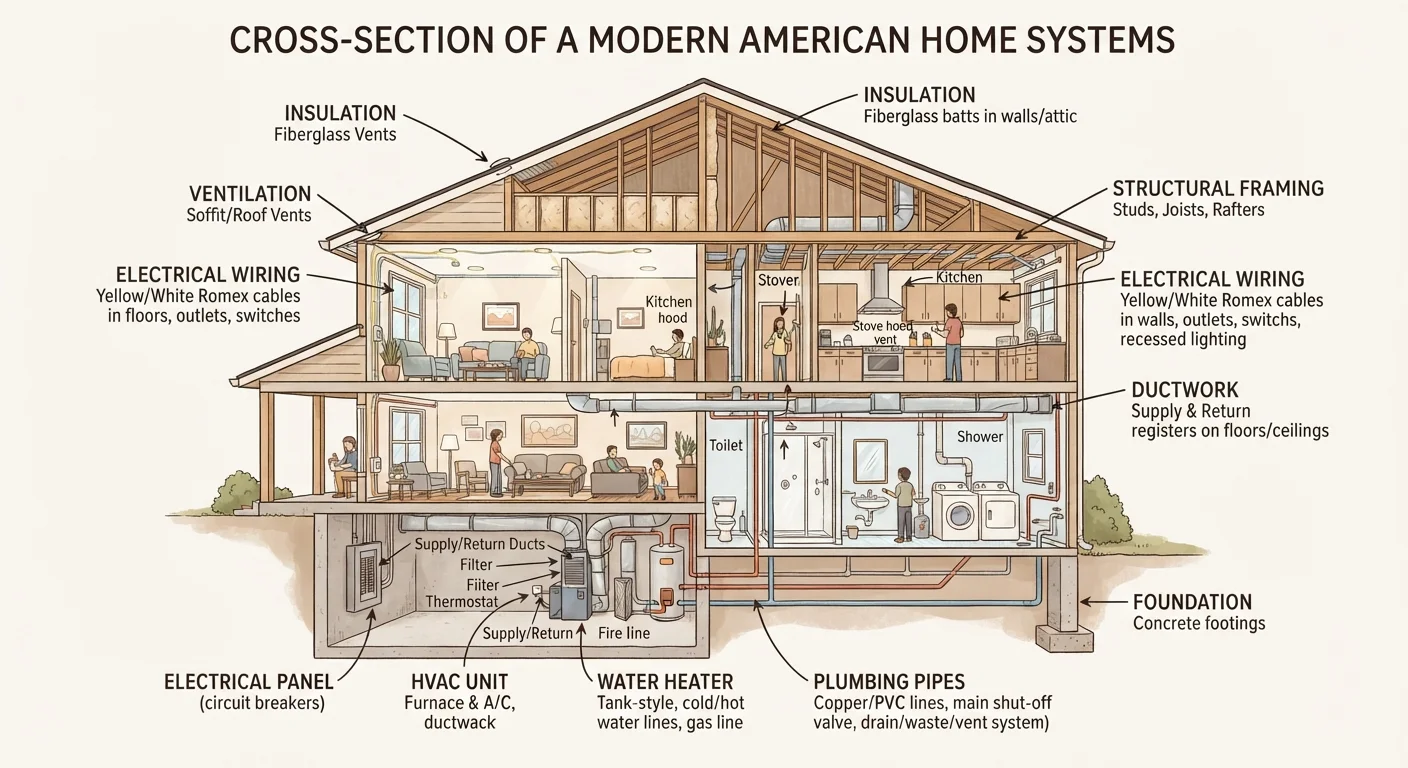
This reference covers the five core home systems most owners will encounter: electrical, plumbing, HVAC, structural, and water heating. Think of it as a plain-language map of what's behind your walls. For hands-on scheduling, see our season-by-season maintenance guide to know when to service each system.
| Typical electrical panel capacity | 100-200 amps (most modern homes) |
| Recommended water heater temperature | 120°F (U.S. Department of Energy) |
| Air filter replacement interval | Every 1-3 months (standard 1-inch filter) |
| Average tank water heater lifespan | 8-12 years |
| Water heater tank sizes (residential) | 40-80 gallons (tank-style) |
| GFCI outlet locations required by code | Kitchens, bathrooms, garages, outdoors (National Electrical Code (NEC)) |
Electrical System: Panel, Circuits, and Safety
Your home's electrical panel (also called a breaker box or load center) is the central hub that distributes power from the utility line to every outlet, switch, and appliance. Each circuit breaker inside the panel protects a specific circuit from overloads by tripping - cutting power - when current exceeds safe limits.
Key things to understand:
- Amperage rating: Most modern homes run on 100-200 amp service. Higher-draw appliances like electric ranges and dryers require dedicated circuits.
- GFCI outlets: Ground Fault Circuit Interrupter outlets (the ones with small test/reset buttons) are required by code in wet areas like kitchens and bathrooms. Press the reset button if they stop working.
- AFCI breakers: Arc Fault Circuit Interrupter breakers detect dangerous arcing in wiring and are now required in bedrooms in most US building codes.
Safety note: Never work inside the electrical panel yourself. Panel work, new circuit installation, and any wiring that involves the main service entrance must be done by a licensed electrician. Always verify local permit requirements before beginning electrical projects.
Circuit breaker
A resettable safety switch inside the electrical panel that automatically cuts power to a circuit when current exceeds a safe level, preventing overheating and fire.
GFCI outlet
A Ground Fault Circuit Interrupter outlet that detects tiny current imbalances and shuts off power within milliseconds, protecting people from electric shock in wet areas.
Drain-waste-vent (DWV) system
The network of pipes that carries wastewater and sewage out of the home by gravity while venting sewer gases safely through the roof.
Heat pump
An HVAC system that moves heat rather than generating it - pulling warmth from outside air in winter to heat the home, and reversing the process in summer to cool it.
Anode rod
A sacrificial metal rod inside a tank water heater that corrodes over time to protect the steel tank lining, extending the heater's useful life.
Load-bearing wall
A wall that carries structural weight from the floors or roof above and transfers it to the foundation; removing or modifying one without engineering guidance can compromise a home's structure.
Plumbing System: Supply, Drain, and Venting
Home plumbing divides into two subsystems that never mix: supply lines (which carry pressurized fresh water in) and the drain-waste-vent (DWV) system (which removes wastewater out). Understanding both helps you isolate problems quickly.
Supply side: Cold water enters through a main shutoff valve - typically near the foundation or water meter. Hot water branches off to the water heater. Knowing where your main shutoff is can prevent major water damage during a burst pipe emergency.
Drain-waste-vent side: Wastewater flows by gravity to the sewer or septic system. Vent pipes extend through the roof to release sewer gases and maintain proper drain pressure. Gurgling drains often signal a blocked or improperly pitched vent.
Common DIY-safe tasks include clearing simple clogs, replacing toilet flappers, and tightening supply line connections. Work involving the main line, sewage, or gas-adjacent water heater connections should involve a licensed plumber.
HVAC: Heating, Cooling, and Air Quality
HVAC systems condition the air inside your home for comfort and air quality. Most US homes use one of three configurations: a forced-air furnace with central air conditioning, a heat pump (which handles both heating and cooling), or a boiler and radiator system common in older homes.
Key maintenance points every owner should know:
- Air filters: Replace 1-inch filters every 1-3 months. Clogged filters restrict airflow, reduce efficiency, and strain the blower motor.
- Thermostat settings: A programmable or smart thermostat can reduce energy use without sacrificing comfort.
- Refrigerant: Low refrigerant in an AC system typically indicates a leak - this is not a DIY repair. A certified HVAC technician must handle refrigerant legally.
- Annual servicing: Professional tune-ups each spring (cooling) and fall (heating) extend equipment life and catch problems early.
For sealing the envelope that your HVAC works to condition, the caulking and weatherstripping primer explains where air leaks most often occur.
Water Heater and Structural Systems
Water heaters come in two main types: tank-style (stores a reservoir of heated water, typically 40-80 gallons) and tankless (heats water on demand). Both require periodic maintenance: tank heaters need annual sediment flushing and anode rod inspection every 2-3 years to prevent premature corrosion.
Set your water heater thermostat to 120°F - hot enough to reduce bacterial growth, but not so hot as to cause scalding. Water heater replacement and gas line connections must be handled by a licensed plumber or HVAC professional and typically require a permit.
Structural systems include your foundation, framing, roof, and load-bearing walls. While these rarely need attention from new owners, certain warning signs deserve immediate professional evaluation: horizontal cracks in a basement wall, doors or windows that suddenly stick, visible sagging in floors or ceilings, or roof shingles that are curling or missing in large sections.
Keeping these systems maintained over time does more than prevent emergencies - it preserves value. Our guide on maintenance tasks that protect home value expands on this relationship between consistent upkeep and long-term equity. Just as understanding your car's systems makes you a more confident driver - see our car maintenance terms reference for a parallel approach - understanding home systems makes you a more confident owner.