Key Takeaways
Start here
Why Air Sealing Matters
Next
Caulking: The Right Tool for Stationary Gaps
Then
Weatherstripping: Sealing Gaps That Move
Going deeper
Insulation: Slowing Heat Transfer Through Surfaces
Put it together
Choosing the Right Method for Each Spot
Why Air Sealing Matters
Drafts don't just make a room feel uncomfortable - they quietly inflate utility bills month after month. Air leaks commonly hide around window frames, door edges, electrical outlets on exterior walls, attic hatches, and pipe penetrations. According to the U.S. Department of Energy, air leakage can account for a significant share of a home's heating and cooling loss, though exact figures vary widely by house age and construction type.
The good news is that three straightforward materials - caulk, weatherstripping, and insulation - address the vast majority of household energy loss. Understanding what each one does, and where it belongs, prevents wasted effort and wasted materials. For a broader look at how energy escapes a home, see the hidden causes of high home energy bills.
Air sealing
The process of closing gaps and cracks in a home's envelope to prevent uncontrolled airflow between inside and outside.
R-value
A number that measures how well an insulation material resists heat flow - the higher the number, the more effective the insulation.
Thermal envelope
The boundary of a home - walls, roof, floors, windows, and doors - that separates conditioned indoor space from the outside environment.
Curing
The process by which a wet caulk or sealant dries and hardens into its final flexible or firm state, typically over 24-48 hours.
Compression set
When weatherstripping is permanently compressed from repeated use and can no longer spring back to fill the gap, reducing its effectiveness.
Caulking: The Right Tool for Stationary Gaps
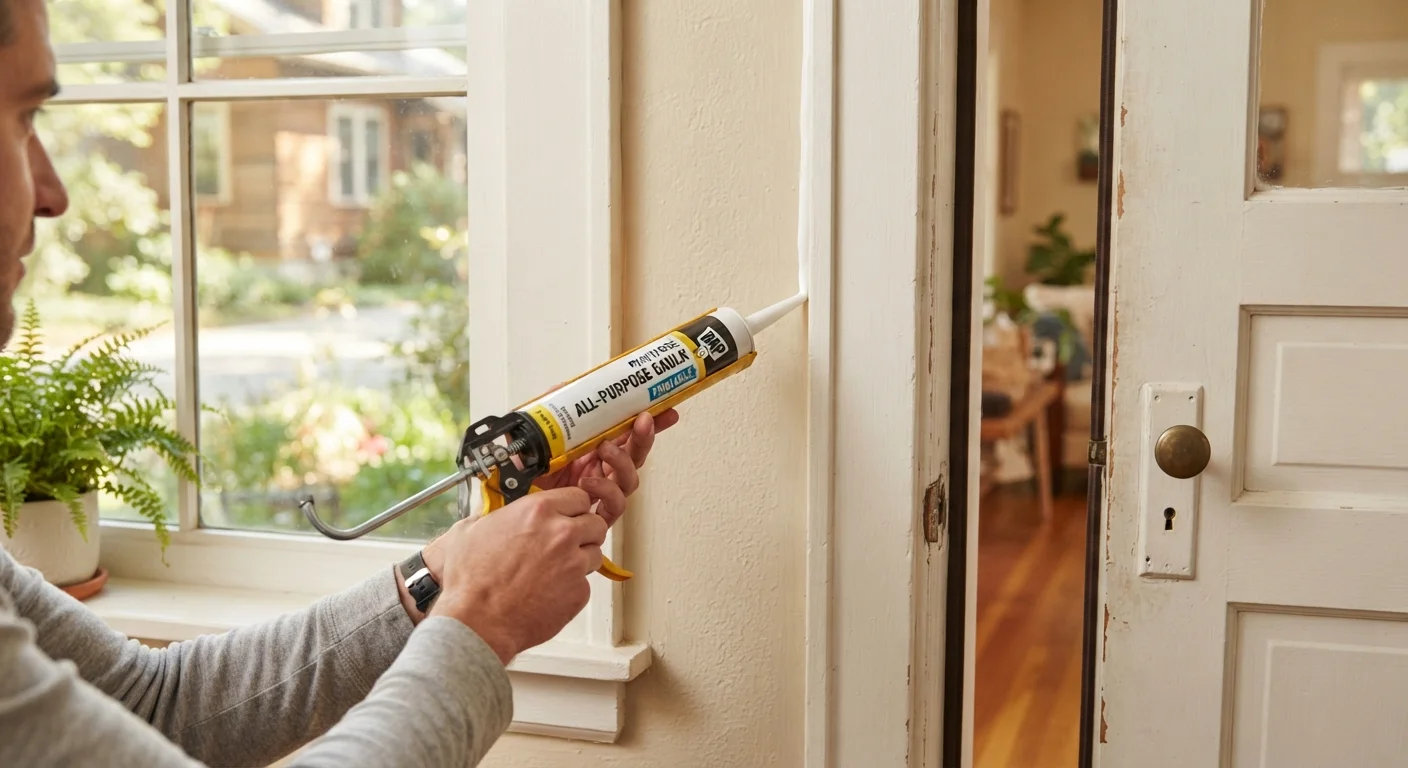
Caulk is a flexible, paste-like sealant that cures into a rubbery or firm bead. Its job is to fill fixed gaps - joints where two surfaces meet but don't move relative to each other. Think of the seam between a window frame and the surrounding drywall inside, or between exterior trim and siding.
Where to use caulk
- Around window and door frames (both interior and exterior sides)
- Where walls meet the floor or ceiling on exterior-facing surfaces
- Around pipes, wires, and conduit that pass through exterior walls or the attic floor
- Along baseboards on outside walls where air can infiltrate from a crawl space or rim joist
Choosing the right type
Silicone caulk is highly flexible and moisture-resistant, making it suitable for kitchens and bathrooms. Latex (also called acrylic latex) caulk is paintable and easier to clean up, ideal for interior trim work. For exterior joints that see temperature swings, look for a product labeled as flexible or elastomeric. For related wet-area sealing tips, see grout, tile, and moisture guidance.
Test Before You Caulk
Run a stick of incense or a damp hand slowly along window frames, baseboards, and wall penetrations on a windy day. Smoke movement or a chill indicates air leakage worth sealing. This low-cost method helps you prioritize which spots to tackle first without guessing.
Weatherstripping: Sealing Gaps That Move
Weatherstripping is designed for moving joints - the edges of doors, operable windows, and attic hatches that open and close repeatedly. Unlike caulk, it must compress and recover without tearing, so it's made from foam, rubber, felt, or metal.
Common weatherstripping types
- Foam tape
- Self-adhesive, easiest to apply, best for low-traffic windows and cabinet doors. Wears faster under heavy use.
- V-strip (tension seal)
- A folded plastic or metal strip that springs open to fill a gap. Durable and nearly invisible when installed in a door or window channel.
- Door sweep
- Attached to the bottom of a door to block the gap between the door and threshold. Available in brush and rubber versions.
- Compression bulb
- A hollow rubber or vinyl tube that flattens when the door closes. Works well on door stops where a tight seal is needed.
For a detailed side-by-side comparison of where weatherstripping and caulk each belong, weatherstripping vs. caulking offers a deeper breakdown.
Insulation: Slowing Heat Transfer Through Surfaces
While caulk and weatherstripping stop air movement through gaps, insulation slows the transfer of heat through solid surfaces - walls, floors, ceilings, and roofs. Even a well-sealed home loses heat through conduction if insulation is thin or absent.
R-value explained
R-value is the measure of an insulation material's resistance to heat flow. A higher number means better resistance. The recommended R-value for your home depends on your climate zone and which part of the house you're insulating. Attics typically benefit from the highest R-values because warm air rises and heat escapes most readily through the roof assembly.
Common insulation types for DIYers
- Batt insulation - Pre-cut fiberglass or mineral wool blankets that fit between wall studs and floor joists. Manageable for most adults to handle in accessible spaces.
- Blown-in (loose-fill) - Cellulose or fiberglass blown in by a machine, best for attic floors and hard-to-reach cavities. Equipment can often be borrowed or rented from home improvement stores.
- Rigid foam board - Panels used on basement walls, exterior sheathing, or under flooring. Cuts with a utility knife.
Safety First in Attics and Crawl Spaces
Attic insulation work exposes you to fiberglass fibers and potentially disturbed dust. Wear a respirator rated for particulates, eye protection, and long sleeves. If your home was built before 1980, have the existing insulation tested for asbestos before disturbing it - this is a job for a licensed professional.
Insulation projects involving electrical, gas lines, or structural elements should be handled by qualified professionals. Always verify local building codes and permit requirements before adding insulation in finished wall cavities or around mechanical systems.
Choosing the Right Method for Each Spot
The simplest decision rule: does the surface move? If yes, weatherstripping. If no, caulk. If the problem is heat transfer rather than air infiltration, insulation is the answer - and often all three are needed in combination.
| Location | Best approach |
|---|---|
| Exterior door edges | Weatherstripping + door sweep |
| Window frame meets wall (interior) | Caulk |
| Window sash (operable) | V-strip weatherstripping |
| Pipe penetrations through walls | Caulk or spray foam |
| Attic floor | Blown-in or batt insulation |
| Basement rim joist | Rigid foam + caulk seal |
Tackling these projects systematically - sealing air gaps first, then improving insulation - tends to yield the most noticeable comfort improvements. Pair this work with your regular home maintenance routine; see seasonal home maintenance tasks for a season-by-season schedule that fits these upgrades in naturally.