

Key Takeaways
Why Skip the Chemical Drain Cleaners?
Liquid chemical drain cleaners are heavily marketed as a quick fix, but they carry real trade-offs. Most work through highly caustic ingredients - lye (sodium hydroxide) or sulfuric acid - that generate heat to dissolve organic matter. Over repeated use, that heat and chemical action can degrade older metal pipes and soften PVC joints. They also pose skin and eye hazard risks if splashed, and their fumes can irritate airways in enclosed bathrooms.
Perhaps more importantly, chemical cleaners often fail on the most common cause of bathroom drain clogs: a dense mat of hair and soap scum sitting just below the stopper. Liquids flow around a physical blockage rather than through it, which is why the drain may seem clear briefly before slowing again. As noted in our home maintenance myths guide, plenty of popular quick fixes end up costing homeowners more in the long run.
The mechanical and natural chemical methods below address the actual cause of most household clogs - safely and at a fraction of the cost.
What you will need
What You'll Need
Most of these tools are inexpensive and reusable, making them a worthwhile addition to any basic home toolkit. Gather everything before you start so you're not searching mid-task.
Zip-it or plastic drain hair tool
Hooks and pulls out hair and soap scum clogs from just below the drain cover.
Manual drain snake (hand auger)
Reaches deeper blockages that a zip-it tool cannot access.
Baking soda and white vinegar
Creates a fizzing reaction that loosens organic buildup inside the drain.
Adjustable slip-joint pliers
Loosens the P-trap slip nuts under the sink for manual cleaning.
Bucket and old towels
Catches water and debris when removing the P-trap.
Drain strainer or screen
Sits over the drain opening to catch hair and debris before they enter the pipe.
Step-by-Step: Clearing the Clog
Remove and clean the drain cover
Unscrew or pop off the drain stopper or cover. Bathroom sinks often have a stopper connected to a lift rod - lift it straight up or unscrew the pivot rod nut beneath the sink to release it. Rinse the stopper under hot water and scrub away accumulated soap scum with an old toothbrush.
Use a zip-it tool to pull out the clog
Insert the plastic zip-it tool (or a bent wire coat hanger) slowly into the drain opening. Twist gently as you push down, then pull upward with a steady motion. Hair and soap debris will catch on the barbs. Repeat several times, wiping the tool clean between passes. Dispose of the debris in the trash - not back down the drain.
Flush with boiling or very hot water
Boil a full kettle of water. Pour it slowly down the drain in two or three stages, waiting 20-30 seconds between each pour. Hot water melts grease and soap buildup that the zip-it tool may have loosened. Note: Use very hot tap water instead of boiling water if you have PVC pipes, as boiling water can soften PVC joints over repeated use.
Apply the baking soda and vinegar method
Pour one cup of baking soda directly into the drain, followed immediately by one cup of white vinegar. The mixture will fizz - this reaction helps break up organic material clinging to pipe walls. Place a drain stopper or damp cloth over the opening to direct the fizzing action downward rather than back up. Wait 15-20 minutes, then flush with hot water.
Use a manual drain snake for deeper clogs
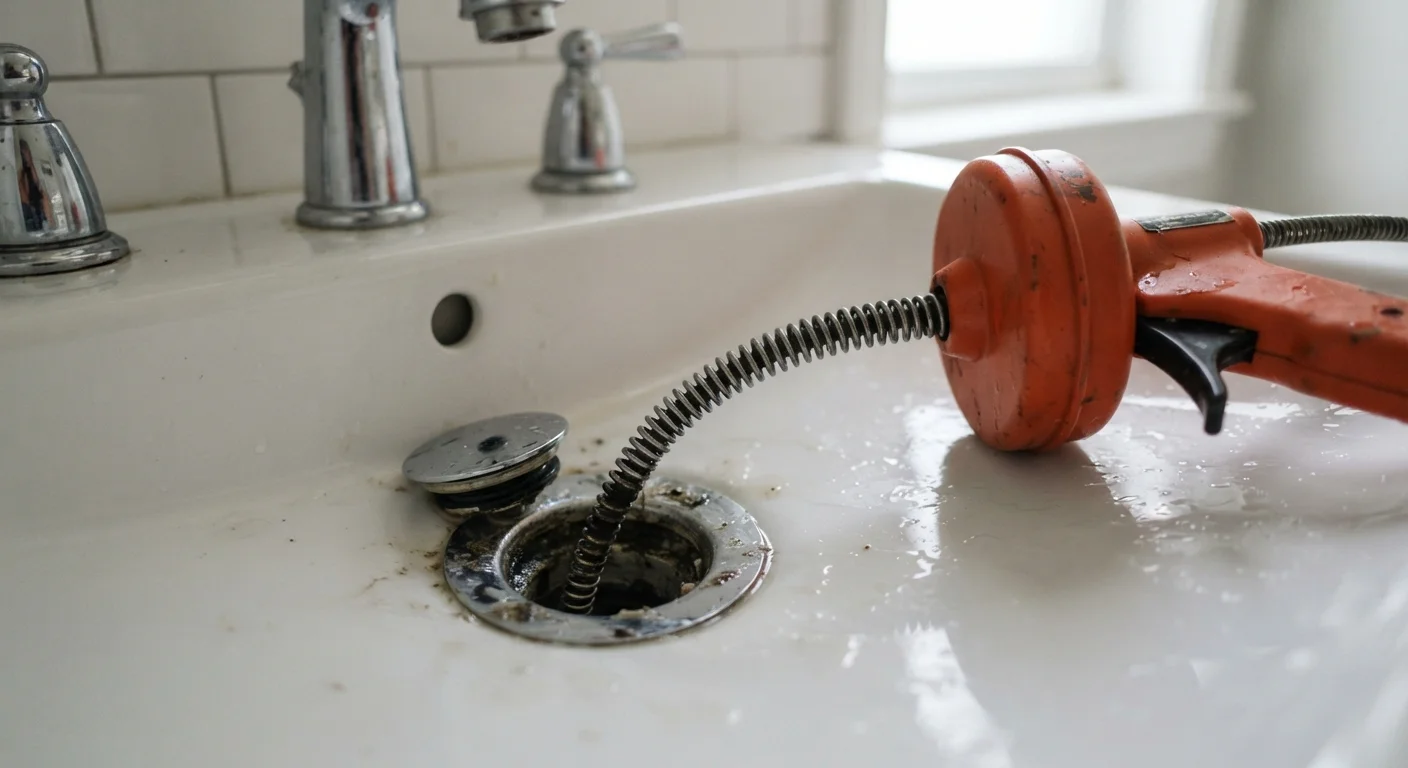
If the drain is still slow, feed a hand-crank drain snake into the drain opening. Rotate the handle clockwise as you push the cable deeper. When you feel resistance, continue rotating to either break through the clog or hook it so you can pull it back out. Withdraw the snake slowly and wipe the cable clean as it comes out.
Clean the P-trap if the drain remains blocked
The P-trap is the curved pipe section directly beneath your sink. Place a bucket underneath it. Using slip-joint pliers or by hand, unscrew the two slip nuts at each end of the curved section. Remove the P-trap and empty its contents into the bucket. Clear any debris with an old bottle brush, rinse thoroughly, then reattach it snugly. Run water to check for leaks at the connections.
Avoid Mixing Cleaning Agents
Never pour chemical drain cleaner into a drain after using the baking soda and vinegar method - or vice versa. Combining these can produce hazardous reactions. If you have already used a store-bought chemical cleaner, flush the drain thoroughly with cold water and wait at least 24 hours before attempting any other method.
Keeping Drains Clear Long-Term
Once your drain is flowing freely, a few consistent habits will help it stay that way. Never pour cooking grease down any drain - even with hot water running alongside it, grease eventually solidifies further down the pipe and catches debris. Dispose of grease in a sealed container in the trash.
In the bathroom, the single biggest factor is hair. A simple mesh strainer over the tub or shower drain will catch the vast majority of it. Empty the strainer after each shower and rinse it clean.
Prevention Costs Less Than Repairs
Place a mesh drain strainer over every bathroom drain to catch hair before it enters the pipe. Once a month, flush drains with hot water for 60 seconds to clear soap residue. These two habits eliminate most clogs before they form and take less than five minutes total.
If you have noticed other plumbing issues around the home - such as a toilet that runs continuously - tackling them early prevents compounding problems. Our guide to fixing a running toilet walks through the most common causes and how to resolve them yourself.
When to Call a Licensed Plumber
If multiple drains in your home are slow or blocked at the same time, this may indicate a clog deep in the main sewer line - not a fixture-level problem. Similarly, if you notice gurgling sounds from other drains or sewage odors, stop DIY attempts and contact a licensed plumber. Working on a main sewer line without proper equipment can cause backups and water damage.