

Key Takeaways
Saves the upfront cost of a service visit
A standard annual HVAC tune-up typically runs $80-$150, so skipping it does provide immediate short-term savings for households managing tight monthly budgets.
No scheduling or time commitment required
Arranging professional service requires coordinating with technicians, taking time off work, or waiting during peak seasons - deferring eliminates that friction in the short term.
Minor risk if the system is relatively new
A system installed within the last one to two years with clean filters and no prior issues carries lower immediate risk from a single missed service cycle than an aging unit.
Energy bills increase as efficiency drops
Dirty coils, clogged filters, and unlubricated components force the system to run longer to reach the set temperature, directly increasing electricity or gas consumption each month.
Small problems escalate into expensive repairs
A worn capacitor or low refrigerant charge costs little to correct early but can lead to compressor or motor failure costing hundreds or thousands of dollars if left unaddressed through a full season.
Shortened system lifespan means earlier replacement
Consistently skipping service can reduce an HVAC system's working life by several years, pulling a $5,000-$12,000 replacement expense well ahead of schedule.
Manufacturer warranties may be voided
Many HVAC manufacturers require documented annual professional maintenance as a condition of the warranty. Skipping service creates a gap in that record that can nullify coverage claims.
Risk of breakdown during peak demand periods
Systems under undetected stress are most likely to fail during the hottest or coldest days - exactly when HVAC technicians are busiest and emergency service rates are highest.
Indoor air quality can deteriorate
Without servicing, dirty coils and clogged filters circulate dust, allergens, and mold spores more freely, which can worsen respiratory conditions for household members.
Our Verdict
Skipping annual HVAC servicing is rarely the money-saver it appears to be. Deferred maintenance compounds quietly - raising energy costs, accelerating wear, and increasing the likelihood of an expensive breakdown at the worst possible time. While some basic upkeep can be handled by homeowners, a professional annual tune-up remains one of the most cost-effective investments in a home's major systems.
Homeowners who want to extend the life of their HVAC system, lower monthly utility bills, and avoid emergency repair costs will benefit most from keeping annual servicing on schedule.
The Short-Term Appeal of Skipping Service
When budgets are tight, an annual HVAC tune-up can feel like an easy line item to cut. The system is running, the air is cool (or warm), and nothing seems wrong. That logic is understandable - but it mirrors the same reasoning behind skipping other preventive checkups, like the ones discussed in our article on why routine checkups matter even when nothing feels wrong.
The reality is that HVAC systems degrade incrementally. Problems don't announce themselves until they reach a tipping point - and by then, repair costs are substantially higher than the tune-up would have been.
Saves the upfront cost of a service visit
A standard annual HVAC tune-up typically runs $80-$150, so skipping it does provide immediate short-term savings for households managing tight monthly budgets.
No scheduling or time commitment required
Arranging professional service requires coordinating with technicians, taking time off work, or waiting during peak seasons - deferring eliminates that friction in the short term.
Minor risk if the system is relatively new
A system installed within the last one to two years with clean filters and no prior issues carries lower immediate risk from a single missed service cycle than an aging unit.
What Skipping Service Actually Costs You
The consequences of deferred HVAC maintenance fall into three categories: higher operating costs, accelerated wear, and sudden failures.
Rising Energy Bills
A system clogged with dirt and debris has to work harder to move air. A dirty evaporator coil alone can reduce efficiency by 5-15%, pushing monthly utility bills noticeably higher. Our guide on hidden causes of high home energy bills covers how small inefficiencies like this compound over time.
Accelerated Component Wear
Belts, bearings, and electrical contacts experience more stress when the system runs inefficiently. What might have been a $80 belt replacement can become a $400 motor repair if the underlying strain goes unaddressed for a full season.
Refrigerant and Airflow Problems
Low refrigerant doesn't just reduce cooling - it causes the compressor to overheat and fail prematurely. Compressor replacement often costs more than half the value of an older system, making it a near-total-loss repair.
Energy bills increase as efficiency drops
Dirty coils, clogged filters, and unlubricated components force the system to run longer to reach the set temperature, directly increasing electricity or gas consumption each month.
Small problems escalate into expensive repairs
A worn capacitor or low refrigerant charge costs little to correct early but can lead to compressor or motor failure costing hundreds or thousands of dollars if left unaddressed through a full season.
Shortened system lifespan means earlier replacement
Consistently skipping service can reduce an HVAC system's working life by several years, pulling a $5,000-$12,000 replacement expense well ahead of schedule.
Manufacturer warranties may be voided
Many HVAC manufacturers require documented annual professional maintenance as a condition of the warranty. Skipping service creates a gap in that record that can nullify coverage claims.
Risk of breakdown during peak demand periods
Systems under undetected stress are most likely to fail during the hottest or coldest days - exactly when HVAC technicians are busiest and emergency service rates are highest.
Indoor air quality can deteriorate
Without servicing, dirty coils and clogged filters circulate dust, allergens, and mold spores more freely, which can worsen respiratory conditions for household members.
What Homeowners Can Do Between Professional Visits
Annual professional service doesn't eliminate the need for routine owner upkeep. The following tasks can meaningfully reduce risk and keep the system running efficiently between tune-ups:
- Replace air filters every 1-3 months depending on household conditions. Homes with pets or allergy sufferers should err toward monthly replacement.
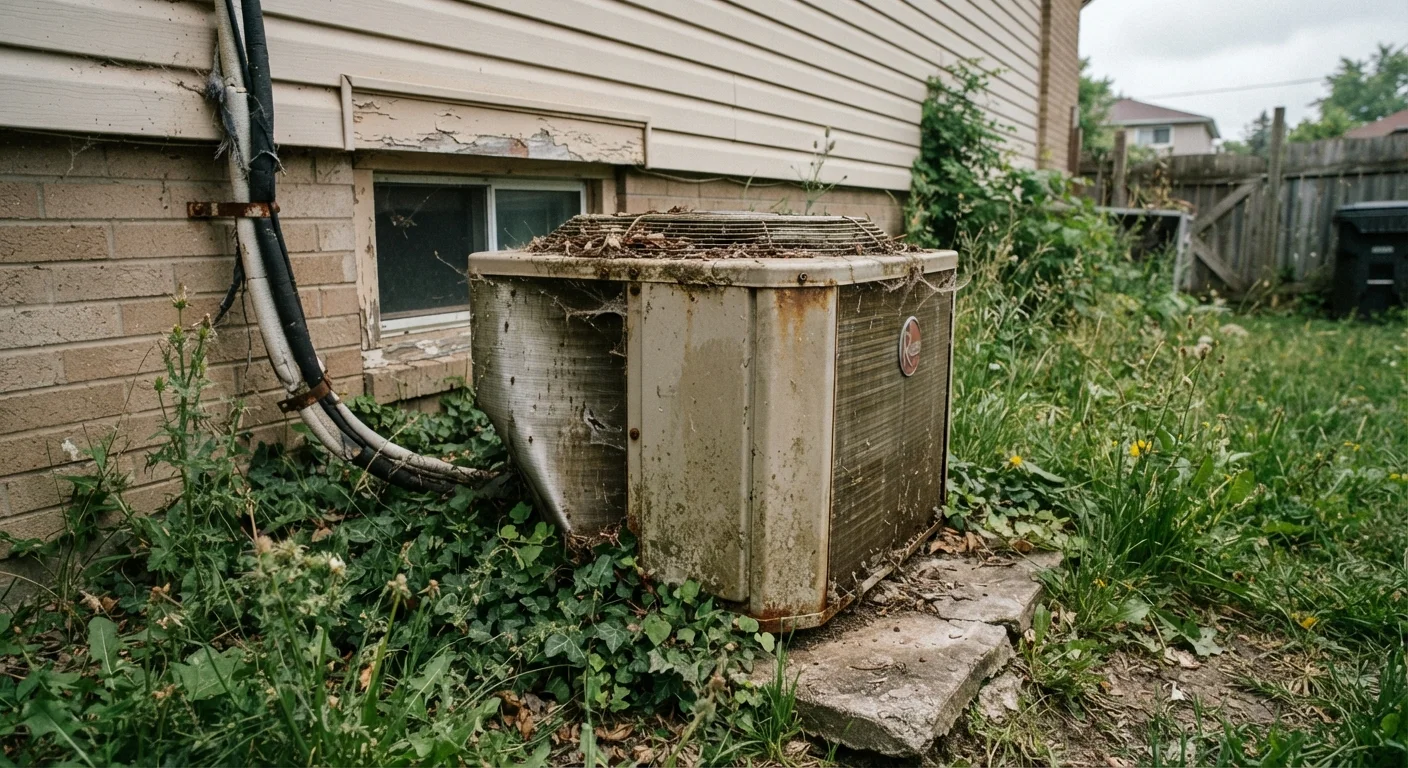
- Keep the outdoor unit clear. Maintain at least 18-24 inches of clearance around the condenser. Remove leaves, grass clippings, and debris after storms.
- Check drain lines seasonally. A clogged condensate drain can cause water damage and trigger system shutoffs. Flush with a small amount of diluted white vinegar a few times per year.
- Listen and observe. New rattles, reduced airflow from vents, or unusual cycling patterns are early warning signs worth noting before they worsen.
When to Always Call a Professional
Tasks involving refrigerants are federally regulated and require EPA Section 608 certification - homeowners cannot legally handle refrigerant themselves. Similarly, gas furnace heat exchanger inspections require professional equipment to detect cracks that can allow carbon monoxide to enter living spaces. Never attempt these tasks as DIY projects. If you smell gas or suspect a carbon monoxide issue, evacuate immediately and contact your utility provider and emergency services.
These steps complement - not replace - professional inspection. A licensed HVAC technician has the tools and training to check refrigerant levels, test electrical components, and inspect heat exchangers safely. Certain tasks, particularly anything involving refrigerants or gas furnace components, should always be handled by a qualified professional.
For a broader view of where HVAC fits in your home's upkeep schedule, see our seasonal home maintenance guide.
The Long-Term Cost of Deferred Maintenance
HVAC systems are typically designed to last 15-20 years with proper maintenance. Skipping annual service regularly can trim that lifespan to 10-12 years or less, meaning replacement arrives years ahead of schedule. A central system replacement can run $5,000-$12,000 depending on home size and system type - a significant unplanned expense for any household budget.
5-15%
Efficiency loss from a dirty evaporator coil
Industry estimates suggest a fouled evaporator coil can reduce HVAC system efficiency by this range, directly increasing energy costs.
15-20 years
Expected lifespan with proper maintenance
HVAC manufacturers and industry associations commonly cite this range as a well-maintained system's expected service life under normal residential conditions.
$5,000-$12,000
Typical central HVAC replacement cost
Replacement costs vary significantly by home size, system type, and region, but this range reflects commonly reported estimates for full central system replacement in the US.
Beyond the system itself, deferred maintenance affects home value. Buyers and inspectors notice unmaintained HVAC units, and a system near failure is often flagged during home sales, sometimes requiring price concessions. Consistent upkeep is one of the maintenance habits that preserves long-term home value, as outlined in our piece on maintenance tasks that protect your home's value over time.
The pattern of deferred maintenance and its compounding costs is not unique to HVAC. The same dynamic plays out with vehicles - a point explored in depth in the real cost of skipping routine maintenance.