

Key Takeaways
Summary
22 items · 20-45 minutes to assemble or audit your kit
Why Every Pet Owner Needs a First-Aid Kit
Accidents don't wait for convenient moments. A dog that cuts a paw on a walk, a cat that gets into something toxic, or a pet that sustains a minor wound during play - these situations happen suddenly and often outside of clinic hours. Having a dedicated pet first-aid kit at home means you can respond quickly and calmly, stabilize your animal, and make informed decisions about next steps.
A good kit also saves money over time. Handling a small wound cleanly at home - under your vet's phone guidance - may prevent a minor issue from escalating into an expensive emergency visit. That said, a first-aid kit is a bridge, not a replacement. For guidance on judging which situations can wait and which require urgent care, see When a Sick Pet Can Wait - and When It Can't. And if you're thinking about how to manage vet costs more broadly, Keeping Vet Costs Manageable Without Cutting Corners on Care offers practical strategies worth reading alongside this checklist.
Never Give Human Medications Without Vet Approval
Many common household medications - including ibuprofen, acetaminophen, and certain antidiarrheal drugs - are toxic to dogs and cats. Even low doses can cause serious organ damage. Before giving your pet any medication, including items marketed for humans, call your veterinarian or an animal poison control service for guidance specific to your pet's species and weight.
What to Put in Your Pet First-Aid Kit
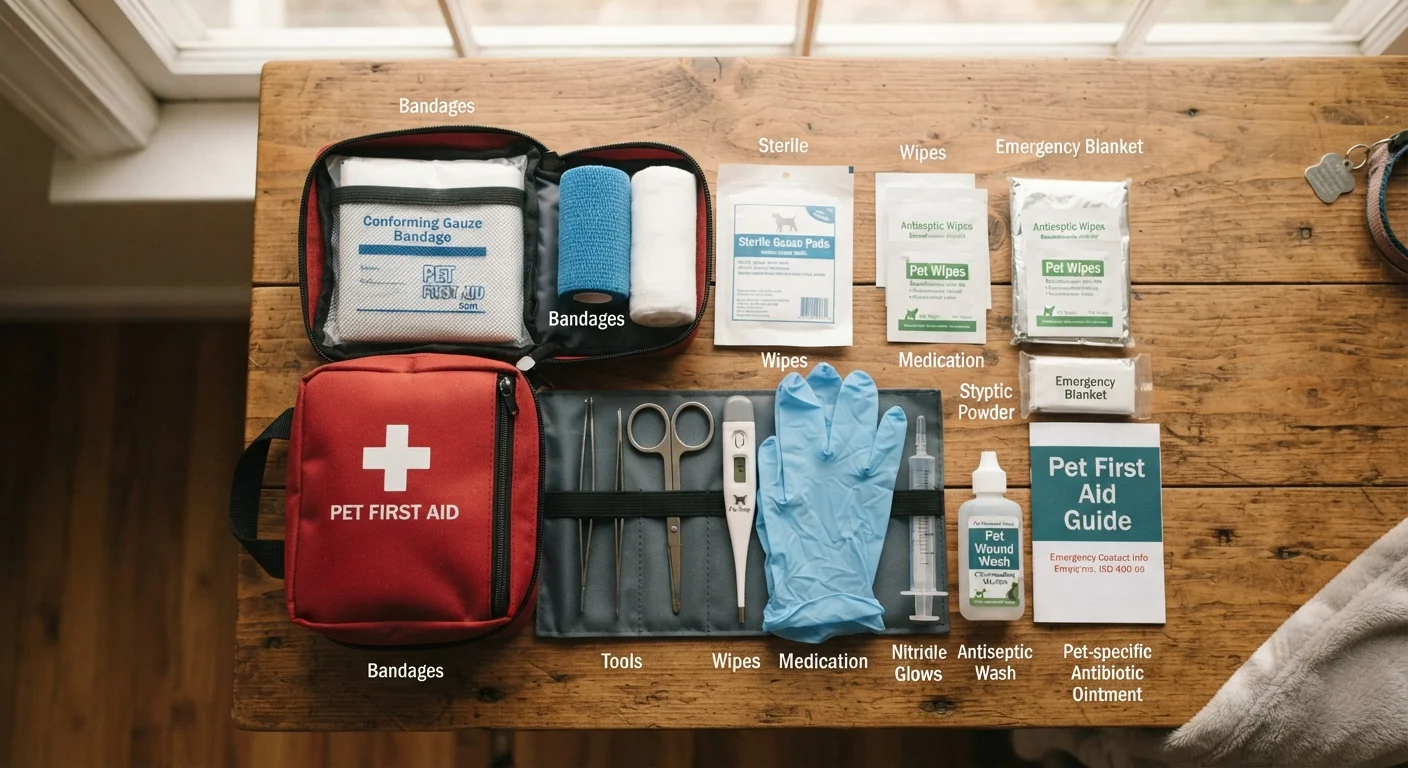
The checklist below is organized into four categories. Many items are found at any pharmacy. Avoid substituting human medications - common over-the-counter drugs such as ibuprofen, acetaminophen, and certain antihistamines can be toxic to dogs and cats. When in doubt, call your veterinarian or an animal poison control hotline before giving your pet anything.
Wound Care Supplies
Examination and Monitoring Tools
Restraint and Safety Items
Documentation and Reference
Store everything in a clearly labeled, waterproof container. A handled plastic storage box or a dedicated soft-sided bag works well. Keep one at home and consider a smaller travel version for road trips or hikes. If you're still setting up your overall pet care plan, Pet Insurance vs. a Dedicated Savings Fund can help you think through the financial side of unexpected veterinary needs.
Restock and Check Expiry Dates Regularly
Saline solutions, antiseptics, and other consumables have expiration dates - using expired supplies may reduce effectiveness or cause harm. Set a calendar reminder every six months to go through your kit, replace anything used or expired, and confirm that reference information such as your vet's phone number is still current.
Tools and Resources to Keep Alongside Your Kit
Supplies alone aren't enough. Keep the following information physically stored with your kit - printed on a card or tucked inside the lid - so you're not searching for phone numbers in a stressful moment.
Veterinarian contact card
Provides immediate access to your regular vet's phone number and after-hours instructions during an emergency.
24-hour emergency veterinary clinic details
Ensures you know exactly where to go and how to reach an emergency vet outside normal clinic hours.
Animal Poison Control Hotline number
Connects you with toxicology specialists if your pet ingests a potentially dangerous substance - note that a consultation fee may apply.
Pet first-aid reference handbook
Provides step-by-step visual guidance for common scenarios such as bleeding control, choking response, and CPR basics for pets.
Waterproof storage container with handle
Keeps all kit supplies organized, dry, and portable so the kit is easy to grab quickly.
If you've recently added a pet to your household, Before the New Pet Arrives covers the broader preparation checklist, including supplies, routines, and family readiness that complement having a first-aid kit ready from day one.
This article is for general informational purposes only and does not constitute veterinary advice. Always consult a licensed veterinarian for your pet's specific health needs or in any emergency situation.