

Pets & Animals

Before the New Pet Arrives: A Family Training Readiness Checklist

Share
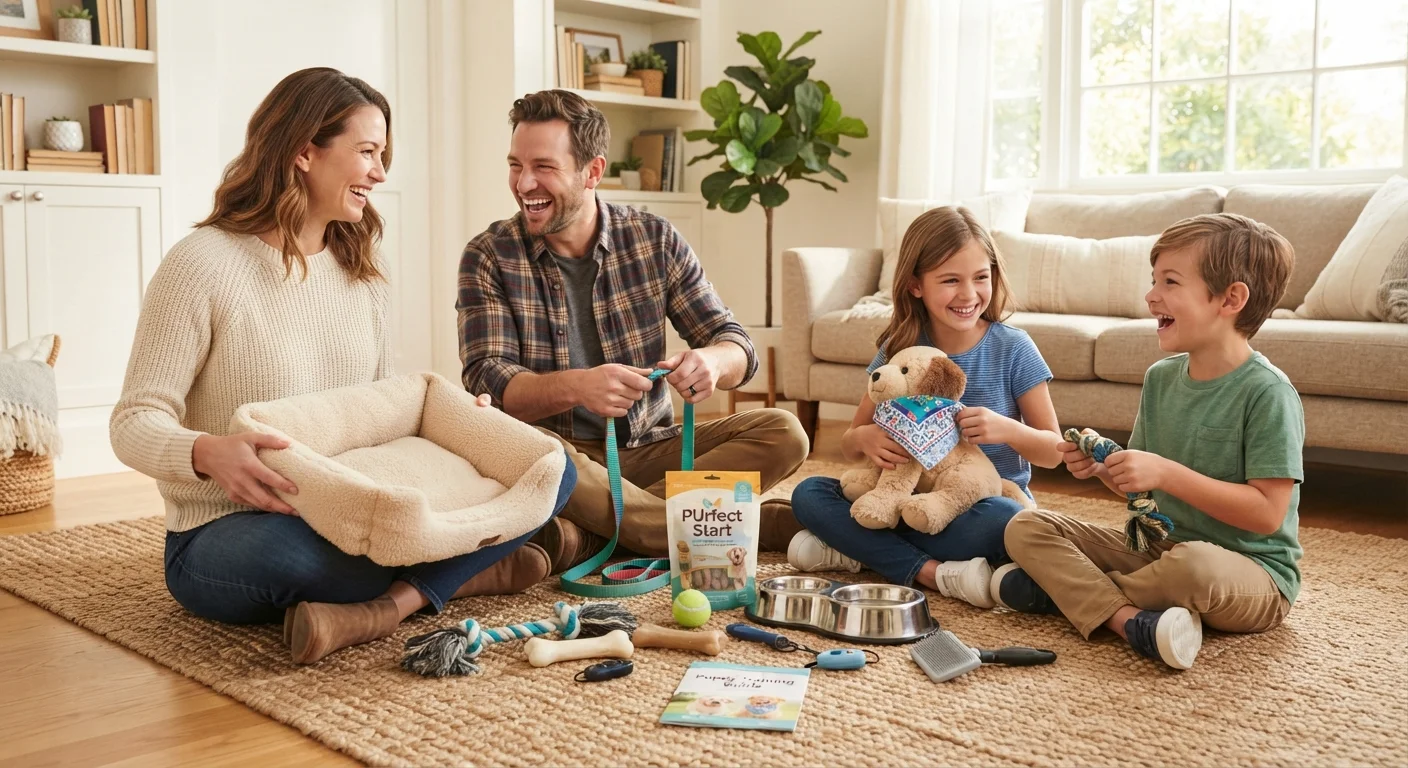
A family sitting together in a living room surrounded by pet training supplies and a pet bed

Key Takeaways

Consistent rules set before arrival prevent confusing mixed signals that slow training progress.
Every family member — including children — needs a defined role in the training plan.
Basic supplies and a designated training space should be ready on day one.
A vet appointment and a feeding schedule should be arranged before the pet comes home.
Understanding your pet's species-specific needs is essential groundwork for effective training.
30–60 min

Summary

24 items · 30–60 minutes

Why Preparation Matters More Than Training Talent

Most training problems families face don't stem from a difficult pet — they stem from an unprepared household. When routines are unclear, commands are inconsistent, and supplies aren't in place, even the most adaptable animal will struggle to learn the rules of the house. Research from veterinary behaviorists consistently shows that early, consistent reinforcement produces the fastest and most durable results.

This checklist walks you through four readiness areas: your home environment, family roles and rules, essential supplies, and foundational health planning. Work through it before your new pet crosses the threshold, and you'll be set up for success from the very first day.

For guidance on how children can actively participate once your pet is home, see our article on involving kids in pet training. And don't overlook the health side of preparation — our Pet Health & Care hub covers wellness basics every new pet owner should review.

Home Environment

Designate one quiet, low-traffic area as the pet's home base where they can rest and feel safe during the adjustment period. Must
Remove or secure hazards in pet-accessible areas, including electrical cords, toxic houseplants, and small objects that could be swallowed. Must
Establish clear boundaries — decide which rooms and furniture are off-limits and communicate these to every household member before arrival. Must
Set up a consistent feeding station in a calm location away from high-traffic areas to support a stable mealtime routine. Must
Identify an outdoor or indoor bathroom spot and plan the route the pet will take to reach it reliably. Should

Family Roles and Rules

Hold a family meeting to agree on a short list of basic commands the pet will be taught and decide that everyone will use the exact same words consistently. Must
Assign a primary training lead — one adult who takes responsibility for coordinating the training plan and tracking progress. Must
Define age-appropriate roles for each child in the household so kids are involved but boundaries are respected. Should
Agree as a family on what behaviors will never be rewarded, such as jumping, begging, or rough play — and commit to enforcing this consistently. Must
Create a simple daily schedule covering feeding times, training sessions (5–10 minutes each), exercise, and rest so the pet's routine is predictable. Should
Discuss a plan for what happens when house rules are broken — agree in advance that corrections will be calm and consistent, never physical. Must

Supplies and Setup

Purchase species-appropriate food recommended by your veterinarian and have at least a one-week supply ready before the pet arrives. Must
Set up a properly sized crate or containment area if crate training is part of your plan — have it placed and furnished before day one. Should
Stock a training treat supply using small, low-calorie options suitable for your pet's size and species. Must
Have a collar, ID tag with your contact information, and a leash ready before the pet arrives. Must
Assemble a basic pet first-aid kit and keep it in an accessible location for minor injuries before a vet visit is possible. Should
Provide at least two enrichment items — such as puzzle feeders or species-appropriate toys — to keep the pet mentally engaged during settling-in. Nice to have

Health and Veterinary Planning

Book a veterinary wellness appointment within the first week of the pet's arrival, or before if the animal has not been recently examined. Must
Confirm the pet's vaccination status and request documentation from the breeder, shelter, or previous owner. Must
Ask your vet about a parasite prevention plan appropriate for your region and the pet's age and species. Must
Research whether your pet's breed or species has known behavioral or health traits that will influence your training approach. Should
Identify an emergency veterinary clinic in your area and save the contact information before you need it. Should
Consider whether pet insurance or a dedicated savings fund is a realistic option for your budget to cover unexpected veterinary costs. Nice to have

Tools That Support Your Training Plan

You don't need a cabinet full of gadgets to train a pet well — but a few purposeful tools make consistency much easier to maintain, especially in a busy household. Below are the resources worth having on hand before training begins.

Required

Clicker or Marker Word

Marks the exact moment a correct behavior occurs, helping the pet associate actions with rewards more precisely than praise alone.

Required

Training Treat Pouch

Keeps small training rewards immediately accessible during sessions so reinforcement is delivered within seconds of the desired behavior.

Optional

Appropriately Sized Crate

Provides a safe, den-like space that supports housetraining and gives the pet a secure resting area during adjustment.

Optional

Baby Gates or Exercise Pen

Controls the pet's access to different areas of the home while boundaries are being learned, reducing the chance of unsupervised problem behaviors.

Optional

Training Log or Notebook

Tracks which commands have been introduced, the pet's progress, and any behavioral patterns that may need veterinary or trainer input.

Required

Leash and Collar with ID Tag

Required for safe outdoor movement and for identification if the pet escapes during the settling-in period.

Once supplies are in place, take 15 minutes as a family to walk through the home together and agree on which areas are pet-accessible, where the feeding station will be, and where the pet will sleep. This walkthrough alone prevents a surprising number of early training conflicts.

For feeding-related preparation, the Pet Nutrition & Feeding hub provides guidance on building a balanced, affordable diet from the start. Also make sure you've assembled a basic pet first-aid kit before your new companion arrives home.

Consistency Is the Single Most Critical Factor

Even one family member who ignores agreed-upon rules — allowing the pet on furniture, using different command words, or rewarding unwanted behaviors — can significantly delay training progress for everyone. Veterinary behaviorists widely agree that inconsistency is the leading cause of persistent behavioral problems in household pets. Before the pet arrives, get genuine agreement from every person in the home, not just acknowledgment.

Pets & Animals Editorial Team is the collective byline for our editorial team and contributor network. Articles published under this byline or an editorial pen name are researched, written, and reviewed according to our editorial standards for clarity, consistency, and independence before publication.

View all articles by Pets & Animals Editorial Team →
Disclaimer: The content provided on our blog site traverses numerous categories, offering readers valuable and practical information. Readers can use the editorial team’s research and data to gain more insights into their topics of interest. However, they are requested not to treat the articles as conclusive. The website team cannot be held responsible for differences in data or inaccuracies found across other platforms. Please also note that the site might also miss out on various schemes and offers available that the readers may find more beneficial than the ones we cover.