

Key Takeaways
Our Verdict
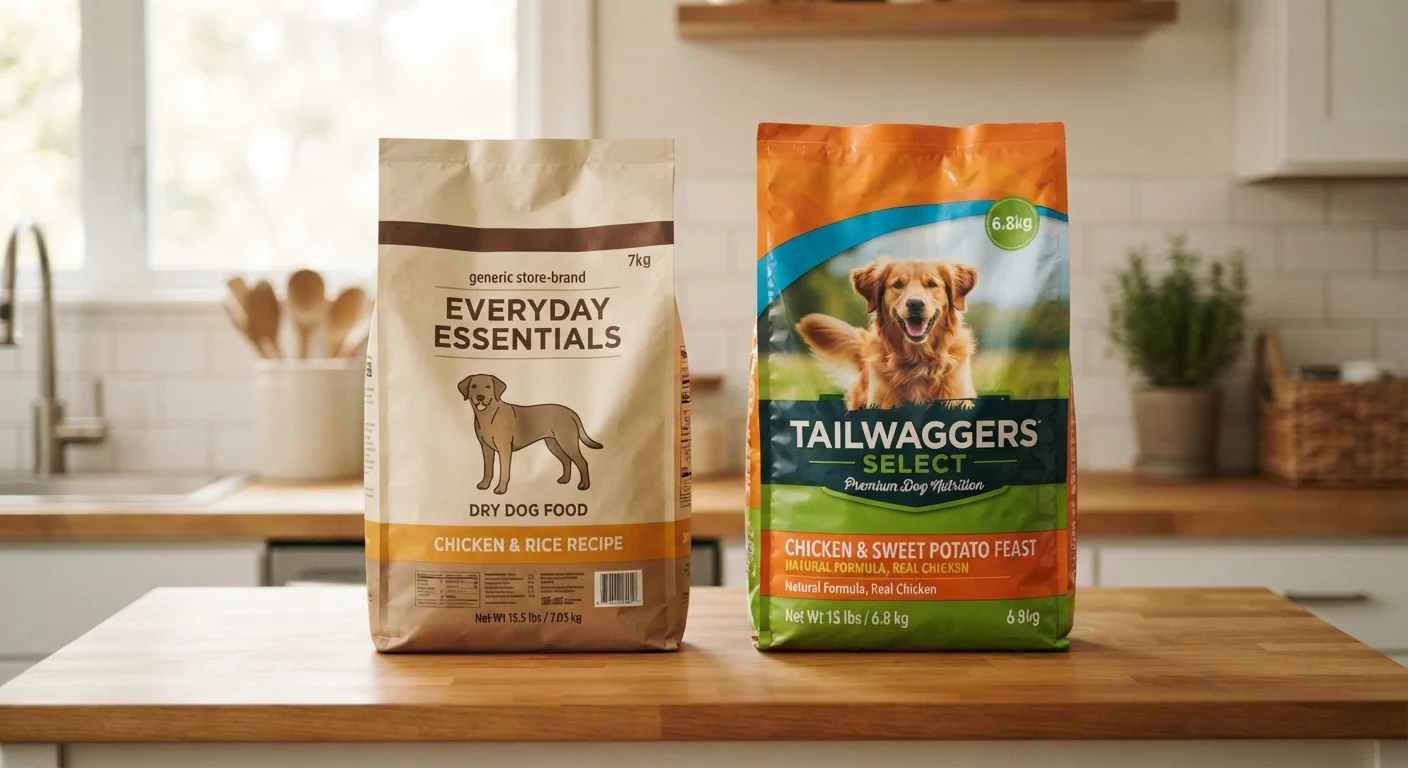
Neither store-brand nor name-brand pet food is automatically superior. What matters most is whether the food meets established nutritional standards for your pet's life stage, uses identifiable ingredients, and suits your pet's health profile. Many store-brand options genuinely deliver adequate nutrition at lower cost, while some name-brand products justify their price through feeding trials and higher ingredient transparency. The right choice depends on your pet's individual needs, not the label.
| Best for | Recommended |
|---|---|
| Budget-conscious families with healthy adult pets | Store-brand foods with AAFCO nutritional adequacy statements |
| Pets with specific health conditions or life-stage needs | Veterinarian-guided selection from either tier |
| Owners prioritizing ingredient transparency and feeding trial data | Name-brand foods backed by published feeding trials |
What Actually Separates Store-Brand from Name-Brand Pet Food
The most visible difference between store-brand and name-brand pet food is price. A store-brand dry dog food may cost 30-50% less per pound than a well-marketed alternative. But price reflects many factors beyond nutritional quality - including advertising spend, packaging design, and retail markup.
At a regulatory level, all pet food sold in the United States is subject to oversight from the Association of American Feed Control Officials (AAFCO), individual state feed laws, and the FDA. Both tiers must meet the same baseline labeling requirements. The single most useful signal on any bag or can is the AAFCO nutritional adequacy statement, which indicates whether a food meets minimum nutrient profiles for a given life stage - and, crucially, whether it was validated through a feeding trial or computer-modeled formulation. Feeding trials provide stronger real-world evidence of nutritional performance.
Many store-brand foods are manufactured by the same contract facilities that produce name-brand products. Others are formulated independently by retailers. Without investigating the manufacturer directly, the label and guaranteed analysis panel are your primary tools for comparison. See our guide to dry kibble vs. wet food for more context on how food format also affects nutritional value and cost.
Reading the Ingredient List and Guaranteed Analysis
Ingredients are listed by pre-cooking weight, so meat listed first doesn't automatically mean it dominates the final formula - moisture is lost during processing. Look for named protein sources (e.g., "chicken" or "salmon meal") rather than vague terms like "meat by-products," which are legal but less transparent about origin.
The guaranteed analysis panel shows minimum crude protein and fat percentages, and maximum fiber and moisture. These figures allow a rough nutrient comparison across price tiers, but they don't reveal ingredient quality or digestibility. A food with identical guaranteed analysis numbers may differ meaningfully in how much of those nutrients a pet actually absorbs.
| Store-Brand Pet Food | Name-Brand Pet Food | |
|---|---|---|
| Average cost per pound (dry) | Generally lower | Generally higher |
| AAFCO compliance | Required - same standard | Required - same standard |
| Feeding trial validation | Less common | More often available |
| Ingredient transparency | Variable by retailer | Often more detailed |
| Marketing claims ("premium," "natural") | Less prominent | Frequently present; unregulated |
| Veterinary nutritionist involvement | Not always disclosed | More often disclosed |
| Manufacturer quality-control data | Rarely published | Sometimes published |
When evaluating either tier, check for: a named protein in the first one or two ingredients; an AAFCO statement appropriate to your pet's life stage; and, ideally, a manufacturer contact number so you can ask about sourcing and quality-control testing. Some name-brand manufacturers publish third-party safety testing results - a genuine differentiator worth noting.
For families exploring other ways to manage pet food costs responsibly, our article on stretching your pet food budget without cutting corners outlines practical strategies that don't compromise nutrition.
When Price Differences May Be Justified
Some name-brand products do offer genuine added value. Foods that have completed AAFCO feeding trials - rather than relying solely on nutrient-profile formulation - provide stronger evidence that pets thrive on them over time. Similarly, manufacturers that invest in nutritional research, employ veterinary nutritionists, and publish quality-control protocols may offer meaningful assurance that budget alternatives don't match.
Life stage and health status also matter. Puppies, kittens, pregnant or nursing animals, and seniors have more specific nutritional requirements. Pets managing chronic conditions such as kidney disease, food allergies, or obesity may genuinely benefit from prescription or specialized diets, which fall into a separate, clinically validated category. For these animals, a conversation with your veterinarian is essential before switching foods based on price alone.
Ask the Manufacturer Directly
Before switching foods, consider calling or emailing the manufacturer with a few key questions: Do you employ a board-certified veterinary nutritionist? Have you conducted AAFCO feeding trials? Do you test each batch for contaminants? A company confident in its product quality should be able to answer clearly. This applies equally to store-brand and name-brand options.
It's also worth noting that marketing language - words like "premium," "natural," "holistic," or "human-grade" - carries no regulated nutritional meaning in U.S. pet food law. A higher price tag attached to these terms does not confirm superior nutrition. Our related piece on grain-free pet diet myths illustrates how marketing trends can outpace the nutritional evidence.
Making a Practical Decision for Your Household
For a healthy adult dog or cat with no diagnosed dietary conditions, a store-brand food carrying a valid AAFCO adequacy statement - particularly one validated through a feeding trial - can be a genuinely sound, budget-friendly choice. Monitor your pet's coat condition, energy level, digestion, and body weight when introducing any new food; these are practical indicators of how well a diet is working.
If your pet shows signs of digestive upset, persistent skin or coat issues, or unexplained weight changes, consult your veterinarian before attributing the issue to food brand alone. Many factors affect pet health, and your vet can help you rule out medical causes and, if needed, guide you toward a more appropriate diet at any price point.
Switching foods should always be done gradually - over seven to ten days - by mixing increasing amounts of the new food with the old. This reduces digestive disruption regardless of whether you're moving up or down in price tier.
Thinking broadly about pet-related costs? Our overview on pet insurance vs. a dedicated savings fund can help you plan for veterinary expenses alongside your routine food budget.
This article is for general informational purposes only and does not constitute veterinary or nutritional advice. Consult a licensed veterinarian for guidance tailored to your pet's individual health needs.