

Key Takeaways
Option A
Dry Kibble
The convenient, cost-effective everyday staple.
Best for: Pet owners seeking an affordable, shelf-stable option that supports dental health and fits a structured feeding routine.
Option B
Wet Food
The moisture-rich, palatable choice for picky or at-risk pets.
Best for: Pets who need extra hydration, have dental problems, are recovering from illness, or are difficult to tempt with dry food.
If your budget is tight and your pet is healthy
Dry Kibble
Kibble delivers complete nutrition at a lower cost per serving and keeps well between meals, making it the practical everyday choice for most families.
If your cat drinks very little water
Wet Food
Cats evolved as desert animals with a low thirst drive; the high moisture in wet food helps support kidney and urinary tract health.
If your pet has dental disease or missing teeth
Wet Food
Soft food is easier to chew and swallow for pets with painful or compromised teeth, reducing mealtime discomfort.
If you want to encourage a picky eater
Wet Food
The stronger aroma and softer texture of wet food tend to be more appealing to finicky dogs and cats, helping ensure adequate intake.
If you want flexibility without sacrificing nutrition
Dry Kibble
Kibble can be mixed with small amounts of wet food to increase palatability and moisture while keeping daily food costs manageable.
How the Two Formats Differ at a Basic Level
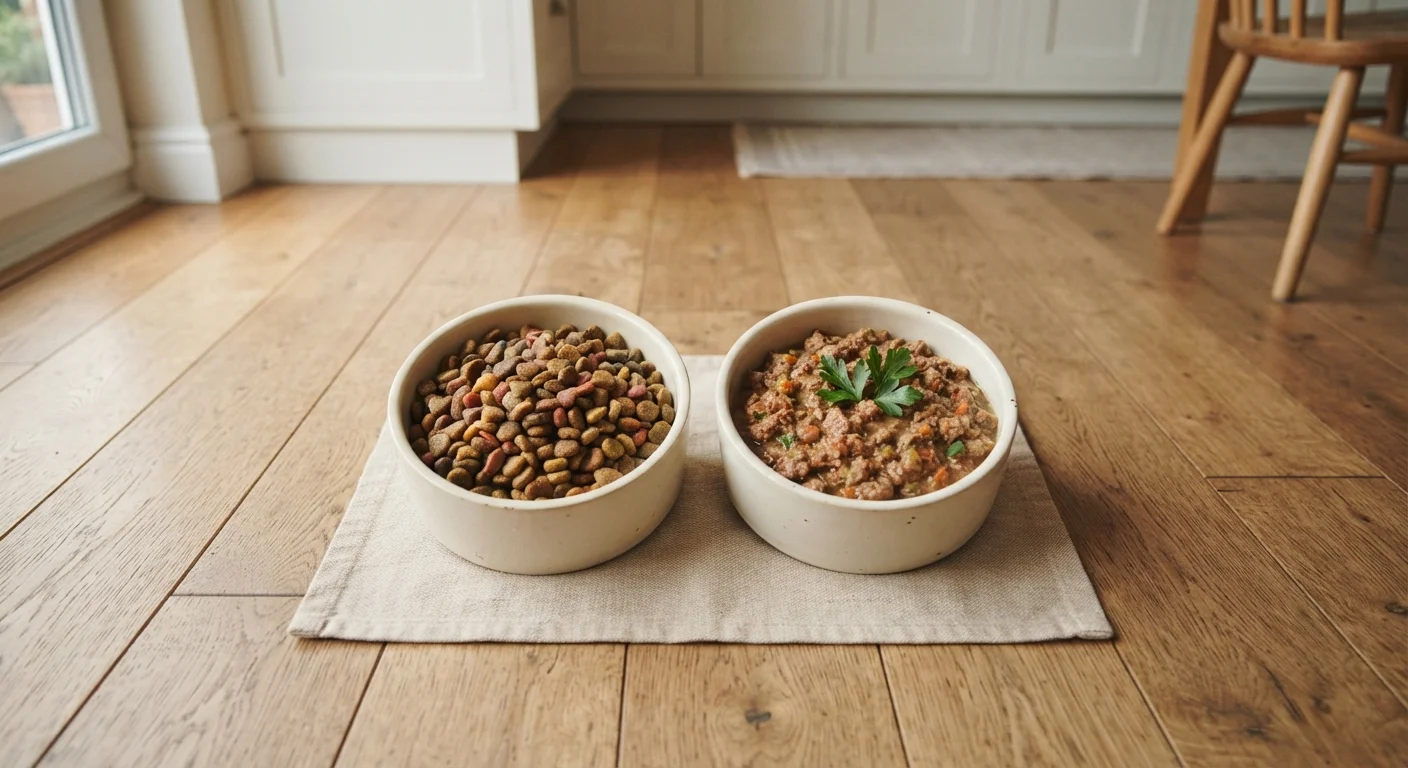
Dry kibble is made by combining ingredients - typically meat meals, grains or legumes, fats, and added vitamins - into a dough that is cooked under high heat and pressure, then extruded into small pieces and dried. The result is a product with roughly 6-10% moisture content. Wet food, by contrast, is processed at lower temperatures and sealed in cans or pouches, retaining 70-80% water. Both formats can be nutritionally complete, but they behave very differently once they reach your pet's body.
To understand whether a specific product is actually complete and balanced, look for the AAFCO nutritional adequacy statement on the label. Our guide to reading pet food labels explains exactly what that statement means and how to find it. For a deeper look at what nutrients dogs and cats actually need, see what goes into a balanced diet for dogs and cats.
| Criterion | Dry Kibble | Wet Food |
|---|---|---|
| Moisture content | 6-10% | 70-80% |
| Cost per serving | Lower | Higher |
| Shelf life after opening | Weeks to months | 1-2 days refrigerated |
| Dental scrubbing effect | Modest benefit | Minimal to none |
| Palatability for picky eaters | Moderate | Generally higher |
| Caloric density | Higher per gram | Lower per gram |
| Feeding convenience | Easy to measure and store | Requires refrigeration; risk of waste |
Hydration: Why Water Content Is a Real Health Issue
Hydration is where wet food holds its clearest advantage - particularly for cats. Feline kidneys are adapted to concentrate urine efficiently, which means cats naturally drink less water than dogs relative to their size. A diet consisting only of dry kibble may leave some cats in a state of mild, chronic under-hydration, which veterinary professionals associate with increased risk of urinary tract issues and kidney stress over time.
Dogs are generally better at compensating by drinking from their bowl, but pets with kidney disease, diabetes, or a history of urinary crystals often benefit from the additional moisture wet food provides. If your pet falls into one of these categories, discuss diet adjustments with your veterinarian before making changes.
70-80%
Average moisture in wet pet food
Compared to just 6-10% in dry kibble, wet food can meaningfully supplement daily fluid intake for cats and dogs.
~50%
Cats affected by urinary or kidney issues
Veterinary studies suggest a substantial proportion of cats develop kidney disease during their lifetime, making hydration a key nutritional concern.
Dental Health: A More Nuanced Picture
Dry kibble is commonly associated with dental benefits, and there is some basis for this: the mechanical action of chewing a firm piece of food can scrape plaque from tooth surfaces. However, the effect is modest. Most veterinary dental specialists note that kibble alone is not a substitute for regular tooth brushing or professional cleanings. Kibble that crumbles immediately on contact provides very little abrasive benefit.
Wet food, by contrast, does not provide any scraping action. Pets eating exclusively wet food may accumulate plaque and tartar faster if no other dental care routine is in place. For a thorough look at what dental care for pets actually involves, see our article on dental health in pets. The practical takeaway: regardless of food format, an active dental care routine matters.
AAFCO Adequacy Applies to Both Formats
Whether you choose dry or wet food, look for an AAFCO nutritional adequacy statement indicating the product is complete and balanced for your pet's life stage. Some products labeled as 'complementary' or 'intermittent feeding' are not complete on their own and should not be a pet's sole diet. This applies equally to treats, toppers, and mix-ins.
Cost, Convenience, and Practical Feeding
For budget-conscious families, the cost difference between formats is significant. On a per-calorie basis, dry kibble is consistently less expensive than wet food. A large bag of dry food can last weeks, and once sealed, it stays fresh for months. Wet food costs more per serving, requires refrigeration after opening, and should be used within a day or two - which can mean waste if your pet doesn't finish a portion.
That said, feeding a small amount of wet food alongside kibble - sometimes called a mixed or combination diet - is a strategy worth considering. It can increase palatability, add moisture, and make mealtime more interesting for pets who've grown bored with a single texture. The key is adjusting total portion sizes so the combined calories match your pet's daily needs, not simply adding wet food on top of a full kibble ration.
If you're weighing cost across different product tiers, our overview of store-brand vs. name-brand pet food can help you evaluate whether a price difference reflects meaningful quality differences. Young pets have additional considerations - feeding a puppy or kitten covers life-stage-specific guidance. And if you want to track how your pet is responding to any dietary change, the pet nutrition checkup article offers a useful observational checklist.
This article is for general informational purposes only and does not constitute veterinary advice. Consult a licensed veterinarian before making significant changes to your pet's diet, especially if your pet has an existing health condition.