

Key Takeaways
Why Your Pet's Gut Needs Time to Adjust
Your pet's digestive system relies on a stable community of gut bacteria (called the microbiome) that is tuned to their current diet. When food changes abruptly, the microbiome can be disrupted before it has a chance to adapt, producing gas, soft stools, vomiting, or a flat-out refusal to eat. This isn't fussiness - it's basic digestive biology.
The risk is higher than many owners expect. Even switching between two foods that look similar on the label - say, the same protein source in a different brand - can cause upset if the fiber sources, fat content, or ingredient ratios differ meaningfully. Before you start, it pays to understand what's actually in both foods. Our guide on reading a pet food label walks you through ingredient lists and guaranteed analysis so you know exactly what you're comparing.
Certain pets need extra care during any transition: seniors, whose digestion tends to be less resilient (see our article on feeding a senior pet), as well as puppies, kittens, and any animal with a history of gastrointestinal sensitivity. If your pet has a diagnosed condition, talk to your veterinarian before making any dietary change.
What you will need
What You'll Need Before You Start
Gathering a few simple tools ahead of time prevents guesswork mid-transition and helps you stick to the schedule consistently.
Kitchen scale or measuring cups
Ensures you mix old and new food at precise ratios rather than estimating by eye.
Transition schedule (written or printed)
Keeps you on track day by day so you don't accidentally advance too fast or fall behind.
Pet journal or notes app
Log your pet's daily stool consistency, appetite, and any symptoms to share with your vet if needed.
Probiotic supplement (vet-approved)
Some veterinarians recommend a pet-specific probiotic to support microbiome stability during transitions - ask your vet first.
The Step-by-Step Transition Plan
Follow the ratio schedule below over seven to ten days. If your pet shows signs of upset at any stage - loose stools lasting more than two days, vomiting, or visible discomfort - pause and hold that ratio for an additional two to three days before advancing.
Days 1-2: 75% Old Food, 25% New Food
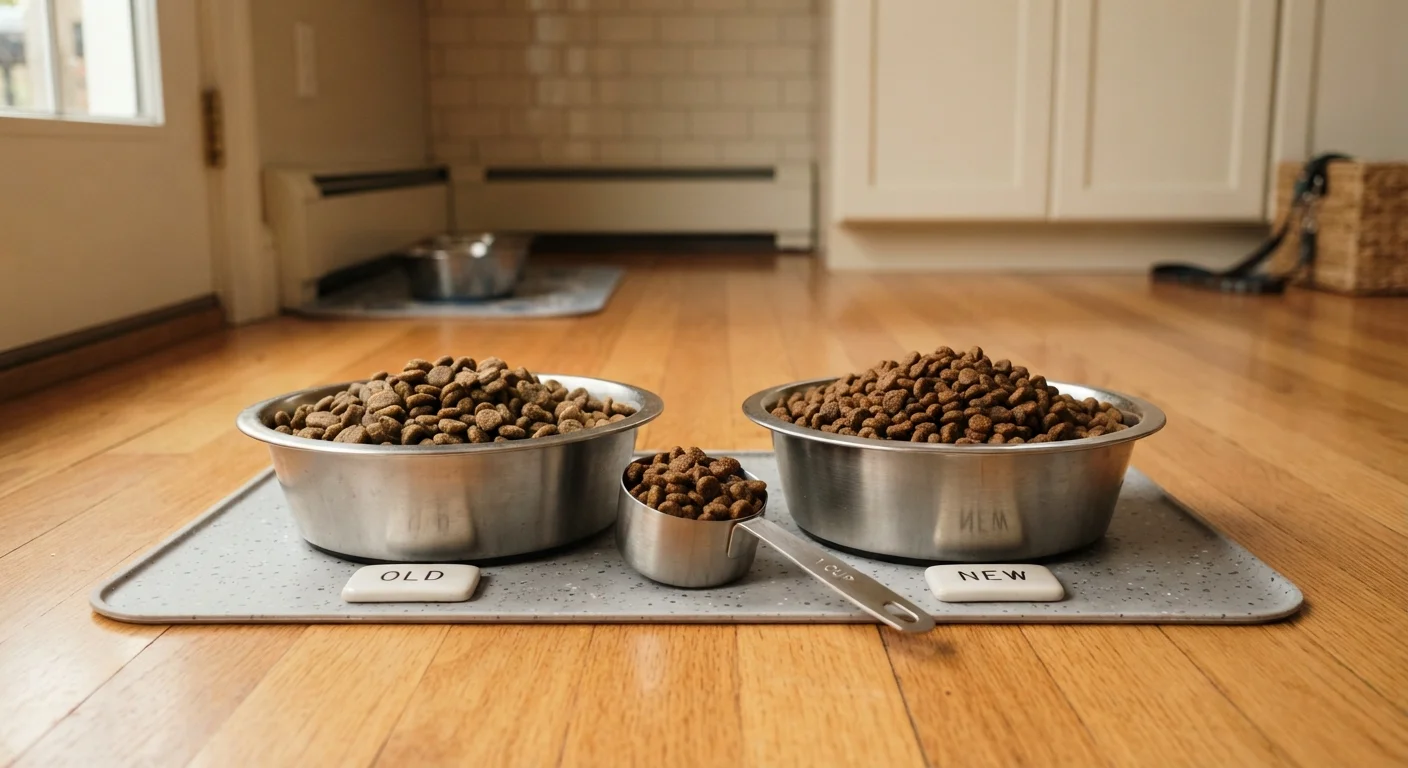
Measure out your pet's normal daily portion. Replace 25% of that amount with the new food and mix them together in the bowl. At this stage, many pets won't even notice the difference in smell or texture, which helps the transition begin without resistance.
Days 3-4: 50% Old Food, 50% New Food
Move to an equal split. This is often the stage where pets with sensitive stomachs first show mild changes in stool consistency. A slightly softer stool at this point is normal. If loose stools persist beyond two days, hold this ratio rather than advancing.
Days 5-6: 25% Old Food, 75% New Food
The new food now makes up the majority of each meal. Your pet's digestive system has had several days to begin adjusting its enzyme production and gut bacteria. Continue monitoring stool quality and appetite at each feeding.
Days 7-10: 100% New Food
Serve the new food exclusively. Most pets settle in without issue by this point. Continue observing for one to two weeks after the full switch - some dietary intolerances take time to become visible as skin, coat, or longer-term digestive changes rather than immediate upset.
Extend the Timeline for Picky or Sensitive Pets
If your pet is a known picky eater, has a sensitive stomach, or is over seven years old, consider stretching the full transition to 14 days by spending three to four days at each ratio stage. A slower pace costs nothing extra and significantly reduces the chance of digestive upset that could derail the switch entirely.
When to Slow Down or Stop
Mild, brief digestive changes are common and expected. However, certain symptoms mean you should stop the transition and consult your veterinarian promptly:
- Vomiting more than once in a 24-hour period
- Diarrhea lasting more than two to three days or containing blood
- Complete refusal to eat for more than 24 hours (cats) or 48 hours (dogs)
- Lethargy, bloating, or signs of pain
These symptoms may indicate an intolerance, allergy, or an underlying condition that a food change has brought to the surface. A vet visit is the right next step - not a faster transition or a return to the old food without guidance.
Once the switch is complete, keep monitoring your pet's coat, energy, weight, and digestion over the following weeks. Our pet nutrition checkup guide provides a practical checklist of observable signs that a diet may still need adjusting. And if budget is part of why you're switching foods in the first place, see how to stretch your pet food budget for nutritionally sound ways to manage costs.
Never Switch Foods Cold Turkey
Jumping straight to a new food - even a higher-quality one - is one of the most common causes of avoidable digestive illness in pets. An abrupt switch can cause painful gas, diarrhea, and vomiting within hours. Always follow a gradual transition schedule, regardless of how similar the two foods appear on the label.
This article provides general educational information for pet owners and is not a substitute for personalized veterinary advice. Always consult a licensed veterinarian for guidance specific to your pet's health and dietary needs.