

Key Takeaways
Why Safety Myths Are Especially Risky on the Road
Road trips are one of the most beloved ways American families explore the country - affordable, flexible, and full of spontaneous moments. But a handful of deeply embedded assumptions about driving safety can quietly undermine even the most carefully planned trip. Unlike travel myths about booking windows or luggage fees, safety myths carry real physical stakes.
The good news: busting these myths takes almost no extra effort. It just requires swapping assumptions for a more accurate picture of how roads, vehicles, and human attention actually work. Families who do that tend to arrive at their destinations with far fewer surprises - and far more confidence.
Myth
My car has lane assist and automatic braking, so it will catch any mistakes I make on a long drive.
Fact
Advanced driver-assistance systems are designed to support attentive drivers, not replace them. They have documented limitations in poor weather, construction zones, and low-visibility conditions.
It's easy to feel invincible behind the wheel of a newer vehicle loaded with technology. But lane-keeping assist, automatic emergency braking, and blind-spot monitoring all carry important limitations that manufacturers disclose in their manuals. These systems can struggle with faded lane markings, heavy rain, glare, or unexpected road debris.
The real picture of modern car safety features is more nuanced than most families realize. Treating these tools as a safety net invites a dangerous reduction in attentiveness - which researchers refer to as automation complacency. Use them as aids, not substitutes for focused driving.
Myth
If I stay at or under the speed limit, I'm driving safely.
Fact
Posted speed limits reflect ideal road and weather conditions. Driving at the limit in rain, fog, heavy traffic, or unfamiliar terrain can still be unsafe.
Speed limits are set based on optimal conditions - dry pavement, good visibility, normal traffic flow. When conditions change, the appropriate safe speed changes with them. This is especially relevant on rural interstates where the limit may be 75 mph but visibility has dropped to a few hundred feet in a sudden downpour.
The relationship between posted speed limits and genuinely safe speed is something every family driver should understand before hitting the open road. Slowing down in response to conditions - not just signs - is a core principle of defensive driving.
Myth
I've driven this route dozens of times - I don't need to think much about it.
Fact
Familiarity with a route can breed overconfidence, reducing hazard awareness and reaction time in ways that surprise even experienced drivers.
Experience behind the wheel is genuinely valuable, but it can quietly introduce habits that increase risk. Familiar routes tend to trigger more automatic, less engaged driving - meaning hazards get noticed later. Road conditions, construction zones, and wildlife crossings change seasonally and without warning.
Studies on driver behavior consistently find that experienced drivers make dangerous choices precisely because familiarity breeds reduced vigilance. Treat each drive, especially a long family trip, as something that deserves fresh attention.
Myth
We'll have cell service the whole time - we can just call for help if something goes wrong.
Fact
Significant stretches of rural America have limited or no cell coverage. Counting on connectivity for emergency communication is a real gamble in remote areas.
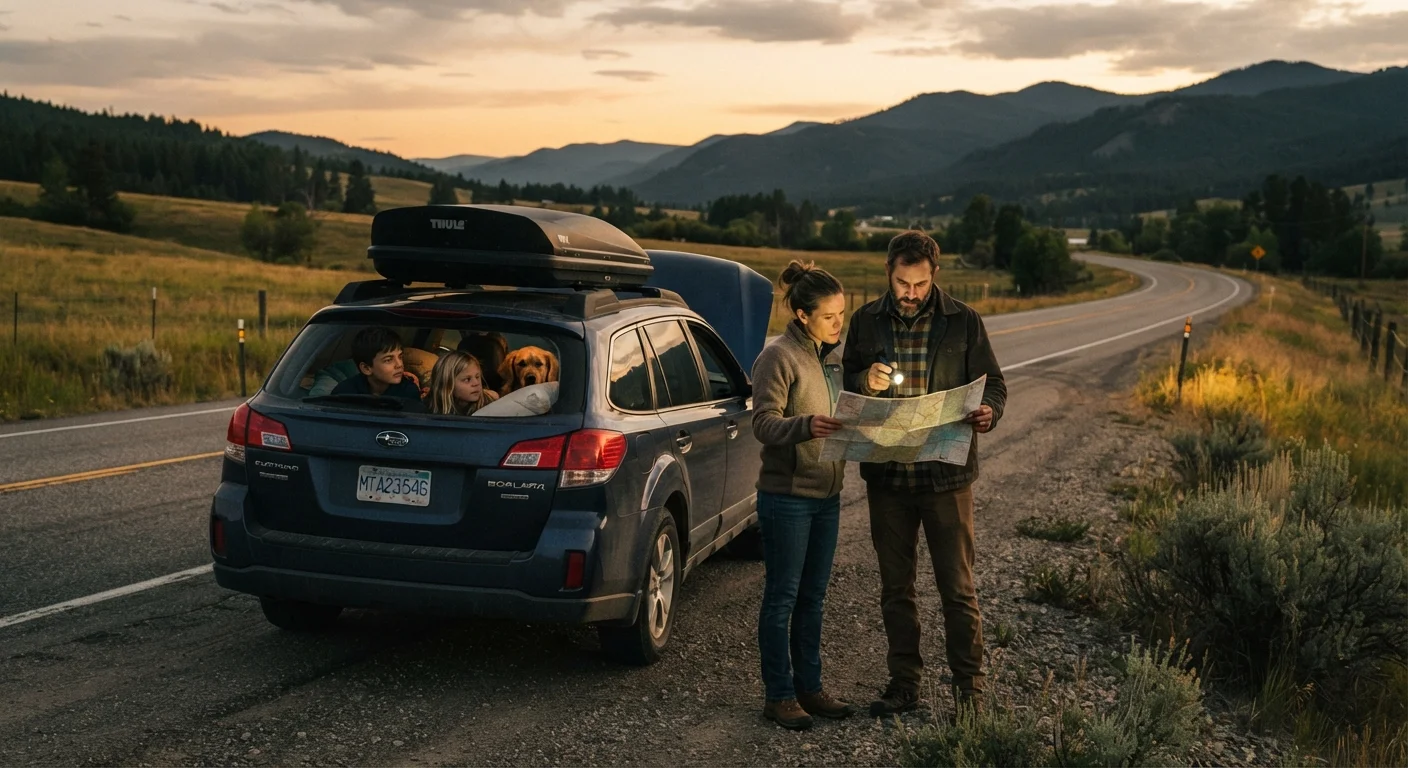
A glance at any carrier's coverage map reveals the truth: vast stretches of the American West, Great Plains, and rural South have spotty or nonexistent cell service. This matters when a tire blows out, someone becomes ill, or the car breaks down miles from the nearest town.
Families planning multi-day drives should identify coverage gaps along their route in advance, consider downloading offline maps, and carry a written list of emergency numbers. A basic roadside kit - jumper cables, a reflective triangle, a flashlight, and water - addresses the moments when no signal means no help is coming quickly. See our pre-departure checklist for a full rundown of what to pack.
Myth
Our car is only two years old - it doesn't need any special checks before a long trip.
Fact
Age alone doesn't determine a vehicle's readiness. Tire pressure, fluid levels, brake condition, and wiper function can all be suboptimal regardless of how new the car is.
A newer vehicle can still have tires that are under-inflated, low washer fluid, or brake pads worn faster than expected from city driving. The safety checks most families skip before a long road trip aren't about doubting your car - they're about knowing its actual condition rather than assuming it.
For ongoing peace of mind, staying current with routine car maintenance is one of the highest-value things a family can do before setting off on any extended drive. A quick check of tire pressure, oil level, and lights takes under ten minutes and can prevent a breakdown that derails an entire trip.
Myth
I'm a bit tired, but I can push through to the next big city before stopping.
Fact
Driver fatigue impairs reaction time and judgment in ways that closely parallel alcohol impairment. Pushing through drowsiness significantly increases crash risk.
The urge to push on is understandable - especially when kids are finally asleep in the backseat or when the destination feels tantalizingly close. But transportation safety researchers have consistently found that drowsy driving substantially slows reaction time and increases the likelihood of drifting, misjudging curves, and failing to respond to hazards.
The practical fix isn't glamorous but it works: take a 15-20 minute rest break, switch drivers if possible, or stop for the night. Planning realistic daily driving distances is one of the key lessons in any complete family road trip planning guide. Fatigue is not a challenge to overcome through willpower - it's a genuine risk to treat seriously.
Building Real Preparedness Before You Leave the Driveway
The myths above share a common thread: they each offer the feeling of preparedness without the substance of it. A new car, a familiar route, a charged phone - these feel like safety measures, but they only hold up when conditions cooperate. Real preparedness is about what happens when conditions don't.
Don't Rely on "I'll Figure It Out" When Cell Service Drops
Rural breakdowns without cell coverage can leave families stranded for hours or longer. Before departing, download offline navigation maps, identify the locations of rest stops and towns along your route, and carry a basic roadside emergency kit. Verify the specific coverage reality of your planned route using your carrier's official coverage map - not the general marketing version.
Before your next road trip, run through the pre-departure readiness checklist and pair it with a look at our guide for first-time family road trippers. And if you're rethinking other travel assumptions, our budget travel myths article is a natural companion read. Safe, confident travel starts with honest information - and now you have it.