

Key Takeaways
The Gap Between What You Expect and What You Spend
Road trips have a reputation for being the affordable alternative to flying - and they genuinely can be. But for many families, the final tally at trip's end lands well above what they imagined when they first mapped the route. That gap isn't random. It's the result of predictable, repeatable mistakes that feel invisible while you're making them.
Understanding where the money actually goes is the first step to keeping it. Our road trip budgeting guide breaks down the real cost categories in detail - but here, we're focusing on the behavioral traps that inflate those categories before you even notice.
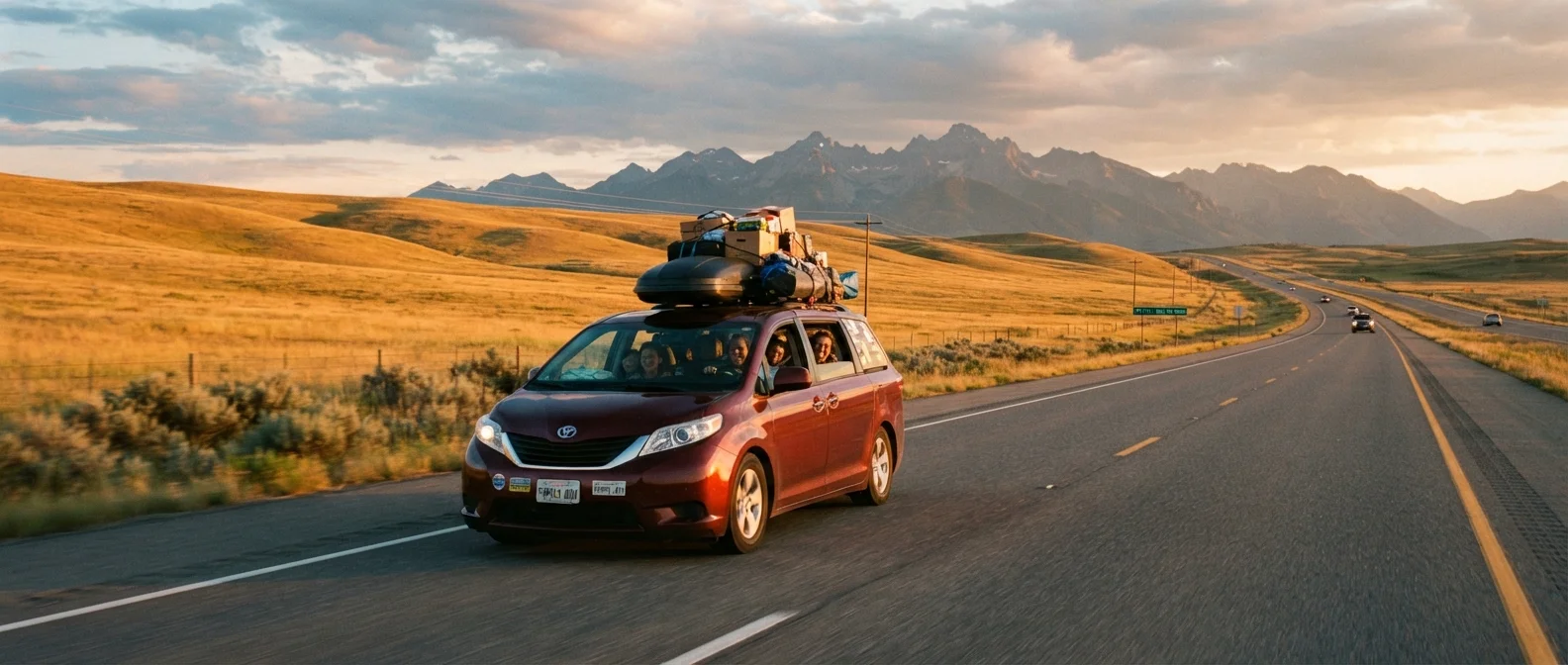
Calculating fuel costs using the EPA's best-case MPG estimate rather than real-world highway mileage with a full load.
Why it happens: Most drivers check their car's listed fuel economy without accounting for cargo weight, air conditioning, terrain, or driving speed - all of which reduce efficiency.
Booking lodging on the fly instead of reserving in advance, especially near popular attractions or during peak travel periods.
Why it happens: Families overestimate how flexible accommodation will be along their route, assuming they can find a room whenever they need one at a reasonable rate.
Ignoring toll costs and mandatory fees when estimating total trip expenses.
Why it happens: Toll roads don't always appear prominently on navigation apps, and resort fees or parking charges at destinations are rarely listed in headline prices.
Underbudgeting for food by planning to cook every meal while underestimating how often the family will eat out.
Why it happens: Families enter the trip planning to pack a cooler and rely on campsite cooking, but road fatigue, limited cooler space, and kids' preferences quickly derail that plan.
Adding unplanned detours and stops without recalculating fuel, time, and accommodation costs.
Why it happens: Detours feel spontaneous and fun in the moment, and the ripple effects on fuel mileage and schedule aren't immediately obvious.
Planning Gaps That Cost You Before You Leave Home
Most road trip overspending is locked in before the engine starts. Route choices, lodging strategy, and fuel math all happen at the planning stage - and errors here compound every day on the road.
Last-Minute Lodging Can Double Your Nightly Cost
Booking a hotel room the same night you need it - especially near national parks, beaches, or popular small towns - often means paying 40-100% more than an advance reservation for the same room. During summer and holiday weekends, rooms may simply be unavailable within a reasonable driving range. Plan at least your key overnight stops ahead of time, even if the rest of your schedule stays flexible.
For example, choosing a route that avoids major interstates sounds scenic and smart, but two-lane state roads often add hours of driving and extra fuel stops. Similarly, families who skip reservations in favor of flexibility frequently find themselves booking last-minute rooms at premium rates. This is the core tension explored in our look at spontaneous vs. planned road trip costs - freedom has a price tag, and it's worth knowing what it is before you go off-script.
One-way versus loop routes also shape costs in ways families rarely factor in. Loop routes vs. one-way trips each carry distinct fuel, logistics, and scheduling implications that affect the total bill.
On-the-Road Spending That Adds Up Fast
Even well-planned trips bleed money through small daily decisions. A roadside attraction here, an upgraded rest stop meal there - individually negligible, collectively significant. The hidden fees that make cheap trips expensive - tolls, resort fees, parking charges - are especially sneaky because they feel small in the moment.
~$200
Average daily out-of-pocket spend per family on the road
AAA's annual travel cost research consistently shows daily family road trip expenses - fuel, food, and lodging combined - frequently exceed initial estimates by 20% or more.
15-25%
Typical real-world MPG reduction under full load
The U.S. Department of Energy notes that factors like cargo weight, roof cargo, and air conditioning use can reduce fuel efficiency by 15-25% compared to EPA estimates.
Families traveling with kids face additional pressure: boredom prompts unplanned stops, and unplanned stops usually involve spending. Building a modest daily discretionary buffer into your plan - rather than pretending impulse purchases won't happen - is a more honest and effective approach. For a broader view of how road trips stack up financially against flying, see our comparison of road trip vs. flying costs for families.
The Travel Hacks & Savings hub and our Budget Family Trips hub offer additional strategies for keeping everyday travel spending in check - well worth a browse before your next departure.