

Key Takeaways
What a Vehicle History Report Actually Contains
A vehicle history report is compiled from data submitted to state motor vehicle departments, insurance companies, auto auctions, and repair facilities. It is organized around a vehicle's VIN - the 17-character code unique to every car. Understanding the report's structure helps you focus on what matters instead of staring at pages of data.
Reports typically cover several major categories: title history, ownership records, accident and damage disclosures, odometer readings, recall status, and sometimes service history. Not every event in a car's life is captured here - only those reported to participating sources. That limitation is important to keep in mind throughout your review.
If you're still weighing whether a used vehicle makes financial sense for your household, our breakdown of new vs. used car tradeoffs can help frame the bigger picture before you dive into a specific report.
What you will need
Step-by-Step: Reading Each Section Methodically
Work through the report in order rather than skimming for the accident section first. Each category builds context for the next.
Check the Title History First
Look for any title brand - a legal designation that follows a vehicle permanently. Common brands to flag include:
- Salvage: The insurer declared the vehicle a total loss. Rebuilding can be done safely, but quality varies enormously.
- Flood / Water Damage: Corrosion and electrical issues may not be immediately visible.
- Lemon Law Buyback: The manufacturer repurchased the vehicle due to persistent defects.
- Odometer Rollback: A legal finding that mileage was altered.
A clean title simply means none of these brands are on record. It does not confirm the vehicle was never in an accident.
Review the Ownership and Registration History
Note how many owners the vehicle has had and where it was registered. A car with four owners in five years may indicate recurring problems or dissatisfied buyers - though fleet vehicles (rentals, corporate cars) often cycle ownership faster and may still be in good mechanical condition.
Geographic history matters too. A vehicle registered primarily in a rust-belt state warrants closer inspection of the undercarriage than one from a dry climate.
Examine the Accident and Damage Records
Reports may list accidents by severity: minor, moderate, or severe. Look at which area of the vehicle was affected. Rear-corner damage is generally less concerning than front-end or structural damage. Airbag deployment noted in a record suggests a significant impact.
Pay attention to how many separate incidents appear and whether repairs were completed at a body shop that submitted records to the system.
Audit the Odometer Readings Over Time
Reports capture mileage at each ownership transfer and sometimes at service events. Plot these readings against dates. Mileage should increase consistently over time. If you see a newer reading that is lower than an older one, that is a significant red flag for odometer tampering and is grounds to walk away.
Also check whether cumulative mileage is consistent with the vehicle's age. A six-year-old vehicle with 140,000 miles has been driven harder than average; factor that into your expectations for remaining component life.
Check Open Recalls and Service Records
Some reports include recall data. Cross-reference this with the NHTSA recall database at nhtsa.gov using the VIN - it's free and authoritative. An open recall doesn't necessarily make a vehicle unsafe to consider, but the recall repair should be completed before purchase.
Service records, when present, can show oil changes, fluid flushes, and scheduled maintenance. Sparse or absent records don't confirm neglect, but documented upkeep is a meaningful positive signal. For context on what regular maintenance looks like, browse our car maintenance resource hub.
Print or Save a Dated Copy of the Report
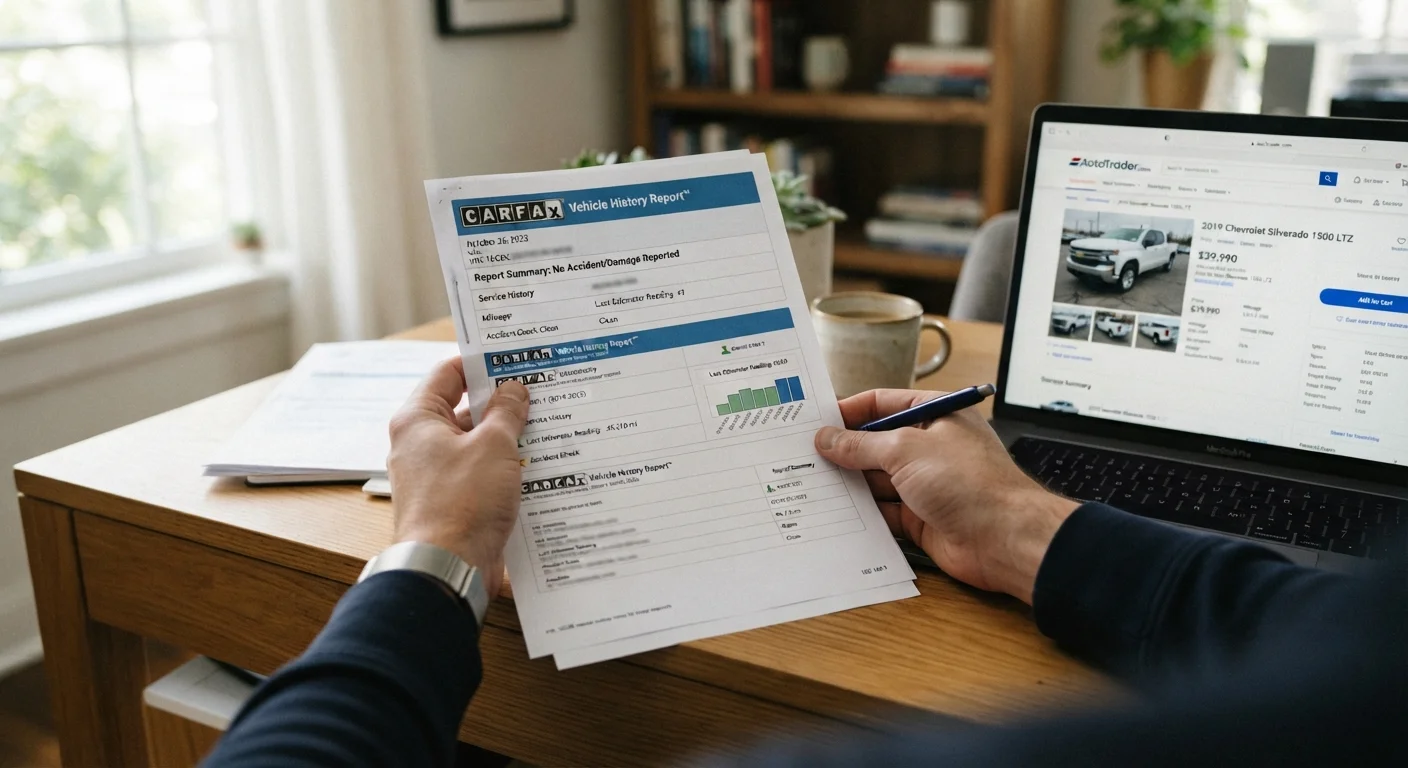
Before negotiating, save or print the report you reviewed with the date visible. If details change between sessions - which can happen when sellers update listings - you have a record of what the report showed at the time of your review. This is especially useful if you later discover undisclosed damage.
What Doesn't Appear in a Report - and Why That Matters
A clean report does not mean a clean car. Many accident repairs go unreported to insurers, particularly when sellers pay out of pocket to avoid premium increases. Flood damage, improper frame repairs, and deferred maintenance often leave no trace in the data.
This is why a pre-purchase inspection by an independent, qualified mechanic remains non-negotiable regardless of what a report shows. Think of the history report as narrowing the field of candidates, not as a final sign-off.
Once you do own the vehicle, keeping your own records becomes valuable. Our guide on maintaining a car service log explains what to track and why documented upkeep protects resale value. For a broader look at sound car-buying principles, see our article on buying a family car responsibly.
A History Report Is Not a Mechanical Inspection
No vehicle history report can assess the current condition of an engine, transmission, brakes, or suspension. Always have an independent, qualified mechanic inspect any used vehicle before you commit to a purchase. The cost of an inspection - typically $100-$200 - is far less than the cost of discovering serious mechanical problems after the sale.