

Key Takeaways
Lower per-service cost once tools are in hand
After the initial tool investment, DIY materials typically cost noticeably less per change than a shop visit, particularly if your vehicle requires full synthetic oil.
You control the oil brand and grade used
You can verify that the exact oil viscosity and specification your owner's manual calls for goes into your engine, rather than relying on what a shop stocks.
Builds hands-on mechanical familiarity
Regularly working under your vehicle helps you spot other developing issues - fluid leaks, worn components, or damage - before they become expensive problems.
Flexible scheduling with no waiting room
You can do it on your own timeline, without booking an appointment or sitting in a waiting area, which suits families with unpredictable schedules.
Upfront tool cost reduces early savings
A quality floor jack, jack stands, drain pan, and filter wrench can cost $100 or more if you don't already own them, erasing savings on the first few changes.
Used oil requires proper disposal effort
You are responsible for transporting used oil to an approved recycling facility - an extra step that shops handle automatically as part of the service.
Risk of costly mistakes without experience
A cross-threaded drain plug, wrong oil spec, or forgotten reinstallation can result in engine damage that far outweighs any cost savings from doing it yourself.
No multi-point inspection included
Many shops perform a basic vehicle inspection during an oil change, flagging tire wear, fluid levels, or brake concerns that a solo DIY job won't catch.
Requires safe workspace and equipment
Working without a garage, level driveway, or proper jack stands makes DIY oil changes significantly more difficult and potentially unsafe.
Our Verdict
Doing your own oil change is a legitimate money-saver for drivers who are comfortable under the hood, own the necessary tools, and have a plan for disposing of used oil. For families short on time or garage space - or those driving a newer vehicle still under a service plan - a professional shop often makes more practical sense. Neither option is universally right; the best choice depends on your situation, comfort level, and how you value your time.
DIY oil changes suit mechanically comfortable drivers with basic tools and a safe workspace; shop service is the better fit for busy households, newer vehicles under warranty, or anyone unsure of the steps involved.
What Each Option Actually Involves
An oil change - whether done at home or at a shop - serves the same purpose: replacing degraded engine oil and a clogged oil filter to keep your engine lubricated and running cleanly. What differs is who does the work, what it costs, and what else you get along the way.
A DIY oil change requires you to purchase the correct oil and filter, safely lift and support the vehicle, drain the old oil, swap the filter, refill, and then transport the used oil to a recycling drop-off. It's a straightforward job, but it has real prerequisites: the right tools, a flat and stable surface, and confidence that you've matched the correct oil spec to your vehicle. Before you begin, it helps to understand your vehicle's fluid systems - see our guide on reading your car's fluid levels without a mechanic's help for a useful starting point.
A shop service - whether at a dealership, quick-lube chain, or independent mechanic - handles everything for you, often includes a basic multi-point inspection, and disposes of the used oil on-site. You pay more per visit, but you're also buying time and peace of mind.
Pros and Cons at a Glance
Before committing to either approach, weigh the practical trade-offs. The advantages and disadvantages below apply specifically to the DIY route - understanding them helps you make an honest assessment of whether it fits your household.
Lower per-service cost once tools are in hand
After the initial tool investment, DIY materials typically cost noticeably less per change than a shop visit, particularly if your vehicle requires full synthetic oil.
You control the oil brand and grade used
You can verify that the exact oil viscosity and specification your owner's manual calls for goes into your engine, rather than relying on what a shop stocks.
Builds hands-on mechanical familiarity
Regularly working under your vehicle helps you spot other developing issues - fluid leaks, worn components, or damage - before they become expensive problems.
Flexible scheduling with no waiting room
You can do it on your own timeline, without booking an appointment or sitting in a waiting area, which suits families with unpredictable schedules.
Upfront tool cost reduces early savings
A quality floor jack, jack stands, drain pan, and filter wrench can cost $100 or more if you don't already own them, erasing savings on the first few changes.
Used oil requires proper disposal effort
You are responsible for transporting used oil to an approved recycling facility - an extra step that shops handle automatically as part of the service.
Risk of costly mistakes without experience
A cross-threaded drain plug, wrong oil spec, or forgotten reinstallation can result in engine damage that far outweighs any cost savings from doing it yourself.
No multi-point inspection included
Many shops perform a basic vehicle inspection during an oil change, flagging tire wear, fluid levels, or brake concerns that a solo DIY job won't catch.
Requires safe workspace and equipment
Working without a garage, level driveway, or proper jack stands makes DIY oil changes significantly more difficult and potentially unsafe.
The Real Cost Comparison
The savings from DIY oil changes are real but sometimes overstated. A typical DIY oil change using conventional oil might cost $25-$40 in materials; synthetic oil can push that closer to $50-$70. Shop prices vary widely by region and service type, but a full-synthetic change at an independent shop often runs $60-$100 or more.
5,000-10,000 mi
Typical modern oil change interval
Most vehicle manufacturers now recommend oil changes every 5,000 to 10,000 miles for synthetic oil; the old 3,000-mile rule is generally considered outdated for modern engines.
~$30-$70
Average DIY materials cost per change
Depending on oil type and filter, DIY supply costs typically fall in this range, excluding tool purchases already owned.
The catch: DIY requires an upfront investment in a floor jack, jack stands, a drain pan, a filter wrench, and a funnel. If you don't already own these, your first change won't save you much. Spread across dozens of future oil changes, though, the math improves significantly.
It's also worth remembering that skipping or delaying oil changes - regardless of who does them - carries far greater costs. Our article on the real cost of skipping routine maintenance explains how deferred service compounds into expensive repairs.
Safety, Disposal, and Things That Can Go Wrong
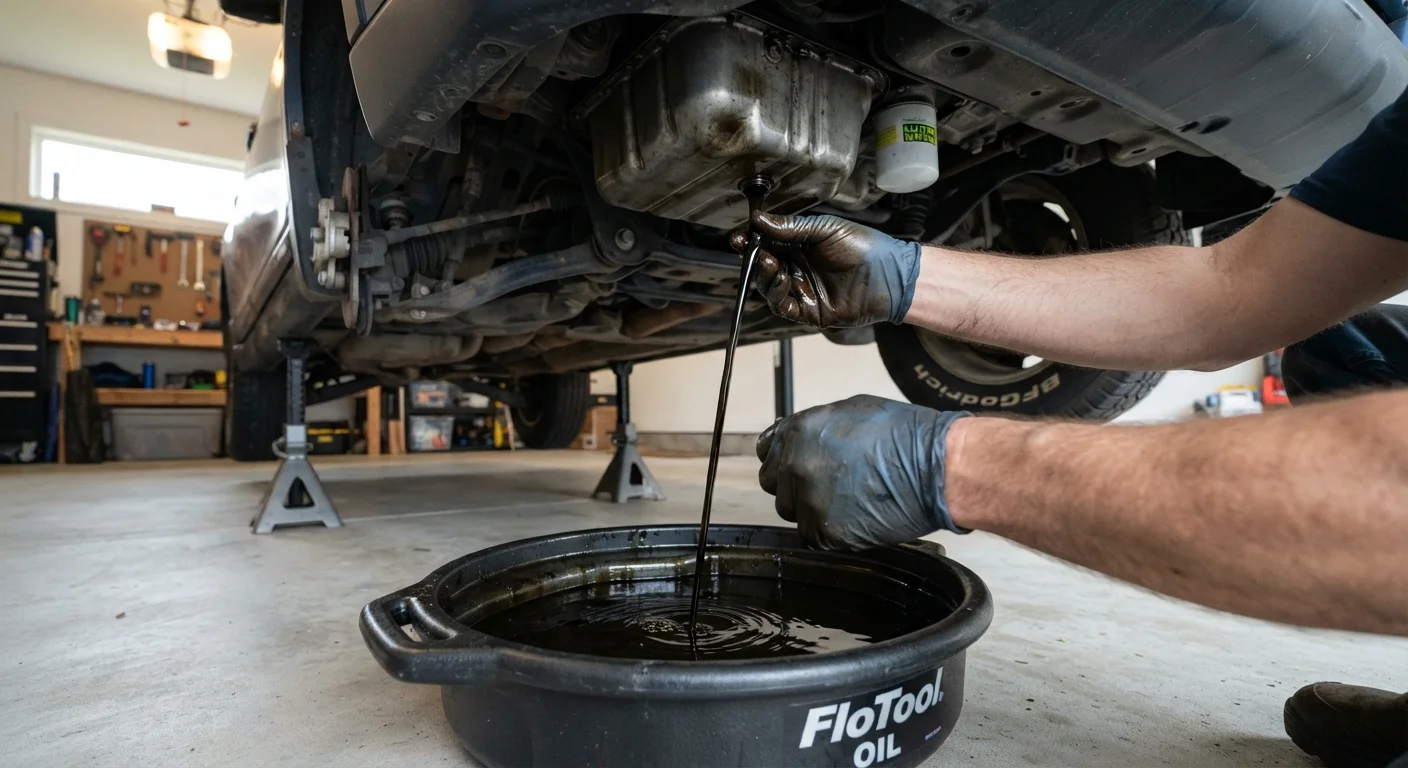
An oil change is one of the more accessible DIY car tasks, but it does carry risks if done carelessly. Never work under a vehicle supported only by a floor jack - always use rated jack stands on solid, level ground. Improper support is a serious safety hazard.
Vehicle Safety While Working Underneath
Always use properly rated jack stands when working beneath a vehicle - a floor jack alone is not a safe support while you're underneath. Position stands on the vehicle's designated lift points (found in the owner's manual) and work on a flat, solid surface. If you have any doubt about safe lifting procedure, consult a qualified mechanic or use a shop with a lift.
Used motor oil is an environmental hazard. It cannot go in the trash, down a drain, or onto the ground. Most auto parts retailers and municipal recycling centers accept used oil at no cost - confirm your local drop-off location before you start.
Common DIY mistakes include: cross-threading the drain plug, over-tightening the oil filter, using the wrong oil viscosity, and forgetting to reinstall the drain plug before adding new oil. Each of these can cause engine damage or an immediate mess. If you're uncertain about any step, a shop visit is the safer and more cost-effective choice in the long run.
Also consider what oil type your vehicle actually needs. The difference between synthetic and conventional isn't just marketing - our breakdown of synthetic vs. conventional motor oil can help you choose correctly before you buy anything.
When the Shop Makes More Sense
Even capable DIYers sometimes benefit from professional service. If your vehicle is under a manufacturer's warranty or a prepaid maintenance plan, verify whether DIY oil changes could affect coverage - some plans require documented dealer service.
Newer vehicles with electronic oil-life monitors, turbo engines, or proprietary drain plug designs can also complicate home servicing. And for families without a garage, driveway space, or a reliable set of tools, the convenience of a shop often outweighs the cost difference.
If you're still deciding how to weigh DIY versus professional help across home and auto tasks generally, the framework in DIY vs. hiring out: how to decide what's worth your time and safety offers a practical decision process. The goal isn't to always do it yourself - it's to make the choice that saves you the most money without creating a larger problem.