

Key Takeaways
Brake Wear
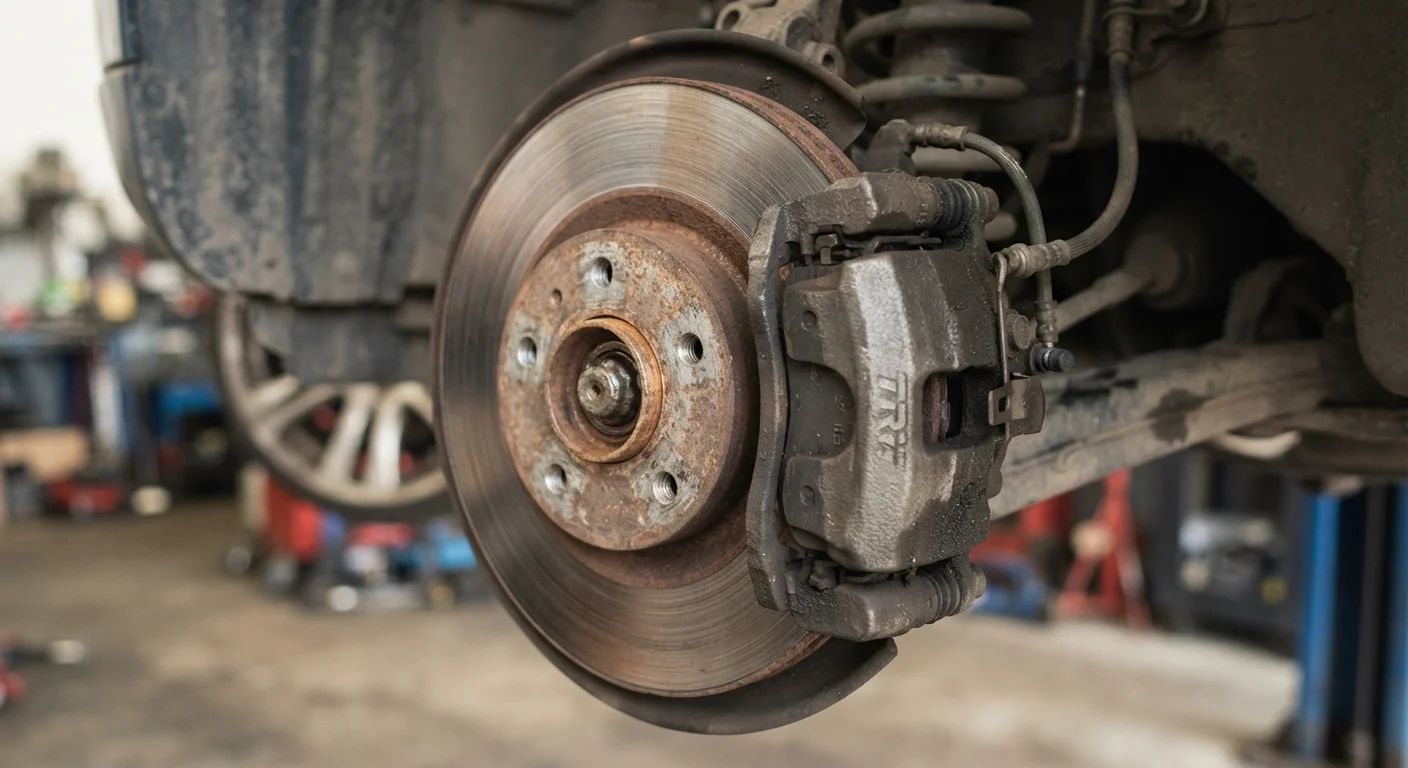
Brake wear refers to the gradual erosion of brake pads and rotors that occurs every time you slow or stop your vehicle. Friction materials on the pads thin out over time and must be replaced before they wear away completely. Left unchecked, worn brakes can reduce stopping power and create a safety hazard for your family.
Most disc brake pads start at 10-12mm of friction material; replacement is typically recommended at or before 3mm. Some vehicles use drum brakes at the rear, which follow similar wear principles but require a different inspection approach.
What Normal Brake Wear Looks Like
Brakes are a consumable part of your car, just like tires. Every time you press the pedal, friction material on the pads rubs against the rotor to slow the vehicle. That material gradually thins out - that's normal and expected. What matters is catching the wear before it becomes a safety problem.
Routine wear produces little to no noise on a well-maintained system. You might notice very faint dusting on your wheels (brake dust) or a slight change in pedal feel over tens of thousands of miles, but neither should be dramatic. Mechanics typically recommend inspecting brake pads at every tire rotation - roughly every 5,000-7,500 miles - so wear doesn't sneak up on you.
Understanding the difference between normal aging and a warning sign is exactly what car maintenance terms every family driver should recognize are designed to help with. Knowing terms like "pad thickness," "rotor runout," and "caliper" means you can have an informed conversation with a mechanic rather than relying entirely on their assessment.
25,000-65,000 mi
Typical brake pad lifespan range
Industry estimates vary widely based on pad compound, vehicle weight, and driving environment - city driving falls toward the lower end.
~70%
Braking force handled by front brakes
Weight transfers forward during braking, which is why front pads wear significantly faster than rear pads on most passenger vehicles.
3mm
Minimum safe brake pad thickness
Most mechanics recommend replacement at or before 3mm of remaining friction material to maintain reliable stopping performance.
Warning Signs You Shouldn't Ignore
Your car's brake system is designed to communicate when something is wrong. Learning to interpret those signals can save you money and keep your family safe.
- Squealing or squeaking: A high-pitched squeal, especially when first applying the brakes, is often the wear indicator doing its job. It's a flag to inspect soon - not a crisis, but not something to defer for months.
- Grinding or growling: A metallic grinding sound means the pad material is likely gone and metal is contacting the rotor. This damages the rotor surface and reduces stopping effectiveness. Have the vehicle inspected immediately.
- Soft or spongy pedal: If the pedal feels mushy or travels further than usual before the brakes engage, this can indicate air in the hydraulic lines or low brake fluid. Check your fluid level - our guide on reading your car's fluid levels without a mechanic walks through exactly how to do this safely.
- Pulling to one side: If the car veers left or right during braking, one caliper may be sticking or pads may be wearing unevenly. This affects vehicle control and should be diagnosed by a mechanic.
- Vibration in the pedal: A pulsating pedal often points to warped rotors - rotors that have lost their flat surface due to heat or uneven wear.
Check Brake Fluid at Every Oil Change
Brake fluid absorbs moisture over time, which lowers its boiling point and can reduce braking effectiveness. Pop the hood and locate the brake fluid reservoir - it's typically a small translucent container near the firewall. The level should sit between the MIN and MAX marks. If it's low or the fluid looks dark brown instead of clear or light yellow, mention it to your mechanic. Our guide on reading your car's fluid levels explains each reservoir in detail.
What Accelerates Brake Wear - and How to Slow It Down
Driving habits have a direct impact on how long your brakes last. Aggressive city driving - frequent hard stops from highway speeds - wears pads significantly faster than smooth, gradual deceleration. Riding the brakes downhill is another common culprit; engine braking (downshifting or lifting off the throttle) reduces the load on your pads on long descents. This is one of the habits that quietly shorten your car's life without drivers realizing it.
Vehicle weight also plays a role. Heavier vehicles - SUVs, trucks, and minivans common in family use - demand more braking force and can wear pads faster than a compact sedan under identical driving conditions.
Maintaining proper tire condition supports your brakes indirectly: well-inflated tires with adequate tread give the vehicle more predictable stopping behavior. See our guide on tire pressure, tread, and rotation basics for more on that connection.
When to DIY and When to Call a Professional
Checking pad thickness visually through the wheel spokes is a reasonable at-home task on many vehicles. If you can see less than about 3mm of friction material - roughly the thickness of two stacked quarters - it's time to act. Some drivers with mechanical confidence also replace pads themselves; however, brake work involves safety-critical hydraulic components. Mistakes can have serious consequences.
Tasks like bleeding brake lines, replacing calipers, or machining rotors require professional tools, training, and judgment. If you're hearing grinding, experiencing pedal issues, or noticing pulling, take the vehicle to a qualified mechanic. Getting a second opinion from an independent shop (rather than a dealership) can also help you feel confident in the diagnosis and pricing. Brakes are part of everything involved in keeping a family car roadworthy - and they're not the place to cut corners.