

Key Takeaways
Why Adverse Weather Requires More Than Slowing Down
Most drivers know to slow down when it rains. Fewer adjust their habits systematically - changing following distance, lighting choices, and mental approach based on whether they're facing rain, fog, or snow. These three conditions are fundamentally different in how they reduce visibility and traction, and they call for distinct responses.
Overconfidence is a documented contributor to weather-related crashes. Drivers with all-wheel or four-wheel drive, in particular, sometimes underestimate stopping distance - AWD improves acceleration traction but does little to shorten braking distance on slick pavement. Good habits apply regardless of drivetrain.
Your tires are the single point of contact between your vehicle and the road in every condition. Before any wet or winter season, review your tread depth and pressure - our tire maintenance overview covers the basics every driver should know.
What you will need
Step-by-Step: Adapting to Rain, Fog, and Snow
The steps below build on each other. Preparation (Step 1) applies to all three conditions. Steps 2 through 5 address rain, fog, and snow specifically, then cover the decision to stop. Work through them in order when you're heading out in difficult weather.
Windshield wipers (front and rear)
Clear rain and snow from your field of vision in real time.
Defrost system (front and rear)
Remove fog and ice buildup from windows to maintain visibility.
Low-beam headlights and fog lights
Improve your visibility and make your vehicle visible to others in rain and fog.
Ice scraper and snow brush
Remove snow and ice from all windows, mirrors, and lights before driving in winter.
Traction control and ABS
Electronic safety systems that help maintain grip and prevent wheel lockup on slippery surfaces.
Prepare Your Vehicle Before You Leave
Weather-related crashes often begin before the vehicle moves. Clear all snow and ice from every window, mirror, hood, and roof - not just a small patch on the windshield. A slab of ice sliding off your roof onto following traffic is both dangerous and, in many states, illegal.
Turn on your defrost early to bring glass up to temperature. Check that headlights, taillights, and wipers are fully functional. If your wipers streak badly or skip, replace them - visibility depends on it.
Adjust Speed for Rain: Slow Down and Increase Following Distance
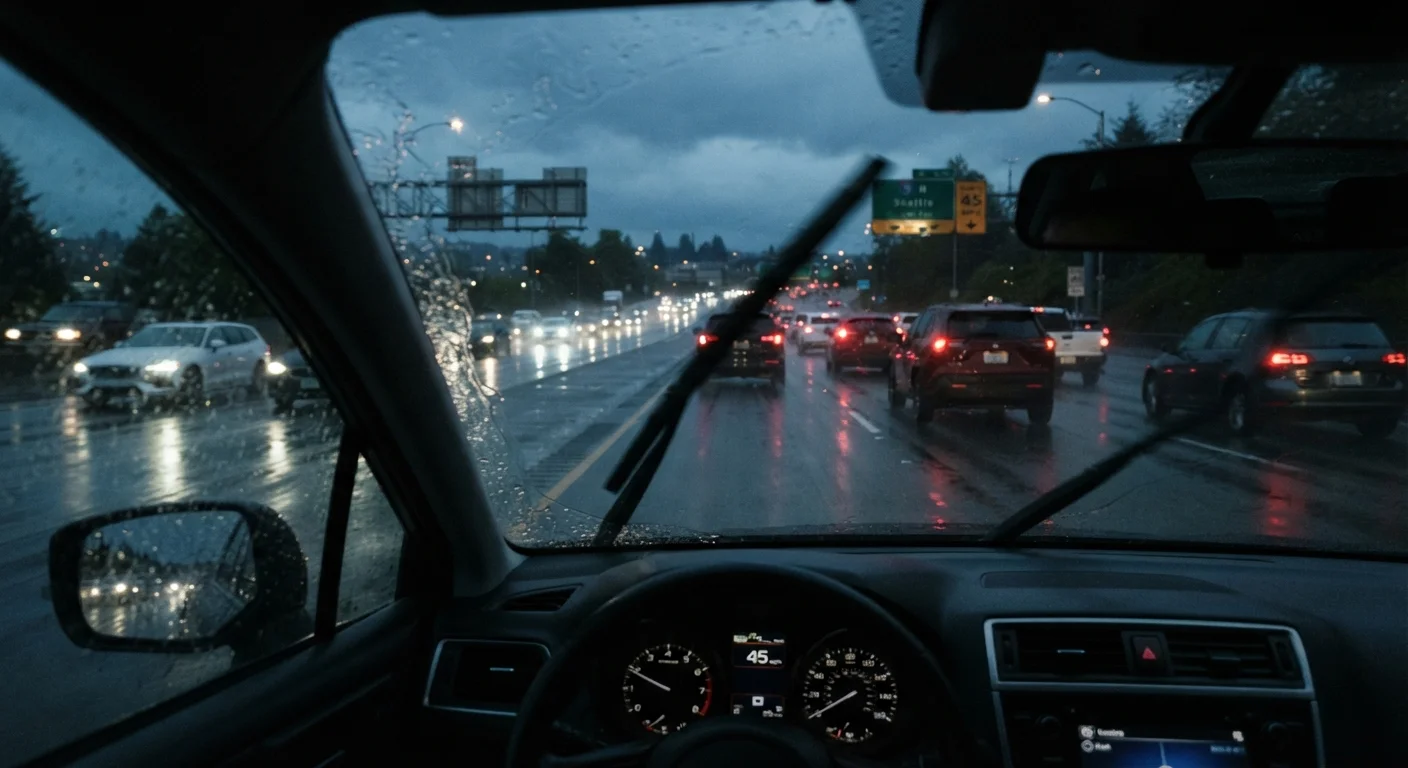
Rain reduces tire grip significantly. Hydroplaning - when a layer of water lifts your tires off the road surface - can occur at speeds as low as 35 mph on worn tires. Reduce speed by at least 5-10 mph below posted limits when roads are wet, more during heavy downpours.
Double your normal following distance. In dry conditions, the standard guidance is a three-second gap from the vehicle ahead; in rain, extend that to at least six seconds. This gives your brakes time to work on a compromised surface.
Use the Right Lights in Fog
In fog, switch to low-beam headlights or dedicated fog lights if your vehicle has them. High beams scatter off the water droplets in fog and reflect back toward you, reducing your effective vision. Keep your headlights on even in daylight fog - the goal is to be seen, not just to see.
If fog becomes so dense that you cannot see more than a few car lengths ahead, find a safe place to pull off the road - a parking lot or well-lit rest stop - and wait for conditions to improve. Hazard lights can help, but be aware that in some states their use while moving is restricted.
Drive for Snow and Ice Conditions
Snow and ice demand the largest behavioral change. Accelerate slowly to avoid spinning wheels, brake earlier and more gently than usual, and take corners at significantly reduced speed. Allow up to ten times the normal following distance on icy roads - stopping distances increase dramatically on ice.
Watch for black ice, a near-transparent glaze that looks like wet pavement. It forms frequently on bridges, overpasses, and shaded stretches even when air temperatures are slightly above freezing. If the road looks wet but other vehicles aren't throwing up spray, treat it as ice.
Know When to Stop Driving
No destination is worth a preventable crash. If conditions deteriorate beyond what your vehicle, tires, or skill level can handle safely, pull off the road in a well-lit, visible location. Activate your hazard lights, stay inside the vehicle with your seatbelt on, and contact someone about your delay.
Families with children in the vehicle should give extra weight to this decision. Distracted or stressed driving compounds the danger that bad weather already creates - see our guidance on driving with young children for more on managing in-car distractions.
Never Use Cruise Control on Wet or Icy Roads
Cruise control is designed for dry, stable conditions. On wet, icy, or snowy pavement, it can prevent your foot from reacting quickly to a skid or loss of traction. Disable it any time visibility is reduced or the road surface is compromised - without exception.
Check Your Tires Before Bad Weather Arrives
Tread depth and tire pressure directly affect how your car handles in rain, snow, and ice. Before the wet season or first freeze, inspect your tires carefully. See our tire pressure and tread guide for what to look for and when to replace.
Longer-Term Habits That Reduce Weather Risk
Adverse-weather safety doesn't start when the clouds roll in. Drivers who maintain their vehicles consistently - working wipers, functioning lights, properly inflated tires - are better prepared when conditions turn. Small deferred-maintenance habits can quietly erode safety margins over time; our article on habits that shorten your car's life identifies several worth addressing before winter arrives.
Fatigue compounds every weather hazard. Reaction times drop, judgment suffers, and the extra mental load of navigating a storm becomes harder to manage. If you're tired, postponing a trip in bad weather is a straightforward way to reduce risk - for context on how fatigue affects driving, see what fatigue does to a driver.
Night driving in rain or snow adds another layer of difficulty. Reduced visibility from both darkness and precipitation combines with the glare of oncoming headlights on a wet road. Our guide to night driving covers habits that help in those combined conditions.
Skidding: Do Not Panic-Brake
If your vehicle begins to skid, resist the urge to slam the brakes. With modern ABS (anti-lock braking system), apply firm, steady pressure and steer toward where you want the car to go. In a rear-wheel skid, ease off the accelerator and gently steer into the skid. Overcorrecting is a common cause of spin-outs.