

| Species most at risk from grapes/raisins | Dogs (cats rarely ingest them) (ASPCA Animal Poison Control Center) |
| Most xylitol-sensitive species | Dogs; cats less studied but also at risk (Veterinary toxicology consensus) |
| Allium toxicity - forms that cause harm | Raw, cooked, and powdered (ASPCA Animal Poison Control Center) |
| Caffeine-containing foods to avoid | Chocolate, coffee, tea, energy drinks, some medications (ASPCA Animal Poison Control Center) |
| Emergency resource (U.S.) | ASPCA Animal Poison Control Center - 24-hour hotline (Consultation fee may apply) |
Why Household Foods Can Be Toxic to Pets
Pets metabolize food differently than humans do. Compounds that are harmless - or even beneficial - for people can trigger organ failure, neurological damage, or death in dogs and cats. This is not about being overly cautious; it reflects genuine differences in how animal bodies process certain chemicals.
Budget-conscious families often look for ways to supplement commercial pet food with items already in the kitchen. That instinct makes sense, but it requires knowing which foods carry real risk. The list below covers the most commonly encountered toxic foods, with a brief explanation of the mechanism behind each danger. For guidance on what pets should eat, see what goes into a balanced diet for dogs and cats.
This article is for general educational purposes only and is not a substitute for veterinary advice. If you believe your pet has ingested a toxic substance, contact your veterinarian or an animal poison control hotline immediately.
| Species most at risk from grapes/raisins | Dogs (cats rarely ingest them) (ASPCA Animal Poison Control Center) |
| Most xylitol-sensitive species | Dogs; cats less studied but also at risk (Veterinary toxicology consensus) |
| Allium toxicity - forms that cause harm | Raw, cooked, and powdered (ASPCA Animal Poison Control Center) |
| Caffeine-containing foods to avoid | Chocolate, coffee, tea, energy drinks, some medications (ASPCA Animal Poison Control Center) |
| Emergency resource (U.S.) | ASPCA Animal Poison Control Center - 24-hour hotline (Consultation fee may apply) |
The Core List of Dangerous Foods
The following foods are well-documented hazards confirmed by veterinary toxicology sources, including the ASPCA Animal Poison Control Center.
Chocolate, Coffee, and Caffeine
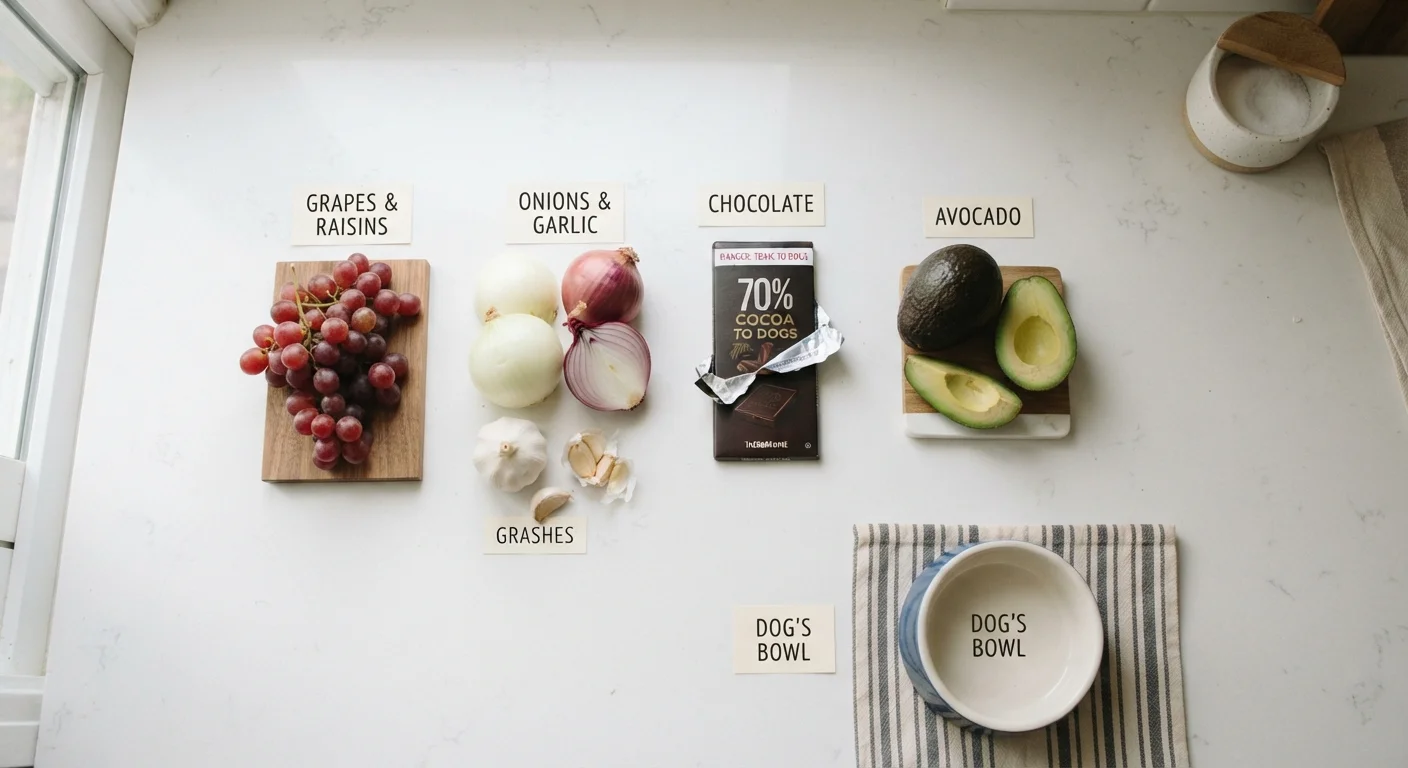
These contain methylxanthines - specifically theobromine and caffeine - which dogs and cats cannot metabolize efficiently. Even small amounts can cause vomiting, diarrhea, rapid heart rate, tremors, and seizures. Dark chocolate and baking chocolate carry a higher concentration than milk chocolate, but all forms are considered dangerous.
Grapes and Raisins
Both grapes and raisins have been associated with acute kidney failure in dogs. The exact toxic compound is still under investigation by researchers, but the effect is well established clinically. Even a small quantity can be dangerous, and there is no known safe threshold.
Onions, Garlic, Leeks, and Chives
All members of the Allium family contain organosulfur compounds that damage red blood cells in both dogs and cats, potentially leading to hemolytic anemia. Cats are especially sensitive. The risk applies to raw, cooked, and powdered forms - meaning garlic powder in table scraps is not safe.
Xylitol (Birch Sugar)
This sugar substitute - found in sugar-free gum, some peanut butters, toothpaste, and baked goods - causes a rapid release of insulin in dogs, leading to dangerous drops in blood sugar (hypoglycemia). Higher doses are also linked to liver failure. Always check ingredient labels before sharing any human food product with a dog.
Avocado
Avocado contains persin, a fungicidal toxin that can cause vomiting and diarrhea in dogs and cats. Birds and small mammals face more severe consequences. While the flesh poses a lower risk than the pit, skin, or leaves, it is generally advised to avoid feeding avocado to pets entirely.
Alcohol and Yeast Dough
Even small amounts of alcohol can cause vomiting, disorientation, breathing difficulty, and dangerously low blood sugar in pets. Raw yeast dough presents a related risk: it ferments in the stomach, producing alcohol and causing painful gas expansion.
Macadamia Nuts
Macadamia nuts can cause weakness, hyperthermia, vomiting, and tremors in dogs within 12 hours of ingestion. The mechanism is not fully understood, but the clinical pattern is consistent and well recognized by veterinarians.
Methylxanthines
A class of compounds that includes theobromine and caffeine. Dogs and cats metabolize these slowly, allowing them to accumulate to toxic levels and affect the heart and nervous system.
Hemolytic anemia
A condition in which red blood cells are destroyed faster than they can be replaced, reducing the blood's ability to carry oxygen. Allium vegetables can trigger this in pets.
Xylitol
A sugar alcohol used as a low-calorie sweetener in many human products. In dogs, it triggers a rapid insulin release that can cause dangerously low blood sugar and liver damage.
Persin
A natural fungicidal compound found in avocado plants - in the fruit, pit, leaves, and skin - that can cause digestive upset and other toxic effects in pets.
When feeding extras beyond your pet's regular diet, understand where treats and table scraps fit in nutritional balance before offering anything from your plate.
What to Do If Your Pet Ingests a Toxic Food
Speed matters. If you believe your pet has eaten any of the foods listed above, do not wait for symptoms to appear before acting. Contact your veterinarian directly or reach an animal poison control hotline. In the U.S., the ASPCA Animal Poison Control Center operates a 24-hour phone line (a consultation fee may apply).
Be ready to tell the veterinarian what your pet ate, how much, and when. Bring packaging if available - the ingredient list can clarify whether a problematic compound like xylitol is actually present. Do not attempt to induce vomiting at home unless specifically instructed to do so by a veterinary professional, as this can sometimes cause additional harm.
For everyday feeding decisions that help you avoid these situations, reading a pet food label without getting lost in the fine print is a practical place to start.