

Key Takeaways
Why Dogs Pull - And Why It's Not Defiance
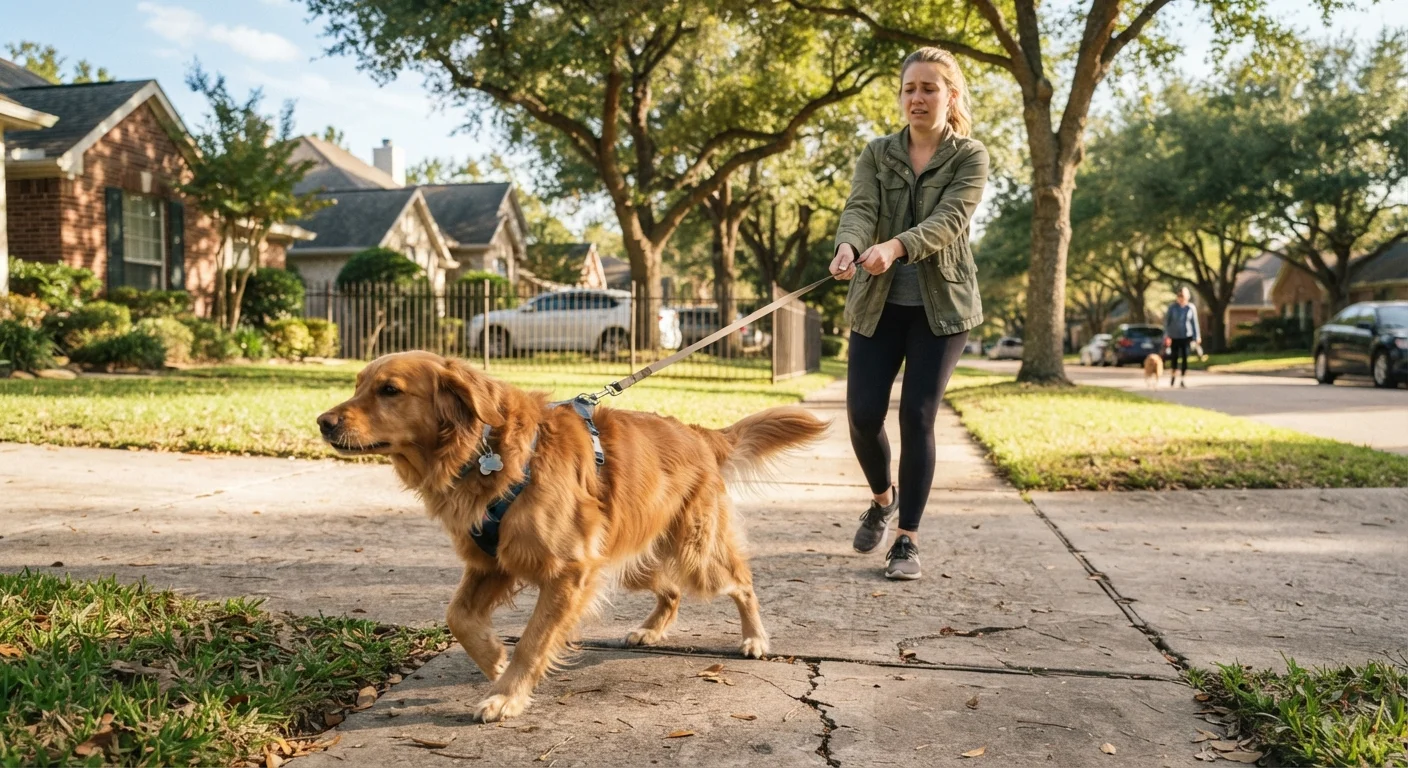
Leash pulling frustrates nearly every dog owner, but it rarely signals stubbornness or dominance. Dogs pull for a straightforward reason: it works. When a dog surges ahead and the owner follows, the dog reaches the interesting smell, the patch of grass, or the approaching stranger. The environment delivers a reward for pulling, and the behavior gets stronger over time.
This is basic learning science. Dogs, like all mammals, repeat behaviors that produce good outcomes. Pulling has been inadvertently reinforced on countless walks, often from the very first one. Understanding this removes the emotional charge from the problem - your dog isn't being bad. It's being a dog that learned a very effective strategy.
Breed tendencies can amplify the behavior. Scent hounds, sporting breeds, and working dogs were often selected specifically for drive and forward momentum. But breed is not destiny: common training myths about certain breeds being untrainable don't hold up. With the right approach, virtually any dog can learn to walk politely on leash.
Front-clip harness
Redirects the dog toward you when it pulls, reducing pulling force without putting pressure on the neck.
High-value treats
Small, soft, aromatic treats (chicken, cheese, or commercial training treats) used to reward a loose leash instantly.
Treat pouch or pocket bag
Keeps rewards accessible so you can mark and reward loose-leash moments within one to two seconds.
Clicker
Provides a precise, consistent marker signal the moment the dog offers the correct behavior.
What You'll Need Before You Start
Effective leash training doesn't require expensive gear or professional classes - though both can help. What matters most is the right equipment and the right treats for your individual dog. Avoid retractable leashes during training; they teach dogs that the leash length is variable, which undermines the loose-leash concept entirely.
What you will need
Equipment Matters More Than You Think
Choke chains, prong collars, and shock collars are not recommended by most veterinary behaviorists for leash training. Beyond the physical risks - including trachea injury and neck strain - aversive tools can increase anxiety and aggression in some dogs. A flat collar, front-clip harness, or head halter paired with reward-based training is a safer starting point for most families.
For an overview of why reward-based methods consistently outperform correction-based ones, see our article on positive reinforcement versus correction-based training. The short version: rewarding desired behavior builds it faster and with fewer side effects than punishing unwanted behavior.
Step-by-Step: Teaching a Loose Leash
Start Indoors Before You Hit the Sidewalk
Practice loose-leash walking inside your home or in a low-distraction yard before taking the training outside. Dogs learn more easily when they're not overwhelmed by smells, other animals, and passing cars. Once your dog reliably walks loosely inside, move gradually to more stimulating environments.
Establish the rule: pulling stops forward movement
The moment your dog begins to pull - leash goes taut, your arm is tugged - stop walking completely. Stand still and wait. Do not yank the leash back or scold. Simply become a statue. Your dog will eventually turn to check on you or release tension on the leash. The instant slack returns, say a calm marker word like "yes" and move forward again.
Reward the loose leash, not just the absence of pulling
Many owners only react when pulling starts. Instead, actively watch for the moments the leash is slack and your dog is walking near your side - then reward immediately. Use a treat, verbal praise, or brief play. Frequent, timely rewards accelerate learning far faster than waiting for problems to arise. Aim to reward every three to five steps early in training.
Practice the 'turn and go' technique for persistent pullers
If your dog resumes pulling immediately after you stop, try changing direction instead of standing still. The moment tension hits the leash, calmly turn and walk the opposite way. Your dog will follow - and you've just made pulling less rewarding while loose-leash walking more rewarding. Repeat direction changes whenever pulling resumes.
Build duration gradually - don't rush distance
In the first week, aim for short sessions of five to ten minutes in a low-distraction environment. As your dog demonstrates consistent loose-leash behavior, gradually extend the session length and introduce more distracting locations: a busier sidewalk, a park, or a street with other dogs visible. Progress is earned; don't skip ahead before the foundational behavior is solid.
Get every household member on the same page
Leash training collapses when one person applies the rules and another lets the dog drag them down the block. Call a brief family meeting to walk everyone through the stop-and-wait and turn-and-go methods. Children old enough to walk the dog should practice in low-distraction areas first. See our guide on including kids in pet training for age-appropriate roles.
Phase out treat frequency as the behavior becomes reliable
Once your dog walks loosely for entire blocks without prompting, begin rewarding on a variable schedule - every ten steps, then every twenty, then randomly. Variable reinforcement schedules are more durable than fixed ones. Eventually, the walk itself (sniffing, exploring, your company) becomes the reward. Continue occasional treats to maintain the behavior long-term.
Don't Let Pulling Ever 'Work'
If your dog pulls and you follow - even once - you've reinforced the behavior. Inconsistency is the single biggest reason leash training stalls. Every person who walks your dog must apply the same rule: forward movement only happens on a loose leash.
If you'd like to explore specific training techniques like clicker training or lure-reward methods to speed up the process, our comparison of training methods explains how each approach works and when each tends to shine.
When Progress Stalls: Common Troubleshooting Scenarios
Your dog pulls immediately outside the front door
High arousal at the start of a walk is very common. Practice threshold manners: ask your dog to sit before you open the door, and only exit when it's calm. If it lunges the moment you step outside, step back inside, wait for calm, and try again. Teaching the dog that the walk doesn't begin until it settles resets the pattern.
Your dog does well in quiet areas but falls apart near distractions
This is a management of arousal problem, not a training failure. Increase distance from whatever is causing excitement - cross the street, turn around - until your dog can respond to you. Reward heavily when it looks at a distraction and then back at you. Gradually decrease the distance as the dog's threshold improves.
Progress has plateaued after several weeks
Consider whether the training sessions are long enough, frequent enough, and varied enough in location. If you've plateaued, a certified professional dog trainer or a certified applied animal behaviorist can offer personalized guidance. For an introduction to foundational training skills, our ground-up guide for new pet owners covers how dogs learn and which habits to build first.