

Key Takeaways
Start here
How Dogs Actually Learn
Next
The First Skills to Teach
Then
Building Consistent Daily Habits
Watch out for
Common Mistakes New Owners Make
When you're ready
When to Seek Professional Help
How Dogs Actually Learn
Before you teach a single command, it helps to understand the basic mechanism behind how dogs learn. Dogs operate primarily through operant conditioning - they repeat behaviors that produce good outcomes and reduce behaviors that don't. This isn't a theory exclusive to dogs; it underpins how most animals, including humans, form habits.
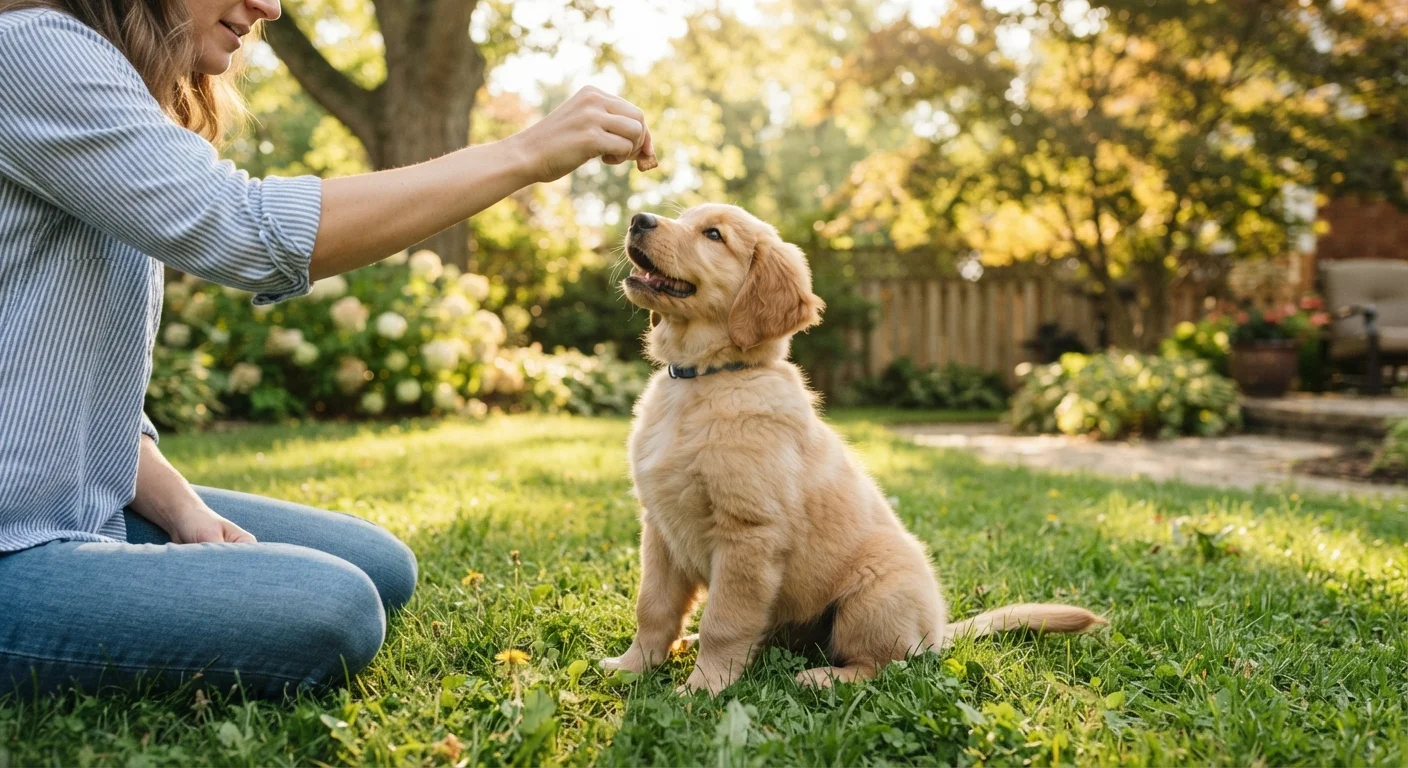
In practical terms, this means: when your dog sits and something good happens immediately after, the dog is more likely to sit again in similar situations. Timing is critical. Rewards delivered within one to two seconds of the behavior are far more effective than delayed ones because dogs connect cause and effect over very short windows.
The core training principles that work across pet species - reinforcement, timing, and consistency - apply just as powerfully here. Positive reinforcement (adding something the dog enjoys, like a treat or praise, after a desired behavior) is the foundation of modern, evidence-supported dog training.
The First Skills to Teach
New owners often feel pressure to teach everything at once. Start narrow. These four foundational skills address safety and daily manners, and they build naturally on each other:
- Sit - The gateway skill. It's easy to teach, gives your dog a default polite behavior, and sets up every other command.
- Stay - Builds impulse control. Begin with just one or two seconds before releasing, then gradually increase duration.
- Come (recall) - The most important safety skill. Practice it only in contexts where you can guarantee success early on, so the dog builds a strong positive association with returning to you.
- Leash manners - Walking without pulling makes daily life easier for everyone. Reward the dog for walking beside you, and stop moving whenever the leash goes tight.
Keep sessions to five to ten minutes, two or three times a day. Dogs - especially puppies - lose focus quickly, and ending on a successful repetition keeps motivation high.
Use Meal Times as Training Opportunities
If your dog eats kibble, consider using a portion of their daily food as training treats during morning sessions. This keeps overall calorie intake balanced and makes training a natural part of the day rather than an add-on. Check with your veterinarian if you're unsure how to adjust treat quantities alongside regular meals.
Building Consistent Daily Habits
Training isn't just what happens during dedicated sessions - it's every interaction you have with your dog throughout the day. Consistency across your household is the single most important variable in how quickly your dog learns. If one family member allows jumping on the couch and another doesn't, the dog receives conflicting information and takes much longer to generalize the rule.
Set clear household agreements before your dog arrives. The family training readiness checklist is a useful tool for aligning everyone on rules, routines, and roles before day one.
Structure matters beyond commands. Regular feeding times, consistent potty schedules, and predictable exercise windows all reduce anxiety and make unwanted behaviors less likely. Crate training, when introduced positively, supports housebreaking and gives your dog a calm retreat. For a full walkthrough, see our crate training guide.
Common Mistakes New Owners Make
Even well-intentioned owners fall into patterns that slow progress. The most common:
- Repeating commands multiple times. If you say "sit, sit, sit" before the dog responds, you teach the dog that the first cue is optional. Give the cue once, wait, and prompt only if needed.
- Training only in one location. Dogs don't automatically generalize skills across environments. A dog who sits reliably in the kitchen may not do so in the park. Practice each skill in varied settings once it's solid at home.
- Skipping reinforcement after a skill seems learned. Move from continuous rewards to intermittent rewards over time, but don't stop entirely. Periodic reinforcement actually maintains behavior more durably than constant rewards.
- Using punishment for accidents or slow learning. Frustration is understandable, but punishment typically creates fear and confusion rather than learning. Redirect and reward instead.
Avoid Flooding Your Dog With Too Much Too Soon
Introducing too many new commands, environments, or distractions before foundational skills are solid can overwhelm a dog and stall progress. Build each skill to a reliable level in low-distraction settings first, then gradually add challenge. Rushing often creates more setbacks than taking a slower, methodical approach.
When to Seek Professional Help
Most new dog owners can handle foundational training independently with good information and patience. But some situations call for professional support sooner rather than later.
Consider consulting a certified professional dog trainer or your veterinarian if your dog shows:
- Growling, snapping, or biting toward people or other animals
- Extreme fear or anxiety that doesn't improve with gradual exposure
- Compulsive or destructive behavior that persists despite consistent management
- Regression in housetraining after initial progress
When selecting a trainer, look for credentials from recognized organizations such as the Certification Council for Professional Dog Trainers (CCPDT) or the International Association of Animal Behavior Consultants (IAABC), and ask about their methods. A qualified trainer should be able to explain their approach clearly and should use reinforcement-based techniques as their primary tool.
Keeping your dog's overall health in check supports training too - a dog in discomfort may be harder to engage. The Pet Health & Care hub covers the wellness basics that complement good behavior.
This article is for general informational and educational purposes only. It is not a substitute for advice from a certified dog trainer, veterinary behaviorist, or licensed veterinarian. If your dog displays concerning behaviors, consult a qualified professional.