

Key Takeaways
Start here
What Defensive Driving Actually Means
Core concepts
The Core Principles in Plain Language
Go deeper
Scanning, Space, and Speed Management
Avoid pitfalls
Common Mistakes That Undermine Defensive Driving
Take action
Building the Habit: Practical Starting Points
What Defensive Driving Actually Means
The phrase "defensive driving" appears on course completion certificates, insurance discount forms, and driver's ed worksheets - which is partly why it has lost its edge. Strip away the jargon and the idea is straightforward: you drive as if the mistakes of others are your problem to solve.
That mindset shift is significant. Most drivers operate with the assumption that other drivers will behave predictably and follow the rules. Defensive driving assumes the opposite - that someone ahead of you may brake suddenly, that a car may run a red light, that a child may step off a curb. Your job is to have already created the conditions to handle those events before they happen.
This isn't pessimism. It's preparation. And the difference between a near-miss and a collision often comes down to whether a driver had thought even two seconds ahead.
Hazard perception
The ability to recognize developing situations on the road that could become dangerous, allowing you to respond before a crisis occurs.
Following distance
The space between your vehicle and the one in front of you, measured in time (seconds) rather than car lengths. More space means more time to react.
Scanning
Actively moving your eyes across the full traffic environment - far ahead, to the sides, and in mirrors - rather than fixating on one point.
Right of way
The legal rule determining which driver or pedestrian has priority in a given situation. Having legal right of way does not guarantee physical safety.
Blind spot
Areas around a vehicle that the driver cannot see in mirrors. Every vehicle has them, and other drivers may not know you are there.
Situational awareness
Maintaining an accurate, real-time understanding of everything happening around your vehicle - traffic, road surface, weather, and other road users.
The Core Principles in Plain Language
Defensive driving rests on a handful of principles that work together. None of them are complicated individually - the challenge is applying all of them consistently.
- Expect the unexpected. Assume other drivers, cyclists, and pedestrians may make errors. Position yourself to have options when they do.
- Manage space aggressively. Keep room around your vehicle in as many directions as possible. Space is reaction time made physical.
- Communicate clearly. Signal early, use your horn appropriately, and make your intentions readable to others before you act on them.
- Control only what you can control. You cannot prevent every hazard, but you can control your speed, position, and attention. Focus there.
- Separate yourself from aggression. When another driver behaves recklessly or aggressively, your goal is to disengage, not respond. For a deeper look at where assertive driving ends and dangerous behavior begins, see our guide on road rage vs. assertive driving.
Scanning, Space, and Speed Management
Three practical skills form the foundation of what defensive driving looks like from inside the car.
Scanning Far Ahead
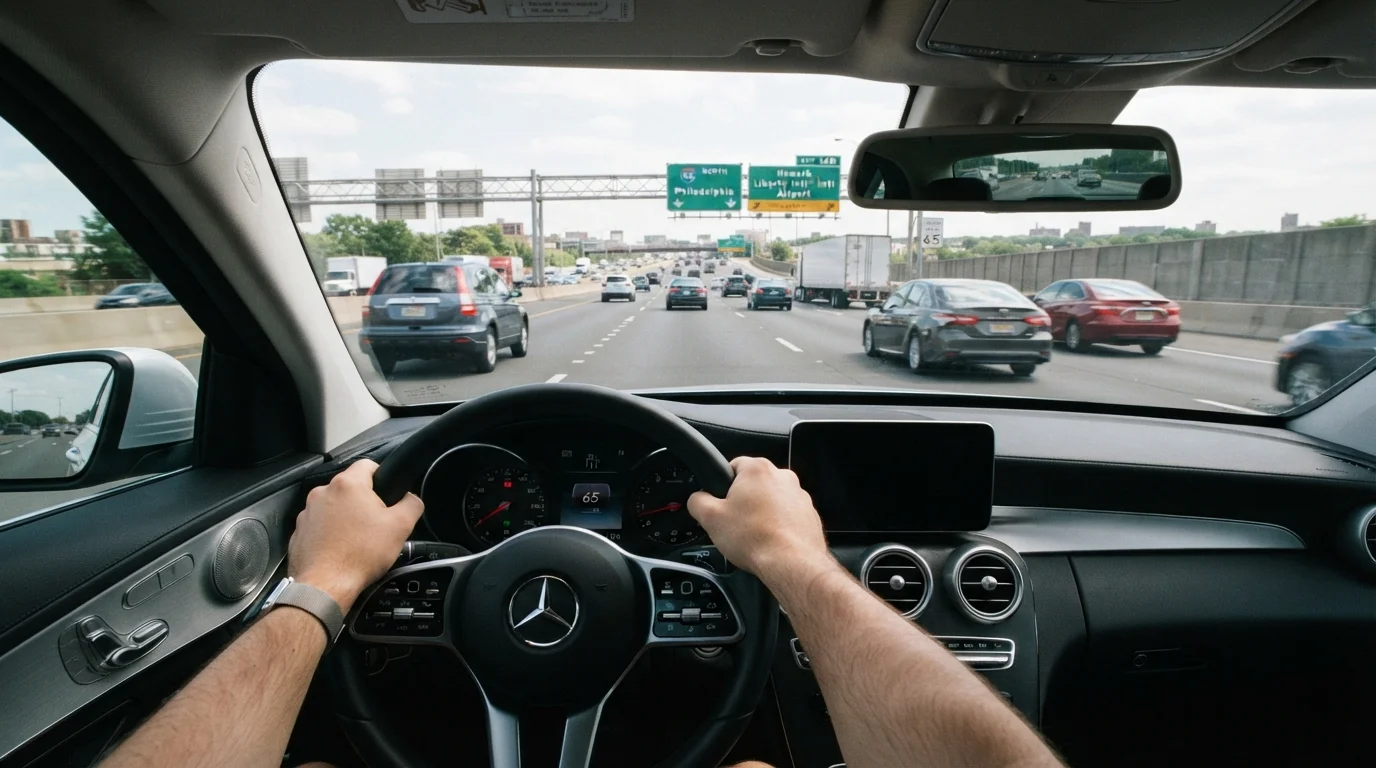
Traffic safety educators commonly recommend scanning 12 to 15 seconds ahead of your vehicle - roughly a city block at residential speeds or a quarter mile on a highway. Most drivers scan only 3 to 4 seconds ahead, which gives the brain little time to process and the body little time to respond without panic braking.
Scanning also means checking mirrors every 5 to 8 seconds and being aware of what is happening to your left, right, and rear - not just in front.
Managing Space
Following distance reduces crash risk more than many drivers expect. A commonly taught reference point is the three-second rule: pick a fixed object ahead, and count three full seconds from when the vehicle in front passes it to when you do. In adverse weather or at highway speeds, extend that gap further.
Matching Speed to Conditions
Posted speed limits reflect ideal conditions. Wet pavement, heavy traffic, reduced visibility, and fatigue all require speed reductions that go beyond what the sign says. Driving the speed limit in a rainstorm may still be driving too fast for conditions. For weather-specific habits, see how to adjust for rain, fog, and snow.
Common Mistakes That Undermine Defensive Driving
Many drivers believe they are driving defensively when they are not. These are the patterns most likely to erode safety even in experienced drivers.
Familiarity Is a Risk Factor
Research consistently shows that a significant share of crashes occur within a few miles of the driver's home. Familiar routes trigger autopilot-style driving where attention drifts. Treat your daily commute with the same alertness you would give an unfamiliar road.
- Tunnel vision. Locking eyes on the car directly ahead and ignoring the full traffic environment is among the most common errors. It eliminates the advance warning that good scanning provides.
- Overconfidence in familiar routes. Drivers are statistically more likely to crash close to home - familiarity breeds complacency. Routine routes still require full attention.
- Lingering in blind spots. Spending extended time in another driver's blind spot removes your ability to be seen and reacted to. Pass decisively or drop back.
- Phone use. Even hands-free conversations reduce situational awareness meaningfully. The cognitive distraction persists even when eyes are on the road.
- Assuming right of way guarantees safety. Having legal right of way does not prevent a collision. Yielding when another driver seems unaware of your presence is not weakness - it is the defensive choice.
Building the Habit: Practical Starting Points
Defensive driving becomes instinctive through repetition, but it starts with deliberate choices. A few changes that cost nothing and can begin on your next trip:
- On your next drive, consciously push your scanning gaze further ahead than feels natural. Notice how much earlier you detect lane changes, brake lights, and merging vehicles.
- Check your following distance at highway speed. If you are less than three seconds behind the vehicle ahead, ease off the accelerator.
- At every red light, glance both ways before proceeding when the light turns green - even when you have the right of way.
- Before a long family drive, review the route conditions. Night driving, for instance, introduces fatigue and reduced visibility factors that deserve a different mindset. Night driving demands different habits worth knowing before you set off after dark.
Defensive driving does not require heroic skill. It requires consistent attention and the humility to accept that the road is unpredictable. Families who build these habits reduce their exposure to the kinds of collisions that are, in hindsight, entirely preventable.
For a broader look at common safety misconceptions, road trip safety myths is worth reading before your next long haul.