

| Origin of Three Sisters planting | Indigenous peoples of North America, practiced for centuries |
| Nitrogen fixed by legumes | Enough to measurably improve soil for subsequent crops (University extension research, general consensus) |
| Marigolds' documented effect | Shown in studies to reduce nematode populations in soil (Multiple university horticultural studies) |
| Best planning approach | Map companions before planting; changes mid-season disrupt roots |
| Trap crop timing | Plant trap crops 1-2 weeks before main crop to attract pests first |
What Companion Planting Actually Does
Companion planting is the practice of growing certain plants near each other so they provide mutual benefits - or at least avoid harming one another. The effects are real but often modest: companion planting rarely replaces good soil preparation, watering, or pest management on its own. Think of it as one practical layer in a broader garden strategy.
The main documented benefits fall into three categories:
- Pest deterrence: Strong-scented plants like basil and marigolds can confuse or repel certain insects that hunt by smell.
- Nitrogen fixation: Legumes (beans, peas) host bacteria in their roots that convert atmospheric nitrogen into a form nearby plants can use after the legumes die back.
- Physical support or shade: Tall plants shelter heat-sensitive neighbors; sprawling ground covers suppress weeds and retain soil moisture.
Not every combination works as popularly claimed. Where scientific research is limited, these pairings reflect long-standing gardening practice rather than controlled trials - so treat the results as generally encouraging rather than guaranteed.
If you're still deciding on your garden layout, the season-by-season garden planning guide covers how to map out beds before planting begins.
| Origin of Three Sisters planting | Indigenous peoples of North America, practiced for centuries |
| Nitrogen fixed by legumes | Enough to measurably improve soil for subsequent crops (University extension research, general consensus) |
| Marigolds' documented effect | Shown in studies to reduce nematode populations in soil (Multiple university horticultural studies) |
| Best planning approach | Map companions before planting; changes mid-season disrupt roots |
| Trap crop timing | Plant trap crops 1-2 weeks before main crop to attract pests first |
Proven Combinations Worth Trying
The pairings below are widely used by home gardeners and supported by at least some research evidence or consistent field observation.
The Three Sisters: Corn, Beans, and Squash
This traditional Indigenous planting combination is probably the best-documented companion system. Corn provides vertical structure for beans to climb; beans fix nitrogen that feeds the corn and squash; squash leaves spread wide at ground level, shading out weeds and keeping soil cool and moist. Plant in blocks rather than rows for best results, and give each plant adequate space - crowding undermines the system.
Tomatoes and Basil
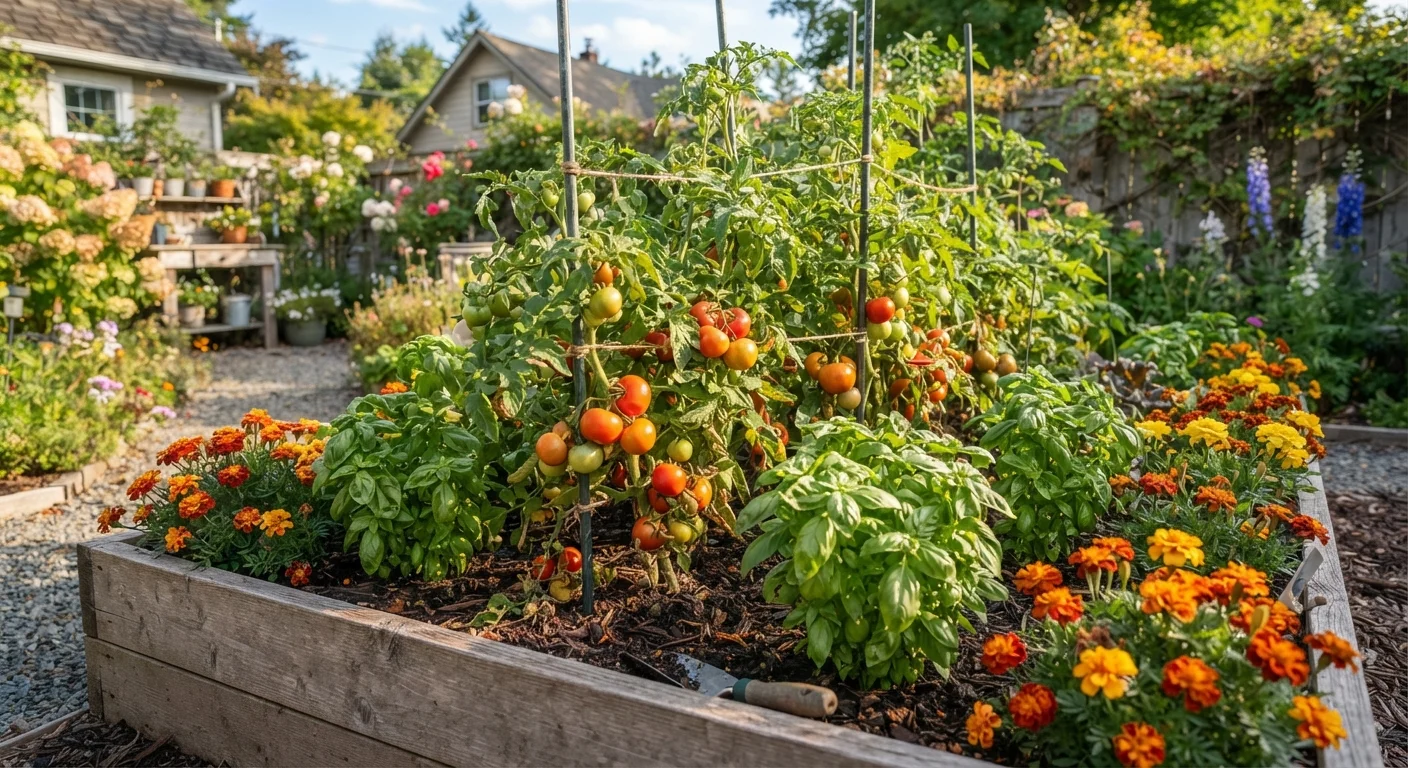
Basil is widely planted near tomatoes. Gardeners report reduced aphid and whitefly pressure, and basil's aromatic oils may mask the scent of tomato plants from pests. Basil also thrives in similar conditions - full sun and consistent moisture - making it a practical pairing regardless of any pest benefit.
Carrots and Onions
Carrot fly and onion fly are each repelled by the scent of the other crop. Interplanting these two is a straightforward way to disrupt both pests using plants you'd grow anyway. Thin both crops as directed so neither is crowded at the root.
Brassicas and Nasturtiums
Nasturtiums act as a trap crop for aphids, drawing them away from cabbage, broccoli, and kale. They're inexpensive to grow from seed and edible themselves. If aphid pressure becomes heavy on the nasturtiums, learn how to identify and manage common garden pests before they spread to your brassicas.
Lettuce Under Taller Crops
Lettuce bolts quickly in summer heat. Planting it beneath tomatoes, pole beans, or tall peppers gives it afternoon shade and extends the harvest by several weeks. This also makes efficient use of limited bed space - a bonus if you're gardening on a tight budget.
Allelopathy
A process where one plant releases natural chemicals into the soil or air that inhibit the growth, germination, or health of neighboring plants. Fennel and black walnut trees are common examples.
Nitrogen fixation
The conversion of nitrogen gas from the atmosphere into ammonia or related compounds by bacteria living in the root nodules of legumes. This process enriches soil nitrogen for surrounding plants.
Trap crop
A plant grown specifically to attract pests away from more valuable crops. The trap crop draws the pest, which can then be managed or removed before it spreads.
Interplanting
Growing two or more different crops in the same bed space simultaneously, often chosen to complement each other's growth habits, timing, or pest profiles.
Combinations to Avoid
Some plants actively inhibit each other - through chemical release (called allelopathy), competition for the same nutrients, or by attracting shared pests. A few combinations to keep separated:
- Fennel and most vegetables: Fennel releases compounds from its roots that suppress germination and growth in tomatoes, peppers, and many herbs. Grow fennel in its own dedicated spot or pot.
- Onions and beans or peas: Onion family plants (including garlic and leeks) can stunt legume growth. Keep these apart.
- Brassicas together in dense blocks: Planting cabbage, broccoli, and kale in solid masses creates a concentrated target for cabbage moths and aphids. Mixing in non-brassicas breaks up the visual and scent cues that attract pests.
For small patios or balconies, companion planting principles apply equally in containers - just scale spacing expectations down. See our container gardening guide for practical tips on pairing plants in pots.