

Key Takeaways
Start here
Assessing Your Space and Setting Goals
Next
Designing Your Garden Layout
Then
Preparing Your Soil
When you're ready
Choosing Plants for Each Season
Ongoing
Seasonal Upkeep and Long-Term Habits
Assessing Your Space and Setting Goals
Before buying a single seed packet, walk your yard at different times of day and note where sunlight falls and for how long. A spot that looks sunny at 9 a.m. may be shaded by mid-afternoon. Most food crops need at least six hours of direct sun daily - leafy greens can get by with four.
Measure your available area and be honest about your time. A 4×8-foot raised bed or a 10×10-foot in-ground plot is plenty for a family new to gardening. Overcommitting leads to neglected plants, wasted money, and frustration. Set a simple goal for year one: grow three to five crops your family actually eats.
Also identify your USDA hardiness zone before choosing any plants. The USDA Plant Hardiness Zone Map, searchable free by zip code, tells you average minimum winter temperatures - information that determines which perennials will survive winter and when to safely start seeds outdoors.
USDA Hardiness Zone
A geographic designation that tells gardeners the average coldest winter temperatures in their area, used to determine which plants can survive year-round outdoors.
Bolting
When a plant shifts energy from leaf or fruit production to flowering and seed-making, usually triggered by heat or long days - making leafy crops taste bitter and reducing yield.
Cover Crop
A plant grown primarily to protect and improve soil during the off-season rather than for harvest; common examples include clover, rye, and buckwheat.
Crop Rotation
The practice of planting different plant families in the same bed each year to prevent the buildup of soil-borne diseases and pests that target specific crops.
pH (soil)
A measure of how acidic or alkaline your soil is, on a scale of 1 to 14. Most vegetables grow best in slightly acidic to neutral soil, roughly between 6.0 and 7.0.
Transplant
A young plant started from seed indoors or in a greenhouse and moved to the garden once conditions are right, giving it a head start over direct-sown seeds.
Designing Your Garden Layout
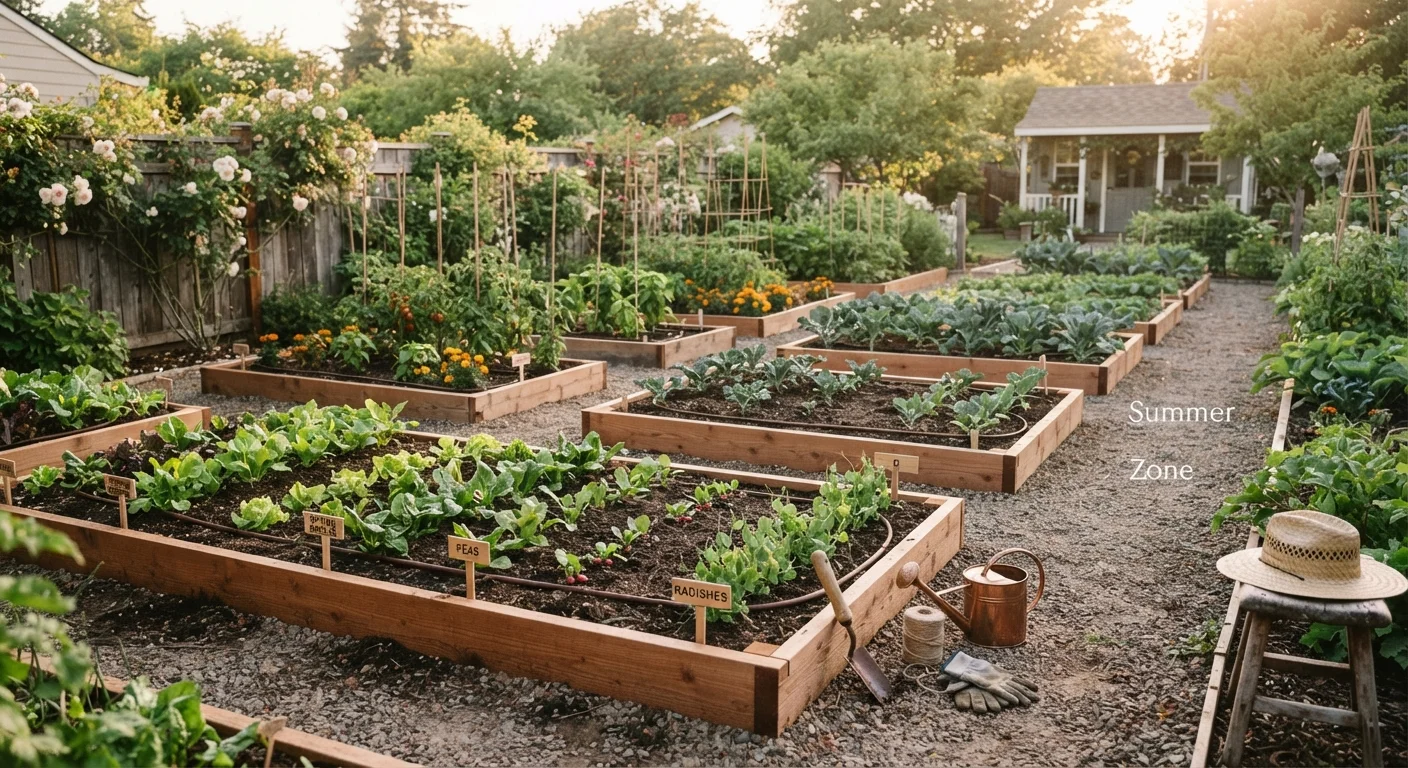
Sketch your garden on paper before breaking ground. Group plants by height so taller crops like tomatoes or pole beans don't shade shorter neighbors. Place these tall growers on the north side of your plot so they don't block sun from lower plants throughout the day.
Leave at least 18 inches between rows or beds for access. You should be able to reach the center of any bed without stepping on soil - compacted soil restricts root growth. A bed no wider than four feet solves this from either side.
If you have a small yard or patio, container gardening is a practical alternative. Our guide on growing food in limited outdoor space covers how to make containers work for both vegetables and flowers. For families watching the budget, starting a vegetable garden on a tight budget offers strategies for doing more with less investment.
Preparing Your Soil
Soil is the foundation of a productive garden, and most yards - especially new construction - have compacted, nutrient-poor ground. A basic soil test, available through many county cooperative extension offices for a modest fee, tells you pH and nutrient levels so you know exactly what to add rather than guessing.
For most vegetable gardens, aim for a pH between 6.0 and 7.0. Work in 2-4 inches of finished compost before planting. Compost improves drainage in clay soil, helps sandy soil retain moisture, and feeds soil organisms that make nutrients available to plant roots. Many municipalities offer free or subsidized compost - check your local waste management program before purchasing bags.
If building a raised bed, a common starting mix is one-third compost, one-third topsoil, and one-third coarse material such as aged wood chips or perlite for drainage. Avoid using straight bagged topsoil alone - it compacts quickly and drains poorly.
Get a Free Soil Test First
Many state university cooperative extension programs offer low-cost or free soil testing kits. Knowing your soil's pH and nutrient gaps before you amend it prevents over-applying products that can actually harm plants. Search '[your state] cooperative extension soil test' to find your local program.
Choosing Plants for Each Season
A season-by-season approach prevents the common beginner mistake of planting everything at once and then having nothing to harvest for months. Divide your garden year into four planting windows.
- Early spring: Cool-season crops go in 4-6 weeks before your last frost date. Think lettuce, spinach, peas, radishes, and kale. These tolerate light frost and bolt (go to seed prematurely) in summer heat.
- Late spring/early summer: Warm-season crops - tomatoes, peppers, cucumbers, squash, and beans - go in after your last frost date. Starting these from transplants rather than seed speeds things up by 4-6 weeks.
- Late summer: A second planting of cool-season crops extends your harvest into fall. Count back from your first fall frost date to time these correctly.
- Winter/dormant season: Prepare beds for next year by adding compost, planting cover crops like clover or winter rye to prevent erosion, and cleaning up spent plants.
Mixing perennials and annuals is a smart long-term strategy. Perennials like asparagus, chives, and most herbs establish once and return each year, reducing annual replanting costs. For drought-prone regions, drought-tolerant landscaping principles can help you design sections that stay attractive with minimal irrigation.
Seasonal Upkeep and Long-Term Habits
Consistent, short sessions of maintenance outperform marathon weekend sessions. Fifteen minutes three times a week is enough to catch problems early - spotting a pest infestation or wilting plant before it spreads saves plants and money.
Build these habits by season:
- Spring: Refresh compost, check for overwintered pests, divide any perennials that have outgrown their space.
- Summer: Water deeply and less frequently rather than shallowly and often. Deep watering encourages roots to grow downward, building drought resilience. Mulch 2-3 inches deep around plants to retain moisture and suppress weeds.
- Fall: Pull spent annuals, cut back perennials as directed for your species, plant garlic bulbs for next summer, and add a layer of compost to beds before winter.
- Winter: Review what worked and what didn't. Order seed catalogs, map crop rotation (don't plant the same family of vegetables in the same spot two years running), and set a realistic budget for next season.
Gardening is one of the more rewarding low-cost family activities you can build together. If you're thinking about how outdoor improvement fits into your broader household budget, our overview of home improvement on a budget covers how to sequence projects and set realistic spending expectations.