Key Takeaways
Option A
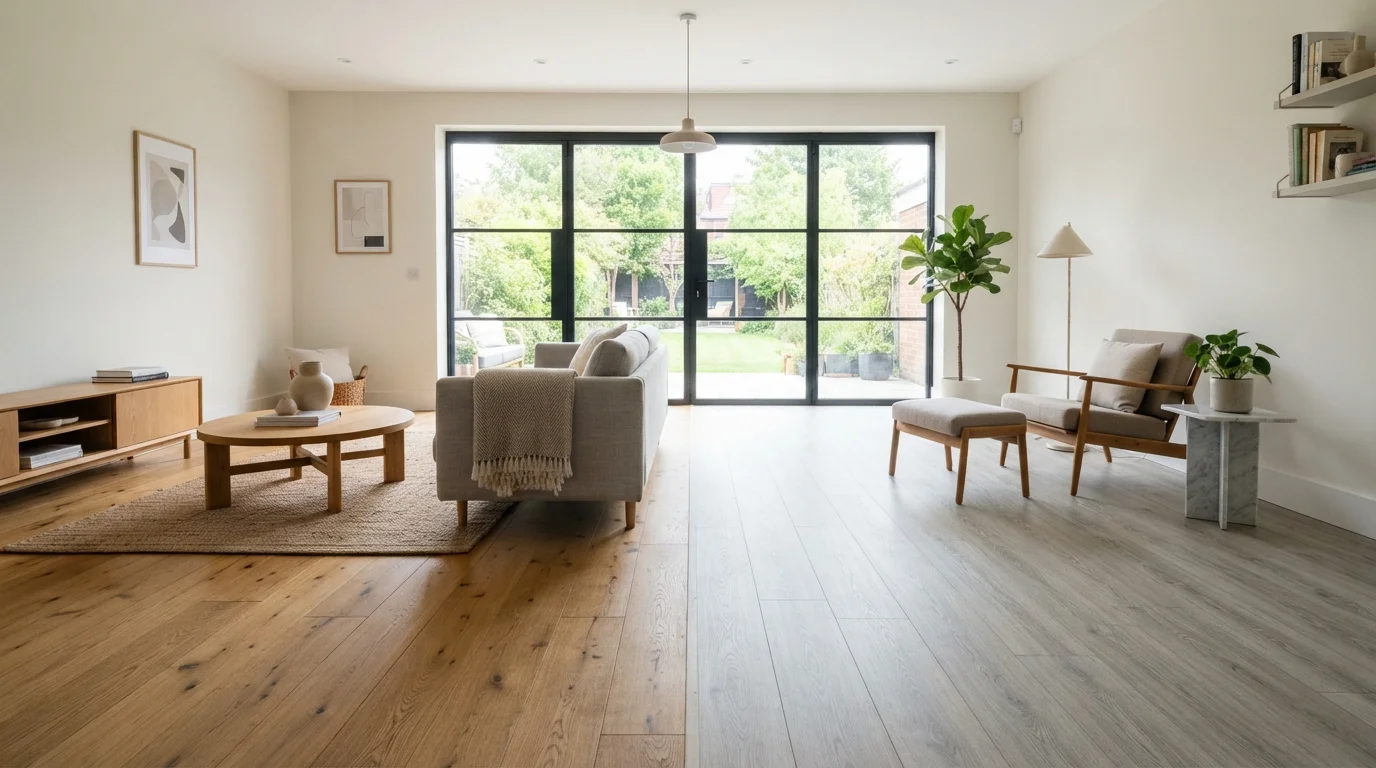
Laminate Flooring
The budget-friendly, durable newcomer.
Best for: Families with young children or pets who need a resilient, low-cost floor that handles heavy daily use.
Option B
Hardwood Flooring
The timeless, long-term investment option.
Best for: Homeowners planning to stay long-term who want a refinishable floor that can add measurable resale appeal.
If you're working with a tight renovation budget
Laminate Flooring
Laminate delivers an attractive, wood-look finish at a fraction of hardwood's installed cost, freeing budget for other upgrades.
If you're focused on long-term resale value
Hardwood Flooring
Hardwood is widely recognized by buyers and appraisers as a premium feature, and its refinishability means it can look new again before listing.
If your household includes pets or young children
Laminate Flooring
Laminate's wear layer resists scratches and surface moisture from spills better than raw wood, making it easier to maintain in high-traffic homes.
If you want to floor a basement or below-grade space
Laminate Flooring
Solid hardwood is not recommended below grade due to moisture risk; moisture-resistant laminate handles basement environments more reliably.
If you're planning to stay in the home for 20 or more years
Hardwood Flooring
Over decades, hardwood's refinishability means you can refresh the surface multiple times without full replacement, offsetting the higher upfront cost.
Understanding What You're Actually Comparing
Laminate flooring is a synthetic product - typically a high-density fiberboard (HDF) core topped with a photographic layer and a clear protective wear layer. It looks like wood but contains no solid timber. Hardwood flooring, on the other hand, is milled directly from timber and comes in two main forms: solid hardwood (a single piece of wood throughout) and engineered hardwood (a real wood veneer over layered plywood). This article focuses primarily on the solid hardwood and laminate comparison, since those represent the clearest trade-off for most families.
Understanding this structural difference matters because it drives nearly every downstream difference - cost, durability, moisture sensitivity, and how each floor ages over time. Before comparing numbers, it helps to know what you're actually putting under your feet.
| Criterion | Laminate Flooring | Hardwood Flooring |
|---|---|---|
| Typical installed cost | $2-$5 per sq ft | $8-$15 per sq ft |
| Lifespan | 15-25 years | 50-100 years (with refinishing) |
| Refinishable | No | Yes (multiple times) |
| Moisture resistance | Good (surface-level spills) | Poor - avoid damp spaces |
| Scratch resistance | High (AC-rated wear layer) | Moderate - species-dependent |
| DIY installation | Beginner-friendly click-lock | Advanced - often needs a pro |
| Resale value impact | Modest positive | Strong positive |
| Suitable below grade | Yes (moisture-resistant types) | No |
Cost: Upfront vs. Lifetime
Laminate flooring typically runs $1-$3 per square foot for materials, with installed costs (including underlayment and labor) generally ranging from $2 to $5 per square foot. Solid hardwood materials alone often cost $4-$10 per square foot, with total installed costs ranging from $8 to $15 or more depending on species, grade, and regional labor rates.
However, the lifetime cost picture is more nuanced. Laminate cannot be refinished - once the wear layer scratches through, replacement is the only option. A quality hardwood floor, refinished every 10-15 years, can outlast two or three laminate installations in the same timeframe. For families thinking about the return on investment from home upgrades, this long-term math is worth running before choosing solely on sticker price.
~70-80%
Cost recouped from hardwood flooring at resale
Industry estimates from the National Association of Realtors suggest hardwood floors recoup a significant portion of their cost at resale, though results vary by market.
$2-$5
Average installed cost per sq ft for laminate
Reported by flooring industry sources as the general residential range, excluding specialty products or complex subfloor repairs.
15-25 years
Typical laminate floor lifespan
General industry consensus based on residential use with standard maintenance; premium laminate with higher AC ratings may last longer.
Durability, Moisture, and Daily Family Life
Laminate's wear layer - rated by an AC (Abrasion Class) score from AC1 to AC5 - makes it notably scratch-resistant for everyday family life. AC3 or AC4 ratings are suitable for most residential use. It also handles incidental spills better than raw wood, though standing water will eventually cause the HDF core to swell and warp.
Solid hardwood dents and scratches more visibly under heavy use, especially with softer wood species like pine. It's also highly sensitive to humidity fluctuations - wood expands and contracts with seasonal changes, which can cause gaps or cupping if the home's moisture levels aren't managed. This makes hardwood unsuitable for bathrooms, most basements, and any space prone to dampness.
For families considering a larger layout change - like opening up a living space - flooring continuity is a real consideration. See our article on the pros and cons of open-plan living conversions for how flooring choices interact with structural changes.
Installation: How DIY-Friendly Is Each Option?
Laminate's click-lock floating installation system makes it one of the most beginner-accessible flooring types available. Planks snap together over an underlayment without glue or nails, and the floor isn't attached to the subfloor - it simply floats. Many homeowners with basic tool skills complete laminate projects over a weekend.
Solid hardwood installation is considerably more involved. It typically requires nailing or stapling to a wood subfloor, precise moisture acclimation (leaving the wood in the room for several days before installation), and careful attention to expansion gaps. Improper installation can cause buckling or gaps within months. Most flooring professionals recommend hiring a licensed installer for solid hardwood, particularly in larger rooms.
Both options demand a flat, clean, structurally sound subfloor. Skipping proper subfloor prep is one of the most common - and costly - DIY mistakes in flooring projects. If you're planning a broader renovation, our guide on home improvement on a budget covers how to sequence projects so flooring comes at the right stage.
Permits and Codes Are Rarely Required for Flooring
In most U.S. jurisdictions, replacing flooring is considered a cosmetic update and does not require a building permit. However, if your project involves structural subfloor repairs, changes to radiant heating systems beneath the floor, or work in certain multi-family buildings, permit requirements may apply. Always verify with your local building department before starting any project that goes beyond surface-level installation.