

Key Takeaways
Water Heater Warning Signs
Water heater warning signs are physical symptoms - sounds, smells, discoloration, or performance changes - that indicate your unit may need maintenance or repair. Catching these signals early can prevent minor issues from becoming major failures. Most symptoms have straightforward explanations and, in many cases, simple fixes a homeowner can handle.
Tank-style water heaters (the most common type in U.S. homes) rely on a sacrificial anode rod, a thermostat, and a temperature-pressure relief (TPR) valve - each of which can produce distinct symptoms when they degrade.
The Sounds Your Water Heater Makes
A water heater operating normally is nearly silent. When it starts making noise, it's communicating something specific.
- Rumbling or popping: The most common culprit is sediment - calcium and magnesium deposits that accumulate at the tank's bottom, especially in areas with hard water. Water trapped under that layer superheats and escapes, creating a rumbling sound. Annual flushing prevents heavy buildup.
- High-pitched whining or whistling: This often points to a partially closed valve restricting water flow, or a failing heating element in an electric unit.
- Ticking or tapping: Usually harmless - these sounds come from pipes expanding and contracting with temperature changes, or from the heat trap nipples at the top of the tank.
- Banging (water hammer): A sudden loud bang when a faucet closes can indicate water hammer - a pressure surge in the pipes rather than a heater problem itself.
Sediment buildup also forces your heater to work harder, quietly raising your energy bills before you notice any other symptom.
Flush Your Tank Once a Year
Draining 2-3 gallons from the bottom of your tank annually prevents sediment from hardening into a thick crust. It takes about 15-20 minutes and requires only a garden hose and basic safety precautions. Always turn off the power supply (or set a gas unit to "pilot") before opening the drain valve, and let the water cool before draining.
Discolored Water and What It Reveals
Hot water should run clear. Any change in color is a diagnostic signal worth taking seriously.
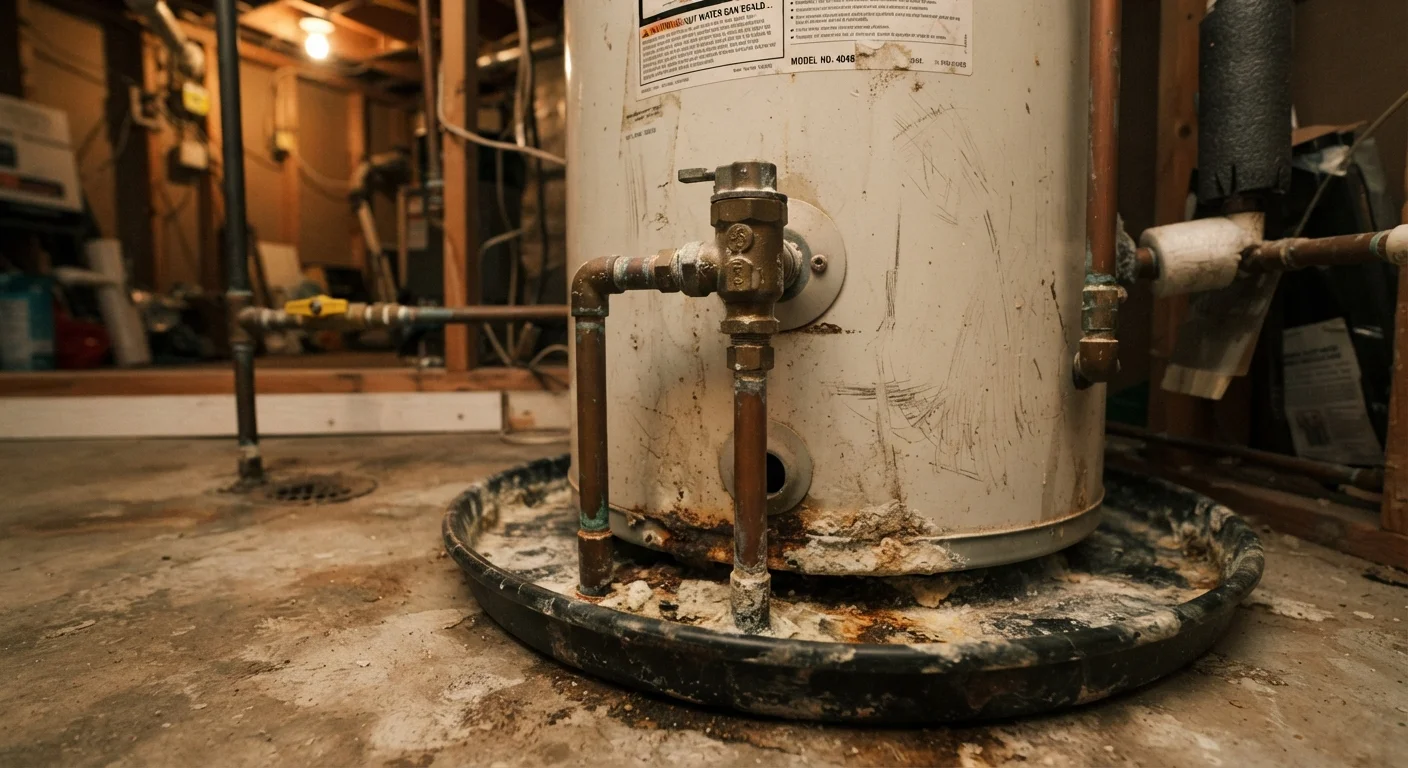
Rusty or reddish-brown water appearing only from hot taps points to corrosion inside the tank. The anode rod - a sacrificial magnesium or aluminum rod designed to corrode in place of the tank - has likely been depleted. Replacing it (typically every 3-5 years) is far cheaper than replacing a corroded tank. If the tank itself is already rusting, replacement is the only reliable fix.
Cloudy or milky water from hot taps is usually harmless - it's often dissolved air or high mineral content becoming temporarily visible as water pressure changes. It should clear within seconds in a glass.
Foul-smelling water (sulfur or rotten egg odor) can occur when bacteria interact with a magnesium anode rod, particularly in homes with well water. Switching to an aluminum or zinc alloy anode rod often resolves this. This is a maintenance fix, not a reason to panic. See our guide on home maintenance myths for other commonly misunderstood warning signs around the house.
8-12 years
Typical lifespan of a tank water heater
The U.S. Department of Energy notes that most conventional storage tank water heaters last between 8 and 12 years with basic upkeep.
14-18%
Share of home energy use from water heating
According to the U.S. Department of Energy, water heating typically accounts for roughly 14-18% of a home's total energy consumption.
~$1/year
Approximate cost of flushing your tank
Flushing a water heater requires minimal supplies - just time and a garden hose - making it one of the highest-ROI maintenance tasks for homeowners.
Inconsistent Heat and Leaks
If your shower goes cold mid-rinse or your hot water temperature swings unpredictably, the thermostat or heating element is the likely culprit.
Electric water heaters have two heating elements (upper and lower). A failed lower element reduces your available hot water volume - you'll get hot water initially, then lukewarm or cold. A failed upper element means you get little to no hot water from the start. Both are serviceable components a confident DIYer can test with a multimeter and replace.
Gas water heaters rely on a thermocouple and pilot light. If the pilot won't stay lit, the thermocouple - a safety device that senses the flame - may need replacement. This is a relatively inexpensive repair but involves gas components, so homeowners who are not experienced with gas appliances should call a licensed plumber or HVAC technician.
Leaks require immediate attention:
- At the drain valve: Often just mineral buildup preventing a full seal. A replacement valve is inexpensive.
- At pipe fittings: Corrosion or loose connections - usually a straightforward fix.
- At the tank body: Internal corrosion has breached the tank. Replacement is required; a leaking tank cannot be reliably patched.
- At the TPR valve: This is a safety device. Do not ignore it - contact a licensed plumber promptly.
Just as brake symptoms tell you when a car needs attention, your water heater's signals follow a similar logic: some are routine maintenance, others are urgent safety concerns.
When to Maintain, When to Repair, When to Replace
Not every symptom means your heater is dying. A clear decision framework helps you avoid unnecessary expense while knowing when to act fast.
- Maintain now (DIY-friendly)
- Annual flushing to clear sediment; inspecting and replacing the anode rod; checking the TPR valve by briefly lifting its lever (have a bucket ready); verifying the thermostat setting (120°F is the standard recommended temperature).
- Repair (evaluate cost vs. age)
- Replacing a heating element, thermocouple, or drain valve makes sense if your heater is under 8 years old. Parts are generally affordable. If the unit is older, weigh repair costs against replacement value.
- Replace promptly
- A tank actively leaking from the body, visible exterior corrosion, or a unit over 12 years old showing multiple symptoms. Continuing to run a failing tank risks water damage that far exceeds the cost of a new unit.
Staying proactive about water heater maintenance connects directly to controlling household costs. See our guide to fixing a running toilet for another common home maintenance task most families can handle without a service call.