

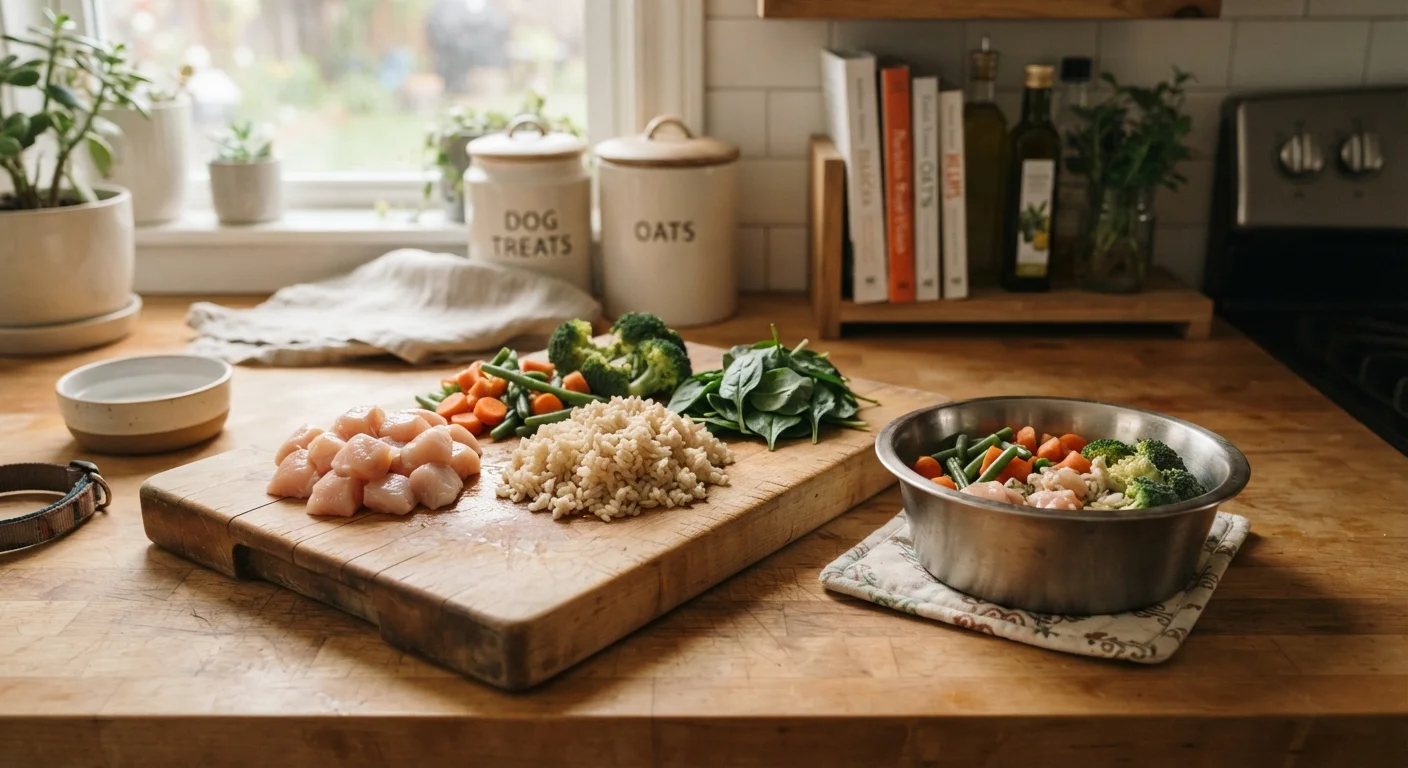
Key Takeaways
Full visibility into every ingredient fed
Families know exactly what proteins, vegetables, and grains go into each meal, which is particularly valuable when managing confirmed food allergies or intolerances under veterinary guidance.
Useful for pets with specific medical dietary needs
Some pets with diagnosed conditions benefit from customized recipes that commercial foods cannot precisely replicate, when those recipes are designed by a veterinary nutritionist.
Can be integrated into existing cooking routines
Families who already cook regularly may find it practical to batch-cook and freeze pet meals alongside their own, reducing the incremental time cost.
Avoids certain additives or preservatives
Home-prepared meals contain no artificial preservatives or colorants, which some pet owners prefer even though the health significance of avoiding these ingredients in pets is not firmly established by research.
High risk of unintentional nutritional deficiencies
Most home recipes found online or in books fail to meet established nutrient profiles for dogs or cats. Deficiencies in calcium, taurine, zinc, and vitamins can develop gradually and cause serious health problems.
Requires expert nutritionist input to do safely
Formulating a complete diet for a pet is more complex than human meal planning. A board-certified veterinary nutritionist is the appropriate professional to design or audit any long-term homemade diet.
Often more expensive than expected
Quality proteins, fresh produce, and necessary supplements add up quickly. Most families find homemade pet food costs more per serving than comparable commercial options, not less.
Time-intensive to prepare consistently
Regular shopping, cooking, portioning, and safe storage require a sustained commitment that can become burdensome for busy households, increasing the risk of cutting corners over time.
Food safety risks for pets and family members
Improper handling of raw or undercooked ingredients can expose pets and humans - especially children - to Salmonella, E. coli, and other pathogens.
Our Verdict
Homemade pet food can be a meaningful choice for families dealing with food allergies, ingredient sensitivities, or a strong desire for control over what goes into their pet's bowl. However, it demands a significant investment of time, ongoing veterinary nutritionist guidance, and usually more money - not less - than mid-range commercial diets. It is not a casual undertaking, and shortcuts tend to create health risks rather than savings.
Best suited to committed pet owners who have consulted a veterinary nutritionist, have time to cook consistently, and prioritize ingredient control over convenience or cost savings.
Why Families Consider Homemade Pet Food
Interest in home-cooked pet meals has grown alongside a broader cultural shift toward knowing exactly what goes into food - for both people and their animals. For budget-conscious families, the appeal is easy to understand: buying bulk ingredients, cooking at home, and skipping branded packaging seems like it should cost less. Others are motivated by a pet with a diagnosed food allergy or chronic digestive issue where ingredient control genuinely matters.
There is also an emotional dimension. Preparing food for a pet can feel like an act of care, similar to cooking for a child. That instinct is not wrong - but it can lead families to underestimate how different a pet's nutritional needs are from a human's, and how difficult it is to meet those needs consistently without expert input. Before committing, it helps to understand what homemade feeding actually involves. For a broader look at how pet diets are evaluated, see our guide on reading a pet food label.
The Real Advantages of Cooking for Your Pet
Full visibility into every ingredient fed
Families know exactly what proteins, vegetables, and grains go into each meal, which is particularly valuable when managing confirmed food allergies or intolerances under veterinary guidance.
Useful for pets with specific medical dietary needs
Some pets with diagnosed conditions benefit from customized recipes that commercial foods cannot precisely replicate, when those recipes are designed by a veterinary nutritionist.
Can be integrated into existing cooking routines
Families who already cook regularly may find it practical to batch-cook and freeze pet meals alongside their own, reducing the incremental time cost.
Avoids certain additives or preservatives
Home-prepared meals contain no artificial preservatives or colorants, which some pet owners prefer even though the health significance of avoiding these ingredients in pets is not firmly established by research.
Ingredient transparency is the most defensible benefit of homemade pet food. When you source the chicken, sweet potato, and leafy greens yourself, you know exactly what is - and is not - in the meal. This matters most for pets with confirmed food sensitivities, where eliminating a specific protein or additive is medically necessary.
Homemade diets also offer flexibility. A recipe can be adjusted as a pet ages, gains weight, or develops a new health condition - provided those adjustments are guided by a veterinarian. Families who already cook frequently may also find that batch-cooking pet meals alongside their own dinners adds relatively little extra effort once a routine is established.
The Disadvantages Families Most Often Overlook
High risk of unintentional nutritional deficiencies
Most home recipes found online or in books fail to meet established nutrient profiles for dogs or cats. Deficiencies in calcium, taurine, zinc, and vitamins can develop gradually and cause serious health problems.
Requires expert nutritionist input to do safely
Formulating a complete diet for a pet is more complex than human meal planning. A board-certified veterinary nutritionist is the appropriate professional to design or audit any long-term homemade diet.
Often more expensive than expected
Quality proteins, fresh produce, and necessary supplements add up quickly. Most families find homemade pet food costs more per serving than comparable commercial options, not less.
Time-intensive to prepare consistently
Regular shopping, cooking, portioning, and safe storage require a sustained commitment that can become burdensome for busy households, increasing the risk of cutting corners over time.
Food safety risks for pets and family members
Improper handling of raw or undercooked ingredients can expose pets and humans - especially children - to Salmonella, E. coli, and other pathogens.
The single greatest risk of homemade pet diets is nutritional incompleteness. Research published in veterinary nutrition journals has consistently found that the large majority of homemade dog and cat recipes - including those found online and in popular books - fail to meet established nutrient profiles. Deficiencies in calcium, zinc, vitamin D, and specific amino acids like taurine (critical for cats) can develop silently over months before symptoms appear.
Cost is another frequent surprise. Once you account for the quality protein sources pets need, appropriate supplements, and the time required to shop, prepare, and store meals safely, homemade feeding often costs more than a well-formulated mid-range commercial food. Families hoping to stretch a tight budget may find better value exploring other strategies - our article on stretching your pet food budget covers practical options that don't require cooking from scratch.
Comparing Homemade to Commercial Options
If you're weighing homemade food against commercial alternatives, it's worth understanding what commercial labels are actually telling you. Our guide on store-brand vs. name-brand pet food explains how to evaluate ingredient quality and nutritional adequacy across price tiers, so you can make a genuinely informed comparison before committing to either approach.
If you're weighing homemade food against commercial alternatives, it's also worth understanding what commercial labels are actually telling you. Our guide on store-brand vs. name-brand pet food explains how to evaluate quality across price tiers.
What It Actually Takes to Do It Safely
Safe homemade feeding starts with a recipe developed or reviewed by a board-certified veterinary nutritionist - not a general-purpose veterinarian, a wellness blogger, or an AI tool. The recipe should be formulated for your specific pet's species, age, weight, and health status. It should also include a specific supplement plan to fill the micronutrient gaps that whole foods alone cannot reliably cover.
Food safety matters too. Raw or undercooked ingredients carry real bacterial risks for both pets and the humans handling their food, particularly children and immunocompromised family members. Cooked diets are generally safer and easier to manage. Meals should be stored properly - refrigerated portions used within a few days, frozen portions labeled clearly - and feeding amounts should be calculated to avoid overfeeding, since homemade meals vary in caloric density. Extras like occasional table scraps or food toppers should be considered carefully; our article on treats, toppers, and table scraps explains how these additions affect overall nutritional balance.
95%+
Homemade recipes failing nutrient standards
Multiple peer-reviewed studies in veterinary nutrition have found that the vast majority of homemade pet diet recipes do not meet established minimum nutrient profiles for dogs or cats.
2-4×
Estimated cost premium over commercial food
Veterinary nutrition professionals commonly note that properly supplemented, nutritionist-formulated homemade diets typically cost significantly more per serving than mid-range commercial foods.