

Key Takeaways
Option A
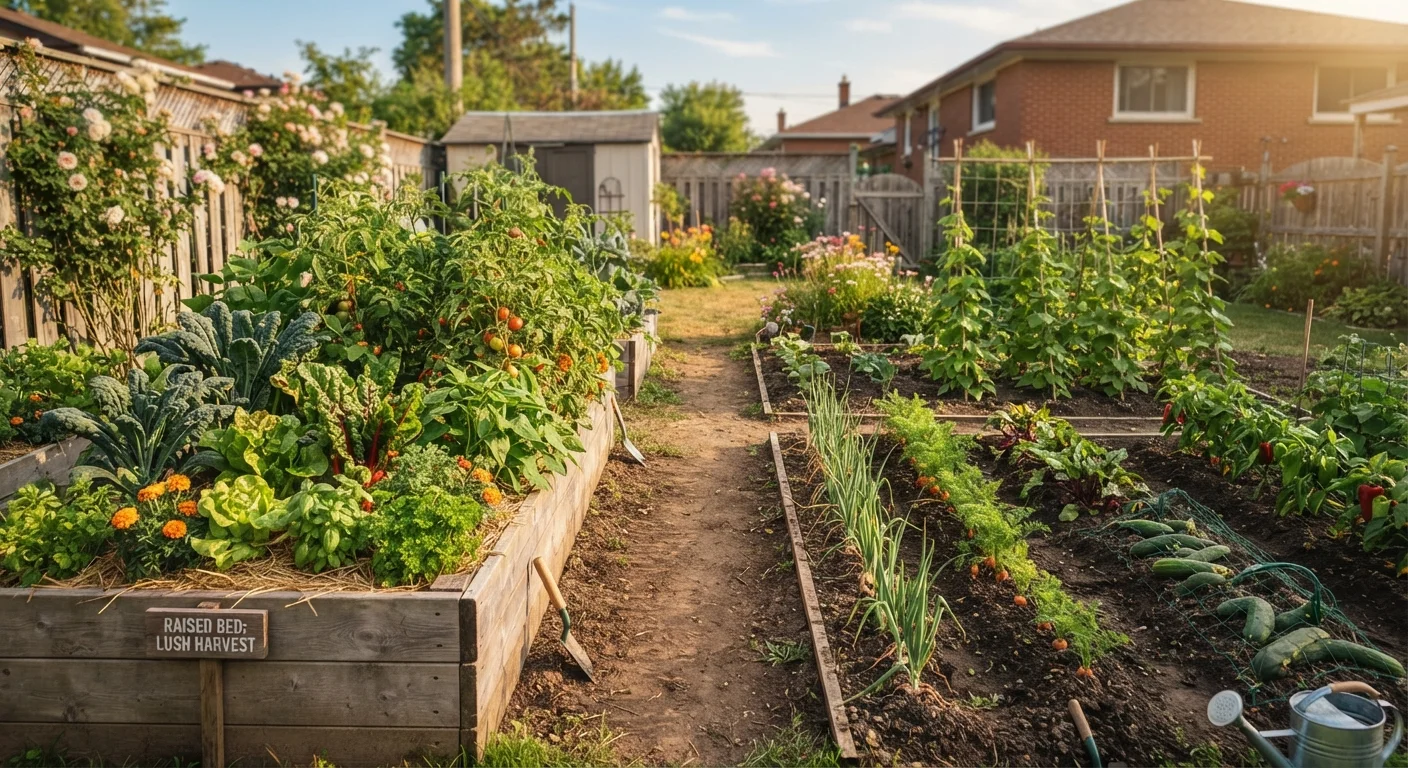
Raised Beds
The controlled, high-performance growing environment.
Best for: Yards with poor native soil, drainage problems, or families who want a contained, low-maintenance setup from the start.
Option B
In-Ground Planting
The traditional, low-cost approach with room to grow.
Best for: Yards with reasonably workable soil and gardeners who want maximum growing area without upfront material costs.
If your yard has poor, compacted, or clay-heavy soil
Raised Beds
Building above native soil lets you fill with quality growing mix immediately, bypassing years of soil amendment work and avoiding the frustration of struggling plants.
If you're starting a garden on a very tight budget
In-Ground Planting
In-ground plots require no lumber, hardware, or bulk soil purchases - your main investment is compost, seeds, and time spent improving what's already there.
If you have limited mobility or back pain
Raised Beds
A bed built 12-18 inches tall reduces bending significantly, making gardening far more accessible for those who find ground-level work uncomfortable.
If you want to garden across a large portion of your yard
In-Ground Planting
Covering a wide area with raised beds becomes expensive and labor-intensive; in-ground plots scale up easily without a proportional cost increase.
If you're gardening with young children
Raised Beds
Defined borders create clear visual boundaries kids can respect, and the contained soil is easy to keep free of weeds that discourage beginners.
The Core Trade-Off: Control vs. Cost
For families with small yards, every square foot matters. The choice between raised beds and in-ground planting often comes down to one core question: how much are you willing to invest upfront in exchange for greater control over growing conditions?
Raised beds let you build a custom growing environment from scratch. You fill them with a soil mix suited precisely to vegetables or flowers, independent of whatever compacted, clay-heavy, or nutrient-poor native soil lies underneath. In-ground planting works with the ground you have - which is either an advantage or a challenge depending on your yard's existing conditions.
For context on how soil quality shapes every other gardening decision, see our guide to improving poor garden soil over time. If you're starting completely fresh, our season-by-season garden planning roadmap walks through the full setup process regardless of method.
| Criterion | Raised Beds | In-Ground Planting |
|---|---|---|
| Upfront cost | Moderate to high (materials + soil) | Low (compost and seeds) |
| Soil control | Full - you choose the mix | Limited by native conditions |
| Drainage | Excellent | Varies by native soil type |
| Spring warm-up | Faster - extends season | Slower in cold climates |
| Weed pressure (Year 1) | Generally lower | Higher from existing seed bank |
| Scalability | Costly to expand | Easy and inexpensive to expand |
| Accessibility | High (reduced bending) | Standard ground-level effort |
| Long-term soil health | Requires ongoing amendment | Improves naturally over seasons |
Soil, Drainage, and Growing Conditions
Drainage is where raised beds consistently outperform in-ground plots, particularly in regions with heavy rainfall or poorly draining clay soils. Water moves through a well-composed raised bed mix much more freely than through dense native soil, reducing root rot risk and allowing earlier spring planting.
In-ground gardens, however, can develop excellent natural drainage and fertility over multiple seasons if you consistently add organic matter. Earthworm activity, beneficial fungi, and soil microorganism communities build up naturally beneath the surface - processes that a brand-new raised bed has to cultivate from zero. For families willing to invest two or three growing seasons in soil improvement, in-ground beds can become remarkably productive without the annual soil-amendment costs that raised beds sometimes require.
6-8 inches
Minimum raised bed depth for most vegetables
University cooperative extension programs generally recommend at least 6-8 inches of soil depth for shallow-rooted crops, with 12 inches preferred for root vegetables like carrots.
2-4 weeks
Earlier planting potential in raised beds
Because raised bed soil warms faster than ground soil in spring, many gardeners in cooler climates can begin planting several weeks ahead of their in-ground counterparts.
4×4 ft
Common recommended raised bed width
A 4-foot width allows a gardener to reach the center from either side without stepping into the bed, which helps prevent soil compaction around plant roots.
Raised beds also warm up faster in spring because the soil mass is exposed on all sides. A few extra weeks of warmth can meaningfully extend the season for warm-season crops like tomatoes and peppers in northern climates.
Space Efficiency and Layout in Small Yards
In a small yard, layout flexibility matters. In-ground planting allows irregular shapes that follow your yard's natural contours - a curved bed along a fence, rows that use otherwise awkward corners, or a gradual expansion year by year with no additional material cost.
Raised beds impose more structure. Standard rectangular frames typically range from 4×4 to 4×8 feet, which suits many small yards well but requires planning around fixed footprints. On the positive side, that structure encourages intensive planting practices like square-foot gardening, which can produce more food per square foot than traditional row gardening. Pairing raised beds with smart companion planting combinations amplifies this efficiency further.
If your outdoor space is extremely limited - a patio, balcony, or narrow side yard - containers may actually serve you better than either approach. Our container gardening guide covers that option in detail.
A Hybrid Approach Is Worth Considering
Many small-yard gardeners find the best results by combining both methods. A raised bed or two near the house handles intensive vegetable growing, while an improved in-ground plot along a fence supports perennials, sprawling squash, or low-maintenance herbs. This hybrid setup lets you manage budget and effort without fully committing to one approach.
Maintenance, Weeds, and Long-Term Effort
Weed pressure is a practical reality in any garden. Fresh raised bed soil, particularly purchased mixes, often starts relatively weed-free - a significant advantage in the first season. Over time, wind-borne seeds and birds will introduce weeds, but the contained footprint makes hand-weeding faster and more manageable than a sprawling in-ground plot.
In-ground gardens typically carry existing weed seeds in the native soil, meaning the first season often involves more weeding effort. Consistent mulching practices - applied correctly - can suppress weeds in both systems, but they make a particularly noticeable difference in in-ground beds where seed banks are already established.
Both approaches require watering, feeding, and seasonal cleanup. Raised beds may dry out faster due to their exposed sides, increasing watering frequency during dry spells. In-ground beds, especially those with improved organic matter content, tend to retain moisture longer. If water use is a concern, our drought-tolerant landscaping principles apply to both garden types and are worth reviewing before your first season.
For budget-minded families, starting a vegetable garden on a tight budget offers practical strategies - from seed-saving to free compost sourcing - that work equally well with either method.